Hydrocarbon exploration in deepwater increasingly relies less on geological intuition and more on the integration of multiple disciplines capable of reducing uncertainty before drilling.
Under this premise, BluEnergies and TotalEnergies are advancing a geoscientific characterization program in blocks LB-26, LB-30, and LB-31 of the Harper Basin, offshore Liberia, with the objective of identifying drilling prospects through seismic reprocessing, seafloor mapping, and geochemical studies.
Activities are proceeding according to the planned schedule and include the reprocessing of 6,167 km² of 3D seismic data, a seafloor survey covering 4,045 km², and the acquisition of geochemical and geothermal information that will enable the construction of a more precise model of the petroleum system in a basin that has not yet been drilled.
BluEnergies: Seismic reprocessing improves definition of exploratory targets
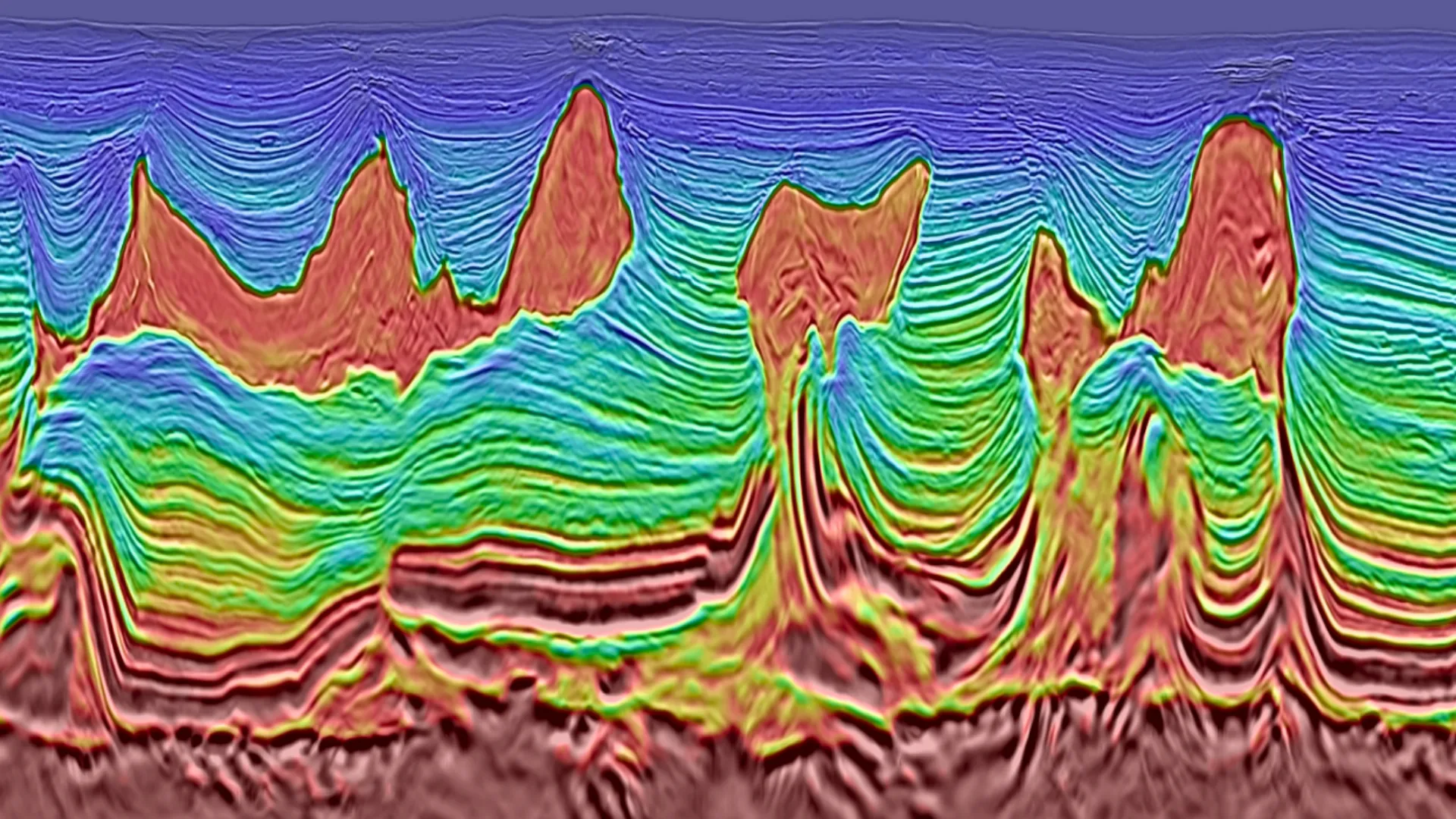
One of the pillars of the program consists of the comprehensive reprocessing of the three-dimensional seismic survey acquired in 2013. Although the original data remain valid, advances in processing algorithms enable higher-resolution images and improved interpretation of deep geological structures.
The work, executed by TGS for BluEnergies and TotalEnergies, incorporates techniques designed to optimize seismic response and AVO (Amplitude Versus Offset) attribute analysis, a tool used to identify variations in the amplitude of seismic reflections that may indicate the presence of hydrocarbons in specific subsurface intervals.
The seafloor provides key information about the petroleum system
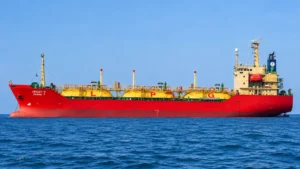
Parallel to the seismic work, GeoPartners is conducting a geophysical and geochemical study using the research vessel R/V GYRE, equipped to perform multibeam bathymetric surveys, seafloor sampling, and heat flow measurements.
Multibeam echosounder mapping enables the identification of depressions, faults, mud volcanoes, outcrops, and other geoforms associated with fluid migration from deep subsurface levels. Additionally, water column images may reveal anomalies consistent with natural hydrocarbon seeps.
Multidisciplinary integration reduces risk before drilling
The information obtained through seismic, marine geophysics, geochemistry, and thermal analysis will be integrated into a three-dimensional subsurface model that will enable reinterpretation of the basin-floor sedimentary fans present in the exploratory blocks.
These depositional systems constitute one of the primary exploration targets on West African transform margins due to their capacity to host high-quality reservoirs when favorable conditions of migration, sealing, and trapping coincide.
The Harper Basin joins an exploratory trend
BluEnergies and TotalEnergies have interest in the Harper Basin, which is part of the renewed exploratory momentum experienced by the African Atlantic margin following significant discoveries made in recent years in countries such as Ghana, Namibia, and Côte d’Ivoire.
These developments have confirmed the potential of deep turbidite systems associated with basin-floor fans, currently considered some of the most attractive targets for offshore exploration in the South Atlantic.
Source and photo: https://www.blu-energies.com/