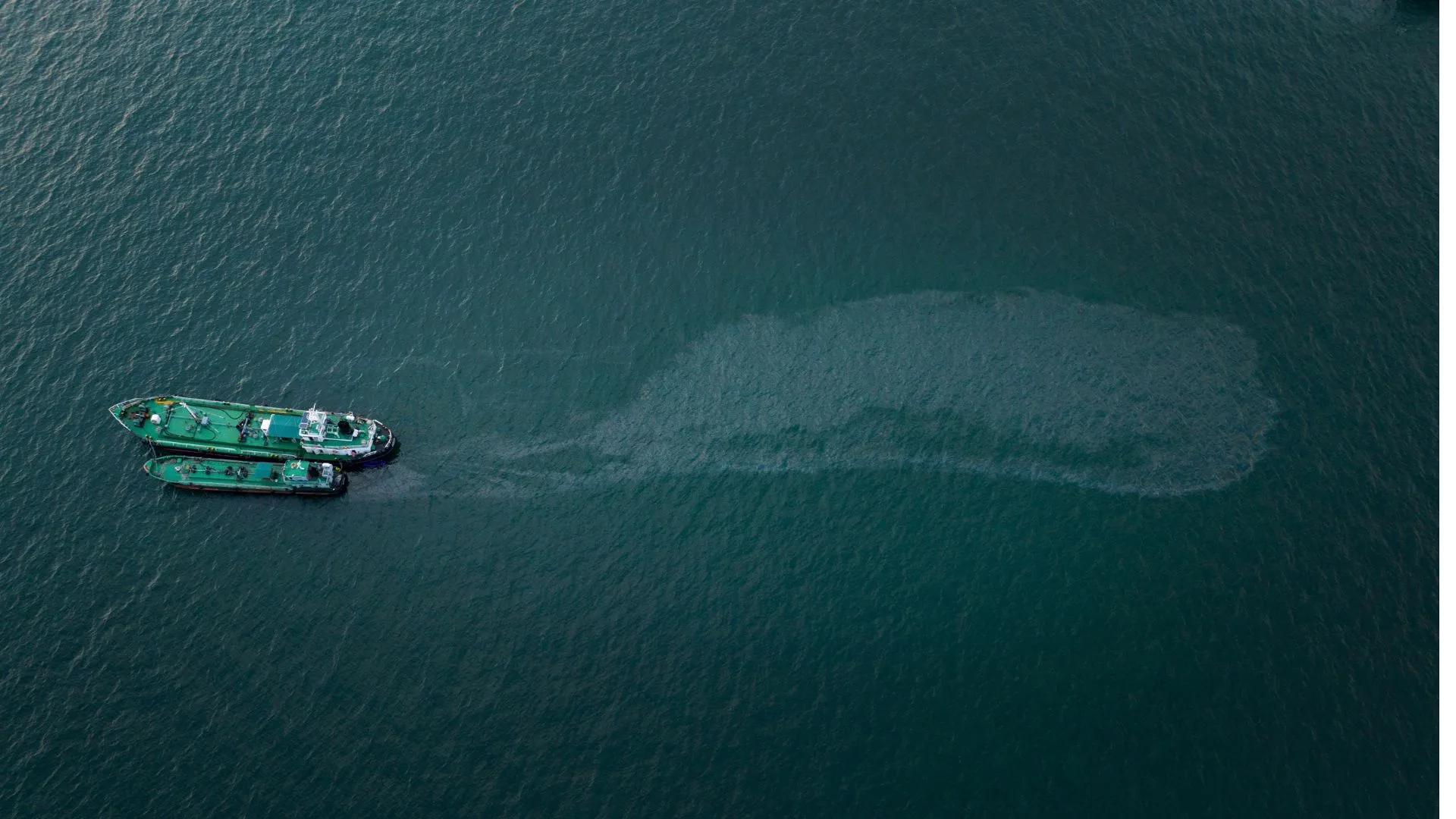
Bad weather and operational difficulties complicate the rescue efforts of oil tanker Caroline Bezengi and the containment of oil spill in Oman, which has affected a protected marine area and reached the coast of the sultanate.
In particular, adverse weather conditions and the characteristics of the location where the vessel remains grounded are complicating operations. The country is coordinating salvage efforts with the risk management company Ambrey while work continues to limit environmental damage.
According to the estimates cited regarding the incident, the oil slick could extend up to about 2.000 km² however, the Omani government’s environmental agency officially estimated an area of 400 km² on August 10th and has not yet released an update.
Bad weather and shallow water complicate the rescue
For their part, Mohammed bin Abdullah al-Rawahi, Director General of Maritime Affairs at the Ministry of Transport, Communications and Technologies Oman’s Information Service explained that the monsoon is one of the main obstacles to the operation.
Furthermore, the Caroline Bezengi remains in an area of shallow waters and rocky bottom, these characteristics increase the risks for the vessels and equipment involved in the rescue operations.
Omani authorities have also noted significant damage to the tanker itself, a large section of one side is flooded, adding technical complexity to any attempt to recover or stabilize the vessel.
Furthermore, the existing conditions create operational and navigational risks for the teams deployed in the area.
Oil spill reaches nature reserve in Oman
As operations progress, the Russian oil spill it has spread around a marine nature reserve and has reached the Omani coast.
The Caroline Bezengi ran aground June 30 near a protected area that is home to species such as humpback whales and Socotra cormorants. Therefore, the containment and cleanup efforts also have a particularly sensitive environmental component.
The origin of the spill is believed to be related to the damage suffered by the oil tanker after an attack on the vessel in June, the circumstances of which have not been explained.
The full extent of the marine pollution remains unclear due to differing estimates. While some assessments place the affected area at around 2,000 km², the latest official calculation by the Omani government was considerably lower.
Caroline Bezengi was transporting about 800,000 barrels of Russian crude oil
In addition, the tanker was carrying approximately 800,000 barrels of Russian oil when it ran aground.
The ship had loaded crude oil in April in Novorossiysk, a Russian port located on the Black Sea, subsequently passed through the Suez Canal at the end of May before continuing its journey to the region.
Built in 2001, the Caroline Bezengi is part of the so-called floats in the Russian shadow, made up of old oil tankers used to transport hydrocarbons and which operate outside much of the traditional Western insurance structures.
The vessel is subject to sanctions from the European Union, the United Kingdom, Canada, Switzerland, and Ukraine.
For now, authorities in Oman and Ambrey continue working on salvaging the tanker and containing the spill. The monsoon, the rocky seabed, and the vessel’s structural damage are limiting the teams’ ability to operate safely.
Source: Reuters
Photo: Shutterstock