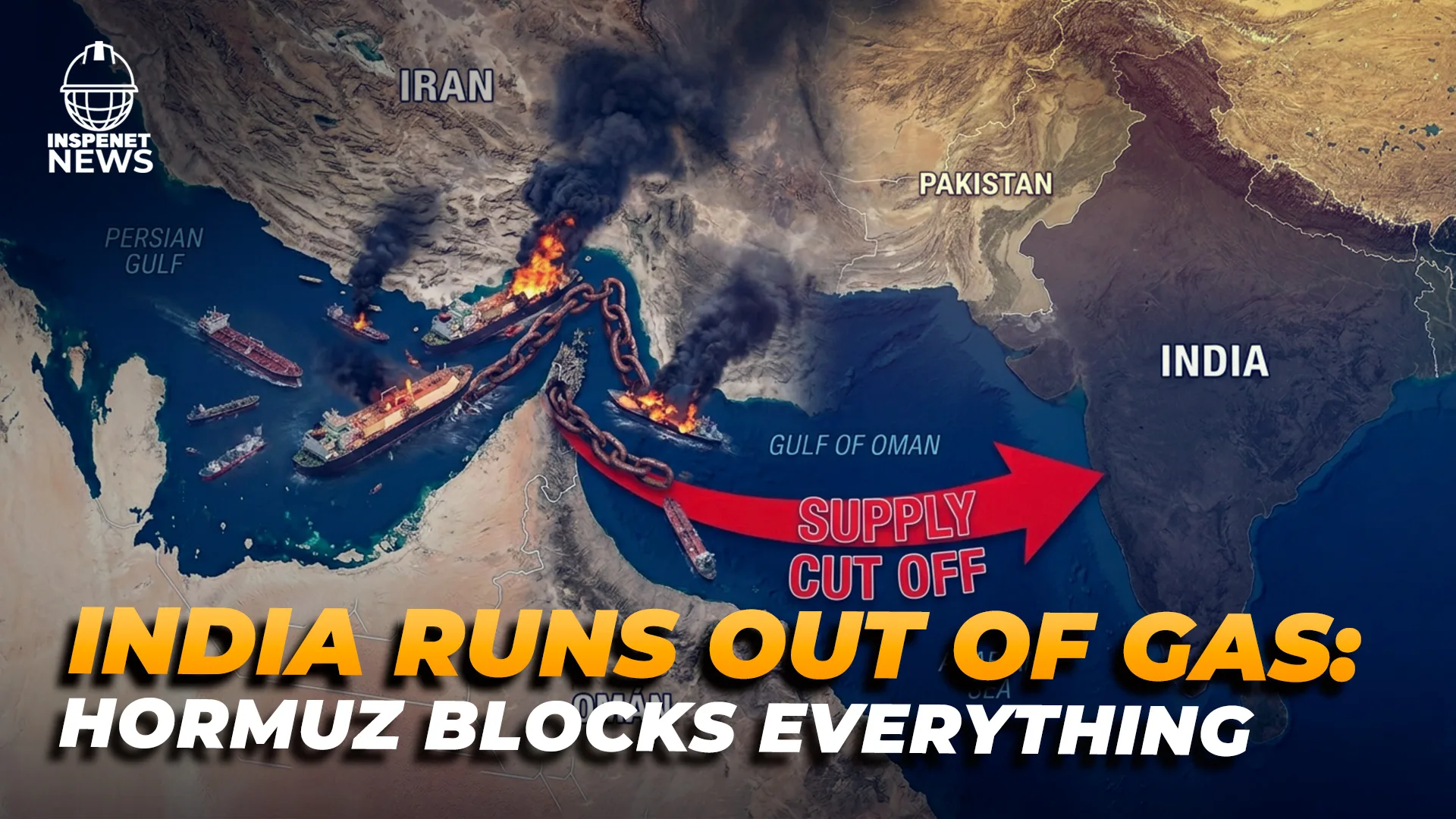
India faces a gas crisis that threatens to last for years
While millions of households rely on LPG to prepare their food every day, India is beginning to accept that the current cooking gas crisis will not be short-lived. Supply disruptions linked to the war in the Middle East and the blockade of strategic routes have created a scenario of prolonged pressure on one of the country’s most widely used fuels.
According to information provided by affected suppliers and cited by official sources, the recovery of the normal flow of liquefied petroleum gas could take between three and four years. That outlook rules out a rapid return to normal and forces the gas crisis to be viewed as a structural problem for household finances and for India’s energy policy.
A shortage already hitting households
The greatest impact falls on families; in India, a very large share of the population uses LPG as the main cooking fuel. When supply slows or becomes irregular, the consequences appear quickly: delays in cylinder deliveries, greater difficulty obtaining canisters, and direct pressure on household spending.
The situation becomes even more delicate in low-income segments and in densely populated urban areas, where continuous access to cooking gas is essential. In that context, any disruption in the logistics chain becomes a social problem with immediate effects on daily meals and quality of life.
The Strait of Hormuz worsens the gas crisis
At the same time, the geopolitical focus explains much of the problem: the Strait of Hormuz remains a key route for India’s energy imports, and a very large share of the LPG reaching the country passes through it. When that gateway narrows or comes under military pressure, India’s supply is exposed almost automatically.
That is why the war in the Middle East has had a far deeper effect than a simple commercial delay. Regional tension has left cargoes stranded and made logistics more expensive at a time when India already has a strong dependence on external sources to sustain its energy consumption. The current gas crisis therefore offers a clear picture: the country can feel in its kitchens a conflict occurring thousands of kilometres away.
Qatar and external dependence increase the pressure
Dependence on Qatar increases the system’s vulnerability; this Gulf country holds a prominent position as a supplier of LNG and LPG to India. When a significant portion of that supply is damaged or reduced, the ability to replace volumes quickly shrinks drastically.
In fact, warnings about damage to production facilities and long repair timelines add further pressure to the market. If supply sources take years to return to normal operations, India’s gas crisis could last longer than consumers, distributors, and authorities expected just a few weeks ago.
The government tries to protect household consumption
In this scenario, the Indian government has begun taking steps to sustain household supply. One measure involves cutting or adjusting supply destined for commercial establishments and industries in order to prioritise domestic consumption.
Authorities are also pushing the expansion of urban gas networks and seeking to enable more users to rely on alternatives to the traditional LPG cylinder. This response shows that the issue is no longer being treated as an isolated incident, but as a strain that requires reallocating resources and accelerating changes in energy infrastructure.
Businesses and industries also enter the equation
Meanwhile, the pressure is not limited to homes; it also affects restaurants, small businesses, and industries that depend on LPG, which are also feeling the supply adjustment. When the state prioritises household use, other sectors must adapt to lower availability or higher costs to keep operating.
This can translate into a broader chain of effects: slower production, higher operating expenses, and more pressure on final prices. The gas crisis then ceases to be a domestic matter and becomes a factor capable of disrupting the economic rhythm of various urban activities.
India accelerates the search for alternatives
Faced with this pressure, the country is trying to gain room with solutions that reduce dependence on imported LPG. Expanding piped gas in cities is emerging as one of the clearest options. There is also growing momentum for alternatives that allow cooking without relying exclusively on traditional cylinders.
However, these changes are not implemented overnight; expanding infrastructure, changing consumption habits, and ensuring sufficient coverage require time, investment, and coordination. That is why the transition may soften part of the blow, but it will hardly resolve the immediate shortage on its own.
A crisis that exposes energy fragility
Ultimately, the gas crisis in India reveals a structural weakness: the country’s energy security remains too tied to sensitive international corridors and specific suppliers. When that external network fails, the impact reaches households quickly and forces emergency measures.
Thus, the debate is no longer only about when normal supply will return; it is also about how India should reorganise its energy strategy to reduce future risks. The lesson of this gas crisis is clear: relying on routes strained by regional conflicts can turn an external problem into daily pressure on millions of kitchens.
For now, the forecast of several years for recovery leaves little room for immediate relief. India faces a period in which LPG will remain under scrutiny, cooking gas will continue to be a concern, and authorities will have to balance social urgency, supply management, and the search for more stable alternatives.
Additional news of interest
Repsol accelerates its production in Venezuela
Repsol reached an agreement with the Venezuelan government and PDVSA that will allow it to regain operational control of the Petroquiriquire field and increase its crude oil production. The deal also establishes mechanisms to secure payments and strengthens working conditions in the country under a framework signed in recent years. The Spanish company has maintained a continuous presence in Venezuela since 1993 and is now seeking to strengthen its activity with its own technical and logistical support.
The company expects to raise its current output of around 45,000 barrels per day by 50% over the next year and to triple it within three years if conditions hold. The plan includes expanding operations in other fields and coordinating crude shipments with PDVSA. This move follows an authorisation from the United States government that allows companies such as Repsol to participate in energy operations in the country.
Europe looks to Canada for natural gas
European energy companies such as Uniper are exploring the purchase of Canadian liquefied natural gas, shipped via the Panama Canal, with the aim of diversifying supply. Interest is focused on the Ksi Lisims project, still at an early stage and whose construction would take several years. Despite higher logistics costs, major companies such as Shell and TotalEnergies have already signed long-term purchase agreements, demonstrating confidence in the project’s development.
Currently, Canadian infrastructure is geared toward exports to Asia, which complicates access for Europe. However, the international context has changed. Tensions in the Middle East and risks along key routes have led European buyers to seek more stable sources, even if they involve longer transit times. Canada is positioning itself as a reliable supplier with competitive prices compared with other markets.
Transocean adds a multimillion-dollar drilling contract
Transocean secured a new contract worth about $158 million for its Deepwater Asgard rig, which will operate in the Eastern Mediterranean. The agreement covers the drilling of five wells over approximately 390 days, with a start expected in late 2026. This project strengthens the company’s activity in ultra-deepwater, a segment where it concentrates much of its expertise.
The contract adds to other recent deals in regions such as Norway and Brazil, bringing new additions to its backlog to nearly $1.6 billion in just a few weeks. The company maintains one of the sector’s most advanced fleets, focused on complex operations and demanding environments, enabling it to secure large-scale projects globally.
Acciona strengthens clean energy in Italy
ACCIONA Energía signed agreements to supply 800 GWh of renewable energy to electricity-intensive industries in Italy, including steelmaker Acciaierie Venete. These contracts are part of the Energy Release 2.0 programme promoted by the Italian government, which seeks to connect industrial demand with new renewable generation. The scheme allows companies to access clean electricity at a stable price for three years.
As part of the agreement, the company will develop new renewable projects that will be linked to these long-term contracts. The model provides stability for both industrial customers and the developer by securing revenue and facilitating new investment. In addition, ACCIONA continues to expand its presence in the country with new solar projects in Sicily.