Zaffra and MB Energy create an eSAF supply chain in Europe
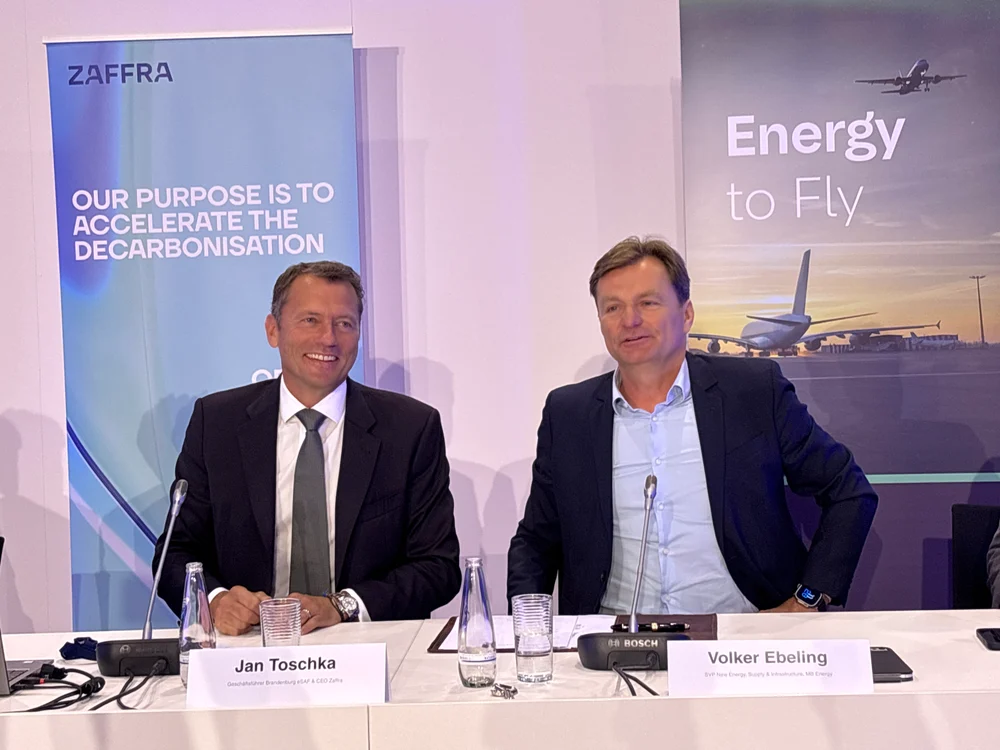
Zaffra and MB Energy have signed a memorandum of understanding to assess a strategic collaboration aimed at boosting the development of eSAF Europe , a market destined to play an increasingly important role in the energy transition of air transport.
The cooperation envisions the creation of a structure capable of connecting synthetic fuel production with the storage, logistics, blending, and distribution infrastructure necessary to supply airports and airlines on a large scale. In this way, both companies aim to facilitate access to new sources of aviation fuel with lower carbon emissions.
MB Energy will provide logistics to expand eSAF in Europe
On one hand, Zaffra brings its expertise in developing synthetic fuels for the aviation sector. On the other, MB Energy would contribute a well-established network of terminals, logistical capabilities, and a presence in key European aviation hubs.
Thanks to this combination, future eSAF production could more efficiently reach markets where demand for sustainable fuels continues to grow due to industry climate goals and European Union regulatory requirements.
In addition, MB Energy will act as a potential buyer of future volumes from the projects developed by Zaffra, an element that could strengthen the commercial viability of the facilities planned for the coming years.
Brandenburg eSAF will be the starting point of the collaboration
Initially, the collaboration will focus on the Brandenburg eSAF project, considered the largest production facility of this type of fuel in Germany.
The plant, jointly developed by Zaffra and ENERTRAG, will be located at the PCK refinery in Schwedt and is scheduled to produce more than 30,000 tons of eSAF annually from 2030.
According to its promoters' forecasts, this capacity would allow covering approximately a quarter of the eSAF obligations established for Germany within the ReFuelEU Aviation regulatory framework promoted by the European Union.
Green hydrogen emerges as a strategic element
Companies are also studying ways to ensure the supply of green hydrogen , an essential raw material for the manufacture of synthetic aviation fuels.
The possibility of using MB Energy's New Energy Gate infrastructure in Hamburg is among the options being considered to ensure the necessary supply for future production projects.
This integration would strengthen the entire eSAF value chain, from obtaining raw materials to the final delivery of fuel to customers in the aviation sector.
A boost for sustainable aviation and energy security
As the airline industry intensifies its efforts to reduce emissions, agreements of this kind seek to solve one of the sector's main challenges: having sufficient volumes of sustainable fuel that can be distributed efficiently.
In this context, the collaboration between both companies aims to promote the growth of sustainable aviation by developing a logistics network prepared to respond to the future demand for eSAF in Europe.
Furthermore, the project could generate economic activity related to infrastructure construction, industrial operations, transportation, and associated services. At the same time, it would contribute to diversifying the continent's available energy sources and strengthening the resilience of supply chains.
Technology aimed at reducing emissions from air transport
Zaffra bases its strategy on the patented G2L™ eFuels technology developed by its shareholders. This system transforms electricity from clean sources, water, and sustainably sourced carbon dioxide into certified synthetic fuel for aviation use.
The company maintains that this process allows for emission reductions of over 90% compared to conventional fuels currently used in aviation.
As regulatory demands and climate commitments in the sector increase, the alliance between Zaffra and MB Energy seeks to lay the foundations for a supply chain capable of supporting the growth of the European eSAF market over the coming decades.
News of additional interest
Naftogaz secures access to LNG until 2044
regasification capacity in Europe for the first time, following its participation in the allocation process for the Klaipėda terminal in Lithuania. The agreement will allow it to operate this facility between 2033 and 2044, along with other energy companies that also received capacity under the program managed by KN Energies.
The transaction strengthens Naftogaz's ability to plan its gas supply more predictably and expand its supply options. Until now, the company had carried out such activities through collaborations with international partners. This direct reservation gives it a greater presence in the global LNG market and expands the available routes for Ukraine's energy supply.
Sofia completes its 100 turbines in the North Sea
Cadeler has completed the installation of all 100 turbines at the Sofia offshore wind farm, a 1.4 GW project developed by RWE off the northeast coast of the UK. The company was responsible for the transport and assembly of the Siemens Gamesa SG 14-222 wind turbines, completing one of the most important phases of one of the world's largest single offshore wind farms.
The campaign was carried out by the vessel Wind Peak, which undertook its first commercial project after joining the Cadeler fleet in 2024. Designed to work with large turbines, the ship completed the installation of all the equipment after commencing operations from the port of Hull in March 2025. When fully operational, Sofia will have the capacity to supply electricity to approximately 1.2 million British homes for a year.
JERA receives its first shipment of LNG from Barossa
JERA received its first shipment of liquefied natural gas (LNG) from Australia's Barossa gas project in Japan. The shipment arrived at the Futtsu terminal aboard the vessel Sohshu Maru and marks the start of regular deliveries from this energy development, which began production in late 2025. The gas extracted from the Barossa offshore field is processed at the Darwin plant before being exported to various international markets.
Through its Australian subsidiary, JERA is participating in the project and will receive approximately 425,000 tons of LNG per year. The company considers this supply an important component of its energy diversification strategy, which also includes investments in other Australian projects such as Wheatstone and Scarborough. The aim is to strengthen a global portfolio capable of responding to market fluctuations and ensuring supply for Japan.
Sicily is moving forward with its first green hydrogen plant
Sicily has given the green light to the construction of its first plant dedicated exclusively to the production of green hydrogen . The project will be developed in the Giammoro industrial park, in the province of Messina, through a collaboration between Duferco Energia and Ansaldo Green Tech. The initiative is part of the Hydrogen Valley Giammoro program and aims to strengthen Italy's energy transition through the use of renewable fuels for industry and transportation.
The facility will feature a 1 MW electrolyzer powered by a 4 MW photovoltaic solar plant located on the same site. This configuration will allow for the production of approximately 100 tons of renewable hydrogen per year, using solar energy to separate water into hydrogen and oxygen. The infrastructure is designed to supply local industries and logistics operators, with the potential to expand its capacity in the future as demand grows.