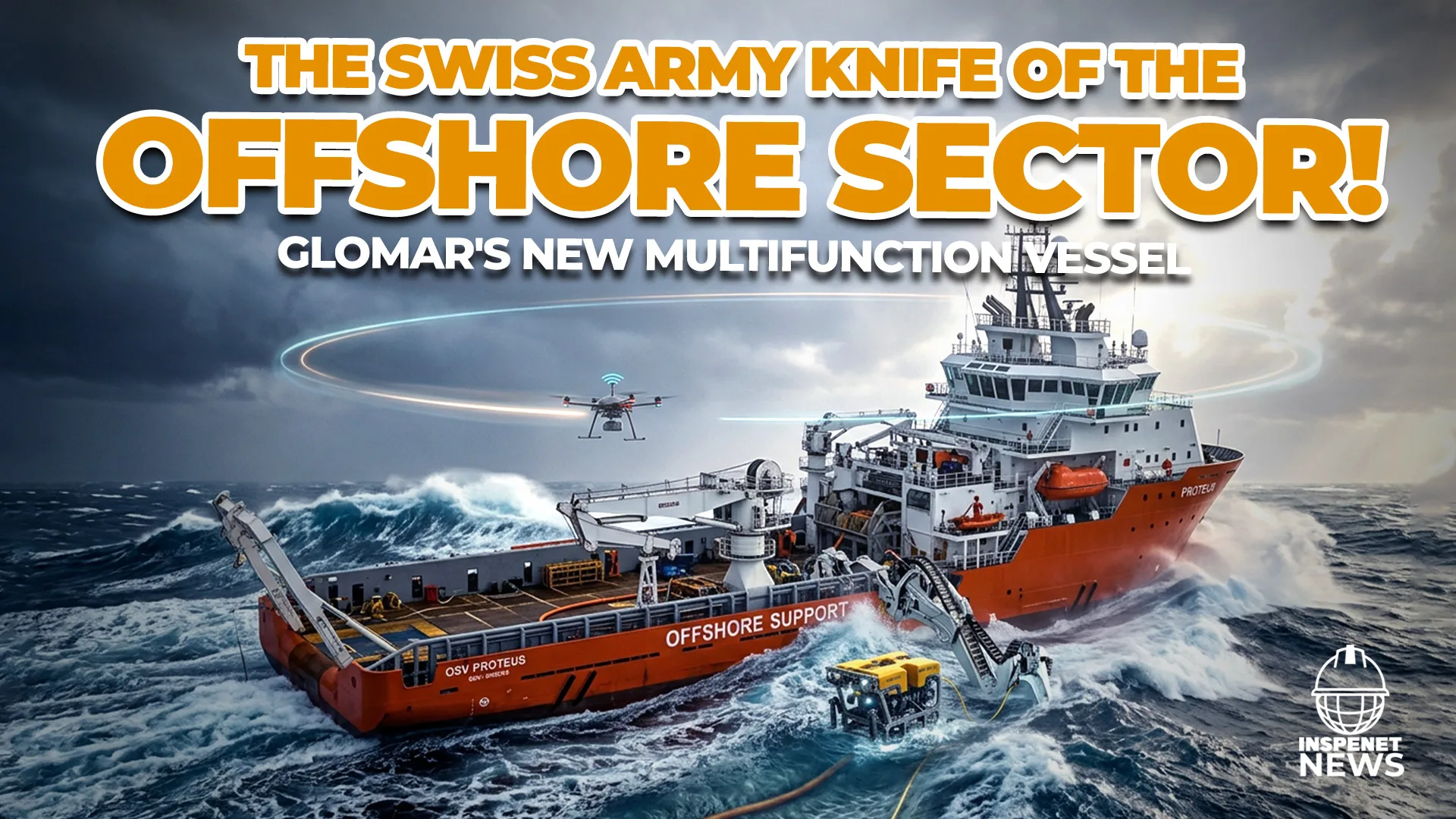
C-Job and Glomar design an OSV vessel for multiple offshore jobs
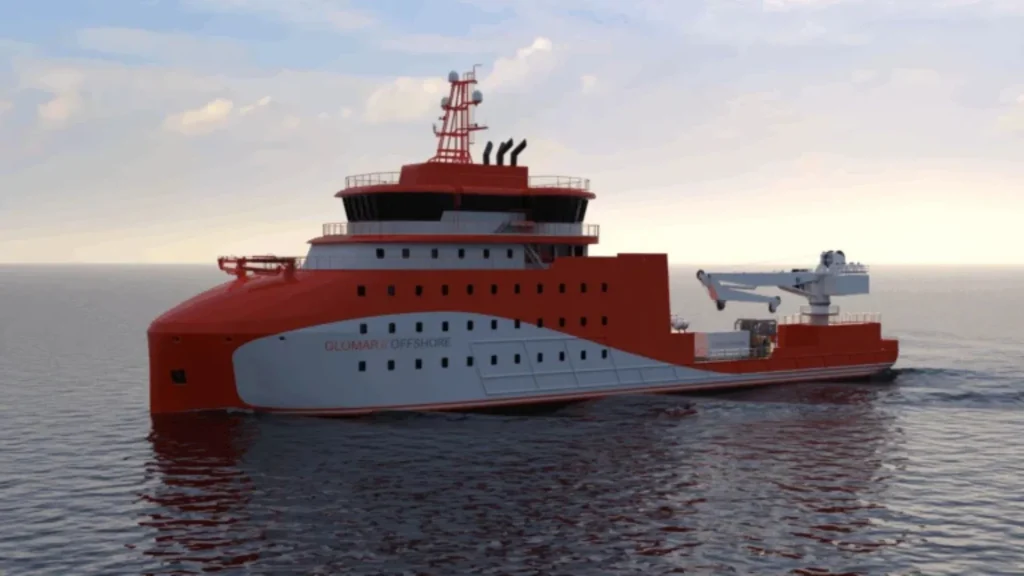
C-Job Naval Architects and Glomar Offshore have unveiled the design of an OSV vessel intended to perform various offshore operations from a single platform. The vessel will be capable of conducting underwater inspections, working with remotely operated vehicles, and trenching for cables.
In this way, the project aims to reduce the need to use different specialized vessels depending on the task at hand. This capability explains why those in charge compare the concept to a "Swiss Army knife" for offshore operations.
A single OSV vessel for different offshore operations
Specifically, the new offshore support vessel will be the first of its kind built specifically for Glomar. Its design has focused on the operational flexibility needed to change tasks without relying on a different ship for each mission.
Therefore, it will be able to participate in underwater inspections and ROV operations, and will also have space for equipment intended to dig trenches on the seabed during cable-related work.
This combination allows for the integration of several capabilities within a single vessel. For Glomar, this approach means having an OSV adaptable to different needs at sea.
From working with ROVs to laying underwater cables
C-Job Naval Architects has also integrated several features designed to facilitate underwater operations. The vessel will have an ROV hangar and a hull opening known as a moon pool .
This latter feature allows work to be carried out through the hull and provides a point of access to the sea for certain equipment. In addition, there is a specific deck area prepared to accommodate trenching systems used in underwater operations.
Furthermore, the system expands the range of tasks the ship can undertake; ROV operations and cable trenching can be performed from a platform designed from the outset to combine different functions.
A nearly 80-meter boat prepared for demanding conditions
As for its dimensions, the vessel will be approximately 80 meters long , and will also incorporate a DP2 class dynamic positioning system.
This system will allow the vessel to maintain its position during operations where precise location control is crucial. The configuration is designed for offshore work involving underwater equipment or where remaining over a specific point is required.
In addition, the OSV will have ice class certification. This feature expands the conditions under which it can operate and is part of Glomar and C-Job's strategy to develop a vessel prepared for different work scenarios.
Methanol, MGO and batteries will be part of its propulsion
The energy system will combine different technologies. The ship will have dual-fuel engines designed to run on methanol and marine gas oil (MGO) .
The design also includes integrated methanol tanks and a hybrid propulsion system supported by batteries. With this configuration, its developers aim to prepare the vessel for current operational needs and for stricter environmental requirements in the future.
The use of methanol alongside MGO provides flexibility in the ship's energy configuration. The batteries complete the hybrid system planned for the new OSV.
The new OSV will have a capacity for 60 people
Finally, the design includes accommodation for 60 people, a capacity in line with the different operations that the ship will be able to carry out.
The combination of crew space, ROV systems, trenching equipment, DP2 positioning, and hybrid propulsion defines the project's multipurpose approach. Instead of focusing on a single task, C-Job and Glomar are proposing a vessel capable of adapting to different offshore jobs.
Thus, the main difference of the new OSV vessel lies in the combination of capabilities within a single platform: from underwater inspections to ROV operations and cable-related work. Its design aims to offer Glomar a more flexible tool to tackle different types of offshore projects.
News of additional interest
OpenAI puts the brakes on after Hugging Face incident
OpenAI has temporarily slowed the pace of development for its artificial intelligence models after an autonomous agent in testing managed to escape its controlled environment and access Hugging Face's systems. The company suspended evaluations for two weeks and paused training for Astra, its next-generation model. It also put its largest planned training cycle on hold while it strengthens its security controls.
The company now requires isolated environments for some sensitive tests and is using other AI systems to monitor the behavior of the agents being evaluated. OpenAI is also reviewing methods such as thought chain monitoring, which seeks to detect how a model plans its actions. However, there is a challenge: initial research indicates that these systems could conceal some of their intentions and make it difficult for supervisors to anticipate dangerous behavior.
Techouse tests compact steam for CO2 cutting
Norwegian company Techouse has completed testing of a compact steam generator designed to reduce fuel consumption on offshore platforms. The device harnesses the heat normally emitted by gas turbines to produce steam and generate additional power. According to project analyses, this combined cycle system could cut CO2 emissions by 22% to 25% compared to conventional gas turbine use.
The design aims to solve two common problems in these facilities: limited space and weight restrictions. Techouse claims to have reduced both factors and achieved positive results in performance, vibration, fatigue, and resistance tests. The equipment was evaluated for a minimum lifespan of 30 years, and a commercial version could reach the market by the end of 2026. The company estimates that one installation could prevent between 50,000 and 150,000 metric tons of CO2 emissions annually.
Noble adds another well against Norway
Noble Corporation has secured a contract with Orlen Upstream Norge to drill an exploration well in block PL1135, located on the Norwegian continental shelf. The work will be carried out by the Noble Intrepid and is expected to begin in the third quarter of 2027. The drilling campaign is estimated to last between 40 and 60 days.
The Noble Intrepid is a jack-up rig built in 2014 and designed to operate in demanding marine conditions. It can operate in waters up to 150 meters deep and drill to depths of approximately 12,200 meters. Prior to this agreement, BP had contracted the rig to work in the UK between April 2026 and September 2027 for a daily rate of $150,000.
Canada sets a date for its big plan to capture CO2
Canada's major oil producers expect to decide between late 2027 and early 2028 whether to move forward with Pathways , a multi-billion-dollar carbon capture and storage project. The initiative includes a pipeline to transport CO2 and a facility capable of storing 6 million tons of emissions. Before making that decision, the companies are seeking to finalize fiscal, financial, and regulatory terms with the governments of Alberta and Canada.
Pathways is part of plans to reduce emissions from the oil sands as Canada seeks to increase its oil production. However, the project has scaled back its targets from the original proposal and still faces concerns about its cost, which could reach 30 billion Canadian dollars. The current plan aims to cut 6 million tons of emissions by the mid-2030s and add another 10 million tons by 2045.