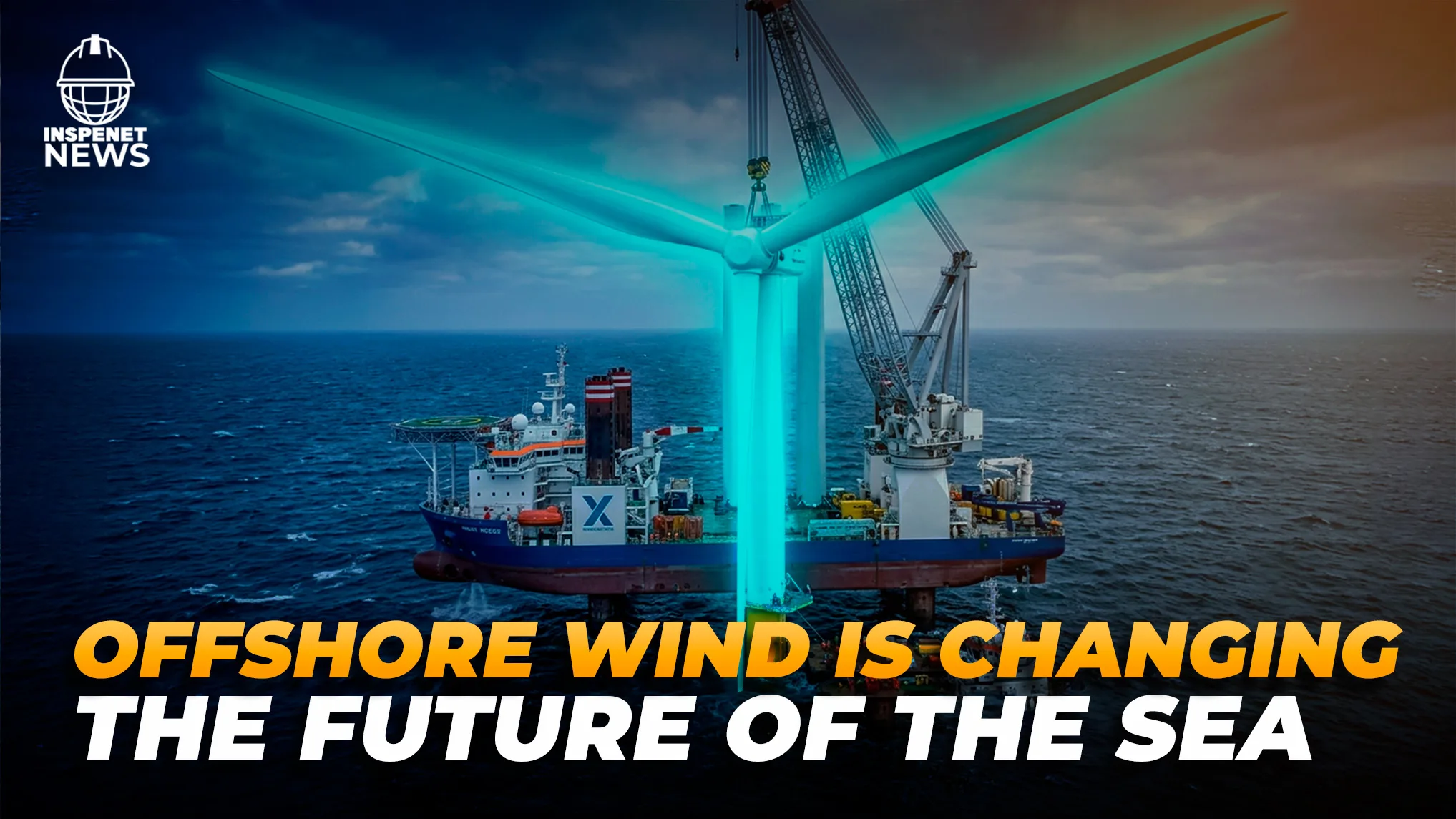
ASYM R&P technology increases the capacity of wind turbine vessels
As offshore wind turbines increase in size and projects move into deeper waters, installation vessel operators face new challenges related to cargo capacity, operational efficiency, and implementation costs. This scenario has driven the search for technologies capable of improving vessel performance without increasing structural complexity.
In this context, GustoMSC , NOV's offshore design and engineering division, presented ASYM R&P Technology , a solution designed to expand the lifting capacity of next-generation vessels intended for the installation of offshore wind farms.
What is ASYM R&P Technology?
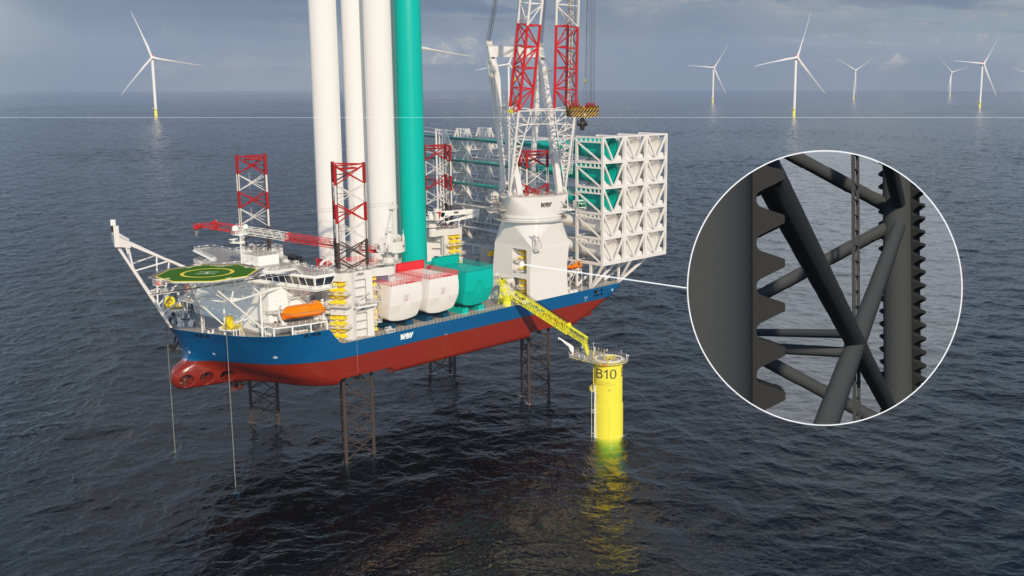
ASYM R&P Technology introduces a different approach to load management within rack and pinion systems used in offshore vessel lifting mechanisms.
The solution is based on an asymmetrical configuration that optimizes the distribution of stress within the existing architecture. Thanks to this design, it is possible to utilize the available structural capacity more efficiently without modifying the space occupied by the system or resorting to larger components.
Furthermore, the technology leverages decades of experience accumulated by GustoMSC in the development of lifting systems for platforms and vessels specializing in offshore operations.
Greater capacity without increasing size or weight
Traditionally, increasing a ship's lifting capacity meant installing larger equipment or adding extra weight to the structure. However, GustoMSC 's new proposal seeks to break with that approach through internal design optimization.
According to the company, ASYM R&P Technology allows for increased system performance while maintaining the same vessel platform. This offers significant advantages for shipowners and operators who need to adapt to the growing demand for transporting and installing increasingly heavy components.
Furthermore, reducing structural modifications can help maintain operational efficiency and simplify the design and construction processes for new vessels.
A response to the evolution of offshore wind energy
offshore wind energy sector is undergoing a period of expansion driven by more powerful wind turbines and larger-scale projects. As a result, installation vessels must be able to handle larger towers, blades, and components without impacting project timelines.
GustoMSC emphasizes that the technology was developed to respond to this market evolution and facilitate the adaptation of fleets to the requirements of future offshore wind farms .
The company believes that increased lifting capacity can help improve operational efficiency and contribute to reducing the levelized cost of energy, one of the industry's main objectives.
Preparing for the next generation of offshore projects
As developers move towards projects located in more demanding environments, the technical requirements of offshore wind vessels continue to increase. In this scenario, solutions that improve performance without increasing vessel size are becoming increasingly important.
Therefore, ASYM R&P Technology represents a commitment by NOV and GustoMSC to offer practical tools for the next stage of offshore development. With greater lifting capacity within the same platform, operators will have more flexibility to execute projects linked to the global expansion of offshore wind energy.
News of additional interest
Siemens Energy strengthens its networks business with Camlin
Siemens Energy reached an agreement to acquire Camlin Group , a Northern Irish company specializing in monitoring, analytics, and digitization technologies for electricity grids. Although the financial terms were not disclosed, both companies expect to complete the transaction before the end of 2026, pending regulatory approvals.
Camlin has approximately 650 employees and a presence in Europe, North America, Asia, and Australia. Its business focuses on solutions that enable real-time monitoring of the status of electrical grids using sensors, data analytics, and software tools. With this acquisition, Siemens Energy will expand its technology offering at a time when utilities are facing increasing pressure to modernize aging infrastructure and manage greater integration of renewable energy.
NYK tests the continued use of pure biofuel
Japanese shipping company NYK has launched a year-long pilot program to operate one of its car carriers using 100% biofuel (B100). The goal is to analyze the fuel's performance under real-world sailing conditions and assess its impact on engines, fueling systems, and operating procedures over an extended period.
The company had already conducted previous tests with biofuel blends such as B24 and B30, but the continuous use of B100 remains uncommon in the maritime industry. One of the main aspects to be studied is the fuel's stability, as this type of biofuel can be affected by factors such as oxygen, light, and heat. The data collected will allow the company to strengthen its technical knowledge regarding the safe use of high-purity fuels.
Absheron aims to bolster gas supplies in Turkey
SOCAR, TotalEnergies , ADNOC International, and the Turkish company BOTAS signed a natural gas purchase agreement related to the second phase of development of the Absheron field , located in Azerbaijan. The agreement was signed during Baku Energy Week and marks a new step forward for one of the country's major gas projects.
The companies expect to make their final investment decision before the end of the year. If the project progresses as planned, production will begin in 2029 and will exceed 4 billion cubic meters annually. According to information from SOCAR, approximately half of that volume would be destined for the Turkish market through the agreement reached with BOTAS.
Weatherford expands its reach with the acquisition of NCS
Weatherford announced a definitive agreement to acquire NCS Multistage , a company specializing in well completion technologies and oil and gas field development. The transaction will allow NCS shareholders to receive Weatherford stock or a combination of stock and cash. The company also expects to generate at least $15 million in annual synergies within 18 months of the transaction closing, which is anticipated in the second half of 2026.
NCS Multistage offers a portfolio of solutions focused on improving well performance and reliability, particularly in complex operations and unconventional resources. With this acquisition, Weatherford seeks to strengthen its presence in the well completion segment and expand the tools it offers its customers to optimize production and manage energy assets throughout their lifecycle.