Africa Energy reveals Indaba 2027 date in South Africa
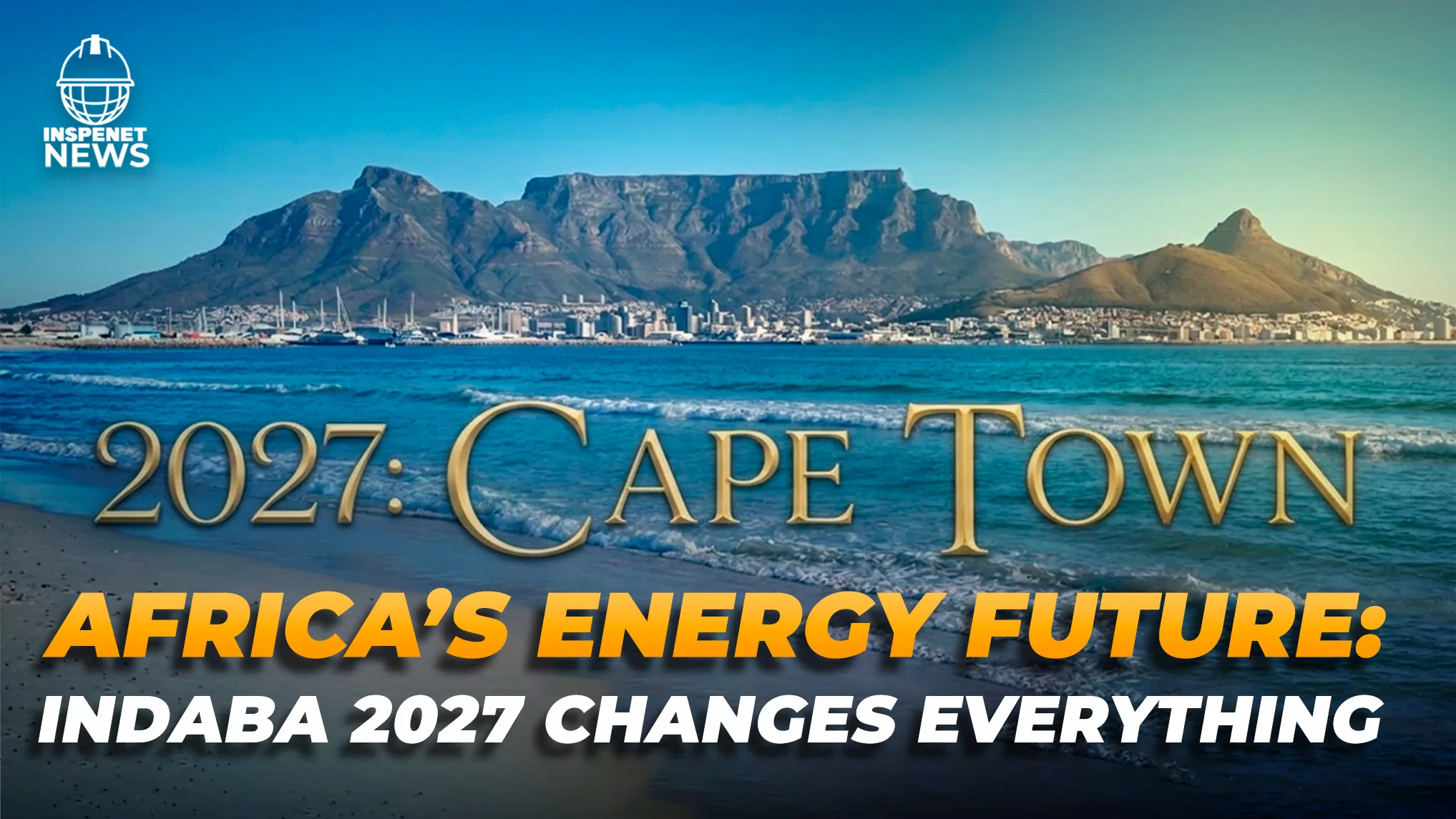
The Africa Energy Indaba has confirmed that its 2027 edition will take place from March 2 to 4 at the Cape Town International Convention Centre (CTICC) in South Africa. This announcement reinforces the continuity of one of the most influential gatherings in the African energy sector.
Furthermore, the selection of Cape Town consolidates its role as one of the continent's leading hubs for energy conferences.
The role of Indaba in Africa's Energy development
Moreover, the Africa Energy Indaba has positioned itself as a strategic platform where governments, investors, and industry companies converge. Its primary objective is to drive the growth of the African energy market through concrete agreements and policies.
In this context, the energy event acts as a catalyst to accelerate projects that respond to Africa's growing electricity demand.
Key stakeholders participating in the event
Likewise, the 2027 edition will bring together a wide variety of participants, including:
- Government representatives and regulators
- Utility companies and independent power producers
- Investors and financial institutions
- Energy technology providers
This diversity enables synergies that facilitate the development of large-scale energy solutions.
Energy priorities for 2027 in Africa
Similarly, the event program will focus on several strategic pillars that will shape the sector's direction:
Investment in energy infrastructure
In particular, efforts will focus on mobilizing capital toward projects that improve power generation and distribution capacity in the region.
Renewable energy and energy transition
Additionally, renewable energy will play a central role, with special attention to sustainable solutions that reduce dependence on traditional sources.
Power grids and regional trade
The strengthening of power grids and integration among countries will also be promoted to facilitate cross-border energy trade.
New technologies and power generation
Finally, alternatives such as gas, nuclear energy, and other emerging technologies that can complement Africa's energy matrix will be analyzed.
Impact of the 2026 edition on the event's momentum
It is worth noting that the previous edition featured participation from high-level political and business leaders, which reinforced the event's relevance within the international landscape.
Building on this momentum, Africa Energy Indaba 2027 seeks to expand its reach and consolidate new investment opportunities.
What to expect from Africa Energy Indaba 2027?
Consequently, the upcoming edition aims to strengthen strategic alliances and promote viable projects that contribute to the continent's energy development.
At the same time, the event will continue to promote dialogue among key sector stakeholders to address structural challenges.
Relevance of Indaba 2027 for energy in Africa
Finally, the Africa Energy Indaba represents a critical meeting point for defining the direction of the energy sector in Africa. Its focus on investment, cooperation, and renewable energy makes it a significant component within the global landscape.

Additional news of interest
ForTest launches advanced leak detection equipment
The Italian company ForTest introduced the K Series, a new line of equipment designed to detect air leaks in industrial processes. The range includes seven models adapted to different environments such as automotive, biomedical, and aerospace. These devices enable non-destructive testing of components and ensure comprehensive quality controls in production. Additionally, they incorporate advanced connectivity and access to a cloud platform for centralizing and analyzing data.
The equipment stands out for its integration with modern industrial systems through multiple connectivity options such as Ethernet, WiFi, and industrial protocols. They also offer different measurement methods to adapt to each requirement and reduce maintenance by eliminating mechanical parts susceptible to wear. Their compact design in some models facilitates use in automated lines, while others are designed for more complex operations.
Libya accelerates oil exploration in Barqa
The National Oil Corporation of Libya initiated a technical workshop in Cairo focused on evaluating the oil potential of the Barqa plateau and surrounding areas. The meeting, organized by AGOCO, brings together local and international experts along with industry companies to analyze opportunities in the Cyrenaica basin, a region considered promising due to its geological wealth.
The event seeks to strengthen cooperation among specialists and improve exploration processes through knowledge exchange. It is also part of a broader strategy to activate research and development in the energy sector, with support from institutions and regional partners such as the Egyptian General Petroleum Corporation.
Germany advances with mega energy battery
Uniper and NGEN began construction of a 50-megawatt battery energy storage facility in Wilhelmshaven, Germany. The project will be located at a former power plant and aims to strengthen the electrical system through storage of energy generated by renewable sources. The facility is expected to become operational by the end of 2026 and contribute to improving supply stability.
The system will compensate for variations in wind and solar energy, facilitating their integration into the grid. It is also part of a broader plan to transform this area into an energy hub focused on clean technologies and new infrastructure such as hydrogen. The initiative also aims to reduce costs by preventing energy losses and optimizing its use during periods of high demand.
EPA approves PureField's carbon capture
PureField Ingredients received approval from the United States Environmental Protection Agency to begin underground CO2 storage in Kansas. This permit will enable the company to capture emissions generated in its ethanol and food production, integrating a system that leverages wheat to obtain food ingredients, biofuels, and carbon capture in a single process.
The model seeks to maximize the use of each resource by converting by-products into new sources of value while significantly reducing the carbon footprint. Additionally, the company projects strengthening local agricultural demand by utilizing millions of tons of wheat and sorghum, while promoting domestic production of ingredients and fuels with lower emissions.