Table of Contents
- Failures that most affect wind turbine gearboxes
- Lubrication: The variable that determines service life
- How to anticipate damage through predictive monitoring
- Vibration, oil, and wear particles
- Early detection to maintenance decisions
- Recommendations for operators
- Conclusion
- References
- Frequently Asked Questions (FAQs)
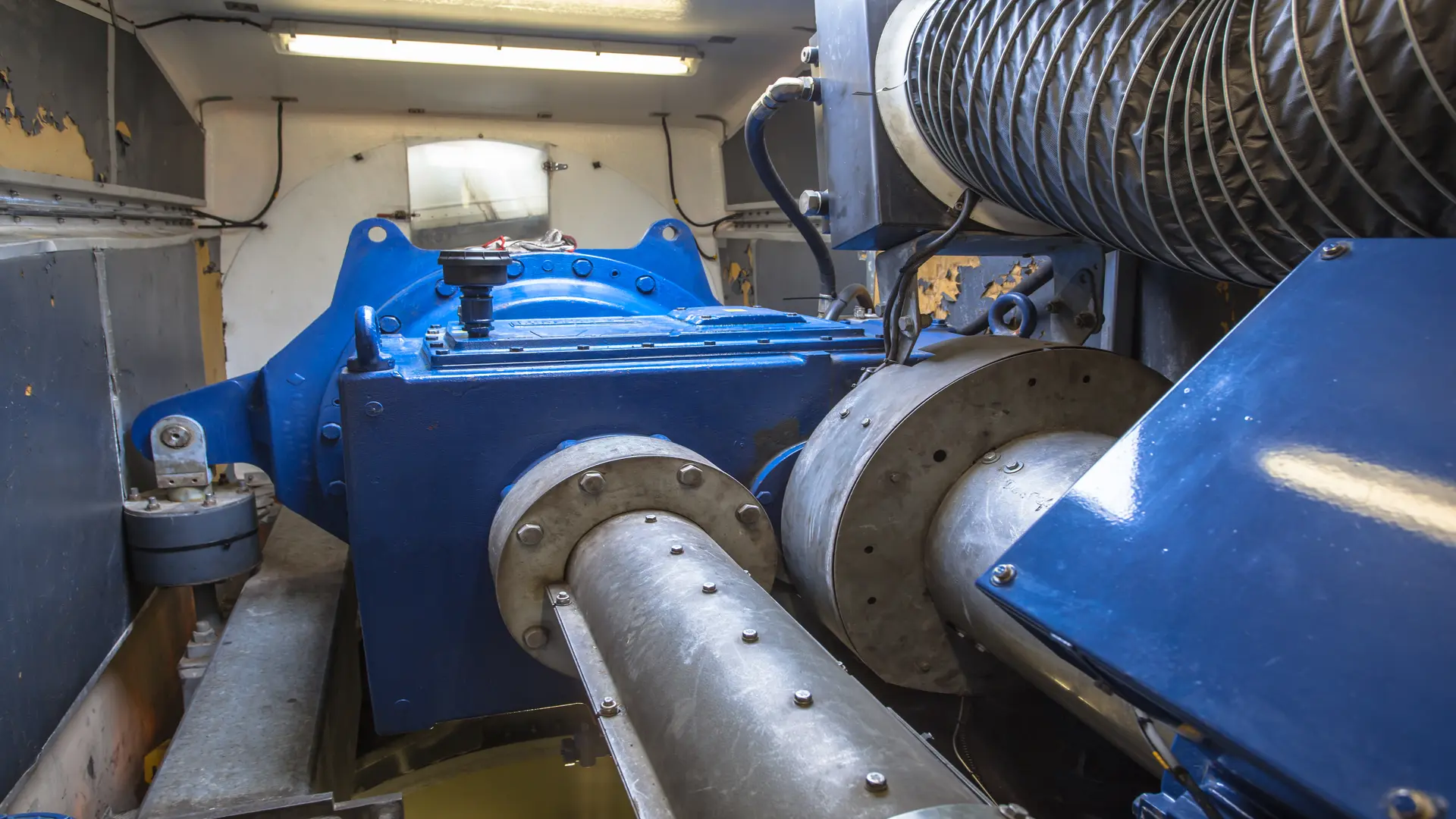
The gearbox of wind turbines continues to be one of the components with the highest technical complexity, and most prone to failure, in modern wind energy systems. Despite advances in design and materials, gearbox reliability remains a challenge for operators, especially under variable loads, transient conditions, and harsh environments.
For engineers in the wind sector, understanding the interaction between lubrication, failure mechanisms, and predictive monitoring is no longer optional, but rather forms the basis of asset integrity and operational profitability.
This article provides a technical perspective on how to anticipate, diagnose, and mitigate gearbox failures through advanced condition monitoring strategies.
Wind turbine gearboxes operate under complex dynamic loads, including torque reversals, misalignments, and variable wind conditions. These stress factors give rise to specific failure modes in the gear train and bearings.
One of the most common issues is bearing deterioration, especially on high-speed shafts and intermediate shafts. White etching cracks (WEC), micropitting, and axial cracks are frequently observed, often associated with transient loads and electrical discharge phenomena.
Failures that most affect wind turbine gearboxes
Gear-related failures include tooth root cracking, scuffing, and macropitting. These are usually caused by inadequate lubricant films, contamination, or improper load distribution between gear teeth. In addition, misalignment and structural deformation of the nacelle can amplify these stresses.
Understanding these failure modes is essential, since they rarely occur in isolation. On the contrary, they evolve as a chain reaction, initiated by lubrication breakdown or contamination and accelerated by mechanical stress.
Lubrication: The variable that determines service life
Lubrication could be considered the factor that most influences gearbox service life. It directly affects friction, wear, heat dissipation, and corrosion protection.
Wind turbine gearboxes depend on high-performance synthetic oils with extreme pressure (EP) additives. These lubricants must maintain viscosity stability over wide temperature ranges while resisting oxidation and degradation during extended service intervals.
However, lubricant contamination control is where most systems fail. The presence of water, dust, or metallic particles significantly reduces lubricant effectiveness. Even small amounts of water can cause hydrogen embrittlement in bearings, accelerating crack formation.
Another important parameter is film thickness, which depends on viscosity and operating conditions. If the lubricant film enters boundary lubrication regimes, direct metal-to-metal contact occurs, drastically increasing wear rates.
In practice, effective lubrication management includes filtration systems, desiccant breathers, and periodic oil replacement strategies supported by continuous monitoring.
How to anticipate damage through predictive monitoring
Predictive monitoring transforms gearbox maintenance from reactive to proactive. Instead of reacting to failures, engineers can detect deterioration at an early stage and intervene before catastrophic damage occurs.
This article focuses on condition-based monitoring (CBM), which integrates several data sources:
- Vibration monitoring
- Oil analysis
- Wear particle detection
Each technique offers a different perspective on gearbox condition, and their combined interpretation provides a complete diagnostic picture.
For example, vibration analysis can detect early-stage bearing defects through characteristic frequency signatures, while oil analysis identifies chemical degradation and contamination levels.
The real value lies in trend analysis, which tracks parameter evolution over time to detect anomalies before they exceed critical thresholds.
Vibration, oil, and wear particles
A robust predictive monitoring strategy is based on the synergy between three key diagnostic tools:
- Vibration monitoring: This technique detects mechanical faults such as imbalance, misalignment, and bearing defects. Advanced signal processing (FFT, envelope analysis) makes it possible to identify specific failure frequencies of gearbox components.
- Oil analysis: Oil analysis provides information on the real condition of the gear system. Parameters such as viscosity, acidity (TAN), water content, and additive depletion reveal lubricant condition and contamination levels.
- Wear particles: Evaluation of wear debris is essential for early wear detection. Techniques such as ferrography and particle counting make it possible to identify the type, size, and morphology of metallic particles, linking them to specific failure modes (for example, fatigue versus abrasive wear).
When these three methods are integrated, a predictive framework is created capable of identifying both root causes and the rate of failure progression.
Early detection to maintenance decisions
Detecting a problem is only half the journey; the real challenge lies in translating data into actionable maintenance decisions. For example, an increase in vibration amplitude together with a rise in ferrous particles in oil analysis may indicate bearing spalling. The decision then becomes whether to continue operation under supervision or schedule an immediate shutdown.
The integration of predictive analytics and digital twins allows gearbox behavior to be simulated under different conditions. Engineers can assess risk scenarios and optimize maintenance schedules. Ultimately, the objective is to move from time-based maintenance to risk-based and condition-driven strategies, reducing downtime and maximizing component life.

Recommendations for operators
- The reliability data has great value from the earliest stages of wind farm development and constitutes a key operational factor throughout their entire service life.
- Ensure that access to reliability data and required supporting data is considered in negotiations with developers, OEMs, suppliers, and service providers.
- Assign all wind asset components and maintenance activities to one of the designation systems identified in your case study. This will improve both consistency and integrity of reliability data across the organization and at supply chain interfaces.
- Align operational states with those specified in IEC 61400-26 1/2, the standard for time-based and production-based availability assessment of wind turbines.
- All personnel directly or indirectly involved in producing, collecting, and analyzing reliability metrics should receive training on the strategic importance of reliability data and be empowered to improve related processes and practices.
- Wind farm operators should participate in external industry-level sharing of reliability and performance data. This will help harmonize data collection methodologies, drive organizational improvements, and obtain statistically significant datasets for reliability analyses.
Conclusion
The gearbox is a critical component in wind turbines, whose reliability depends on proper lubrication, contamination control, and continuous monitoring to reduce premature failures and operating costs. The integration of predictive techniques such as vibration, oil, and wear particle analysis makes it possible to anticipate damage, optimize maintenance, and extend gearbox service life.
References
- American Gear Manufacturers Association. (2015). AGMA 6006-B20: Standard for design and specification of enclosed gear drives for wind turbines. AGMA.
- International Electrotechnical Commission. (2019). IEC 61400-4: Wind energy generation systems – Part 4: Design requirements for wind turbine gearboxes. IEC.
- International Organization for Standardization. (2016). ISO 14224: Petroleum, petrochemical and natural gas industries — Collection and exchange of reliability and maintenance data for equipment (3rd ed.). ISO.
- Musial, W., Butterfield, S., & McNiff, B. (2007). Improving wind turbine gearbox reliability. National Renewable Energy Laboratory (NREL). https://www.osti.gov/servlets/purl/1240108
Frequently Asked Questions (FAQs)
What are the most common failures in a wind turbine gearbox?
The most common failures include bearing damage (WEC, micropitting), gear tooth cracks, scuffing, and lubrication-related wear. These issues are often interconnected and caused by load variability and contamination.
How does lubrication affect gearbox service life?
Lubrication controls friction, wear, and temperature. Poor lubrication or contamination causes surface fatigue, reduced lubricant film thickness, and accelerated failure of gears and bearings.
What signs indicate imminent gearbox failure?
Key indicators include increasing vibration levels, abnormal noise, rising temperature, presence of wear particles in the oil, and changes in lubricant properties such as viscosity or acidity.
How does predictive monitoring contribute to wind turbine maintenance?
Predictive monitoring enables early fault detection through vibration, oil, and wear particle analysis. It allows maintenance to be scheduled before catastrophic failure occurs, reducing costs and downtime.
Why is oil analysis essential in gearbox monitoring?
Oil analysis reveals contamination, lubricant degradation, and internal wear. It provides direct information about the internal condition of the gearbox without the need for disassembly.