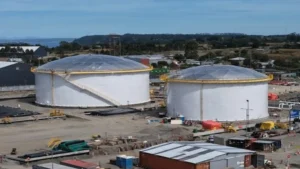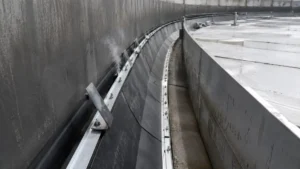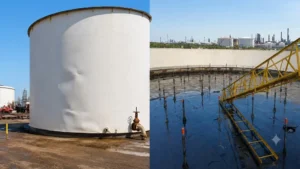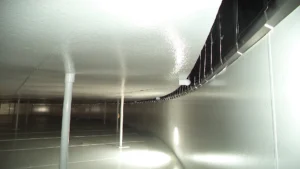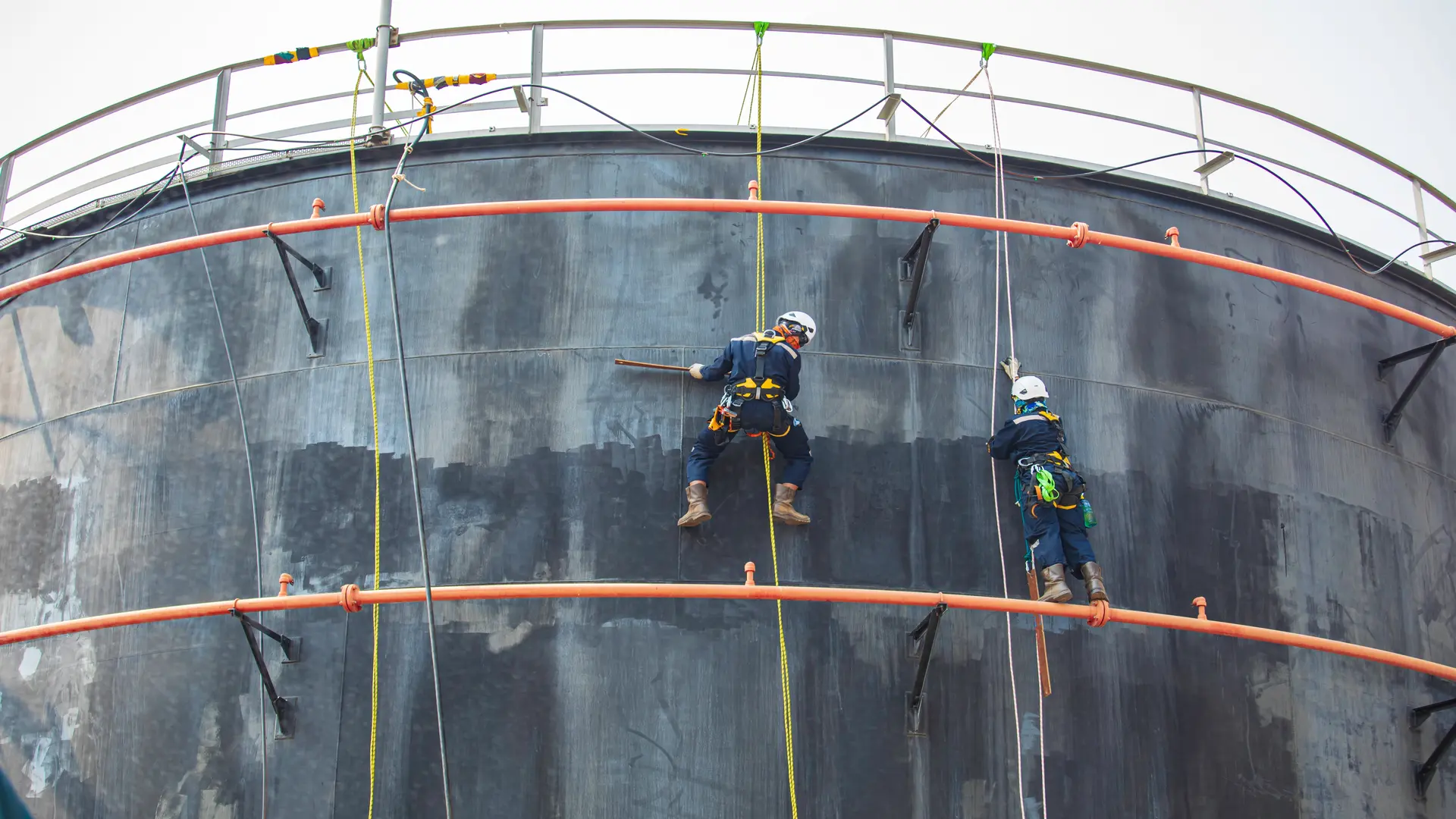
Aboveground storage tanks (ASTs) are critical assets in the energy industry, both due to their impact on operational safety and the economic and environmental implications associated with failure. In this context, for surface maintenance practices and for the purpose of assessing condition or reconditioning equipment, technical cleaning using chemical agents such as Traffic Film Remover (TFR) plays significant role in the mechanical integrity of storage tanks.
Importance of cleaning in mechanical integrity
Within the industry, when asset integrity is understood as an investment rather than an expense, it becomes clear that the accumulation of contaminants on external surfaces, including hydrocarbons, salts, and atmospheric compounds, can directly interfere with the inspection of coating conditions and the underlying metallic substrate.
According to AMPP, the global cost of corrosion is estimated at $2.5 trillion annually, representing approximately 3–4% of global GDP. It has been documented that between 15% and 35% of these costs can be mitigated through proper maintenance and corrosion control practices (International Measures of Prevention, Application, and Economics of Corrosion Technologies Study).
In the specific case of AST tanks, the presence of surface contaminants can mask coating defects, hinder the detection of early-stage corrosion, and create microenvironments that promote localized degradation mechanisms. Recent studies on failure modes in internal tank coatings demonstrate that premature degradation is associated not only with operational factors but also with inadequate cleaning practices.
It is also important to note that standards such as API 653 require inspections to be conducted under conditions that allow for a reliable evaluation of tank condition. Similarly, inspection practices aligned with ASTM International and ISO standards require properly prepared surfaces to ensure the effectiveness of non-destructive testing (NDT) methods such as ultrasonic testing (UT), visual testing (VT), liquid penetrant testing (PT), and fluorescent techniques.
Therefore, the presence of residues or surface films introduces uncertainty in results, reducing the reliability of diagnostic assessments. Proper cleaning is essential when performing any of these inspection techniques.
Technical function of TFR
Traffic Film Remover (TFR) is a chemical agent formulated to remove contaminants adhered to industrial surfaces. Its application helps restore or establish suitable conditions for inspection, reduce interference in NDT measurements, limit the retention of hygroscopic contaminants, and decrease the likelihood of under-deposit corrosion.
From an operational standpoint, its use enhances the quality of data obtained during integrity assessments.
Additionally, TFR cleaning restores optimal conditions for visual inspections and NDT methods, which are fundamental for evaluating structural integrity. Technical literature indicates that early detection of coating failures can reduce major repair costs by up to 40%, by preventing corrosion from progressing to critical stages (estimate based on integrity management trends described in API 653).
Recommended operational parameters
Industrial best practices for TFR application typically include dilution ratios between 1:10 and 1:20, depending on contamination levels and coating compatibility.
Controlled application using foam or high-pressure equipment ensures adequate dwell time, followed by an upward cleaning sequence and downward rinsing process to optimize contaminant removal.
A critical factor is thorough rinsing. Technical literature indicates that chemical residues trapped in geometric discontinuities, such as welds, joints, and nozzles, can promote localized corrosion mechanisms, including crevice corrosion.
The application of TFR in AST tanks requires technical precision rather than mechanical intensity. Unlike conventional washing, the process must consider surface scale, coating sensitivity, and the need to prevent chemical residues. Improper rinsing is directly linked to documented failure modes in internal coatings, where chemical degradation and adhesion loss occur when aggressive residues remain in joints and welds.
Operational errors and their impact
Various asset integrity studies and field practices identify recurring failures in chemical cleaning processes:
- Use of highly caustic agents: May lead to premature coating degradation, including chalking, loss of adhesion, and increased porosity.
- Insufficient rinsing: Residues trapped in welds, nozzles, and valves act as silent corrosive agents. API 653 emphasizes the importance of external visual inspections every five years and condition-based NDT, which are only effective when surfaces are free of contaminants.
- Use of non-biodegradable products: Beyond environmental implications, these may generate incompatibilities with materials and coatings, affecting long-term performance.
Integration with maintenance strategies
Technical cleaning gains greater relevance when integrated into asset management methodologies such as:
- Risk-Based Inspection (RBI)
- Failure Modes, Effects and Criticality Analysis (FMECA)
- Reliability-Centered Maintenance (RCM)
- Maintenance Management Systems (CMMS)
These methodologies rely on reliable data, the quality of which is directly influenced by the surface condition of the inspected asset.
Furthermore, advanced technologies such as high-resolution ultrasonic testing, infrared thermography, online sensors, and digital twins require contaminant-free surfaces to maximize accuracy.
Impact on asset service life
According to documented integrity management practices, the combination of preventive maintenance, proper inspection, and corrosion monitoring can extend the service life of storage tanks by 10 to 15 years, depending on operational and environmental conditions.
This translates into reduced replacement costs (CAPEX), optimized maintenance (OPEX), and a significant reduction in the risk of structural failures and environmental incidents.
Conclusions
In asset evaluations within the industry, results often reflect general condition. However, the procedures behind those results are equally critical.
Considering TFR cleaning as part of the integrity management strategy for AST tanks is a technically relevant practice. Proper application improves inspection quality, facilitates early defect detection, and preserves corrosion protection systems.
In environments where operational reliability depends on accurate condition assessment, surface preparation is not a secondary consideration—it is a fundamental requirement for informed decision-making.
References
- American Petroleum Institute. (2025). API 653: Clave para la integridad y seguridad de los tanques de almacenamiento. LinkedIn
- INERCO. (2024). Guía de Integridad de Activos. inerco.com
- Reyes, Y. (2026). Recubrimientos internos en tanques AST: Modos de falla y diagnóstico hacia 2026. inspenet.com
- TÜV SÜD. (2025). Estudio de la integridad de tanques de almacenamiento. tuvsud.com
- Agencia de Seguridad, Energía y Ambiente (ASEA). (2024). Criterio para el monitoreo de la integridad mecánica de tanques de almacenamiento. Gobierno de México