The storage tanks integrity is a critical factor in the management of fluid storage within the global energy infrastructure. In this context, industrial storage tanks should be understood not merely as static containers, but as systems subject to mechanical stresses, corrosion-induced degradation, and strict regulatory requirements. For the integrity engineer or inspection technician, this analysis involves evaluating variable operating conditions and potential failure modes. Optimizing operations therefore requires detailed knowledge of applicable codes and technologies aimed at minimizing downtime.
Classification of tanks by mechanical design
Tank engineering of storage tanks often suffers from terminological ambiguity. For the specialist, it is imperative to distinguish physical location from thermodynamic condition. In other words, the difference between a generic storage tank and an atmospheric tank is not semantic, but rather one of mechanical design and process safety. Those who lack clarity on this distinction often confuse not only the terminology but also the function, even though all are used for storage.
Storage infrastructure
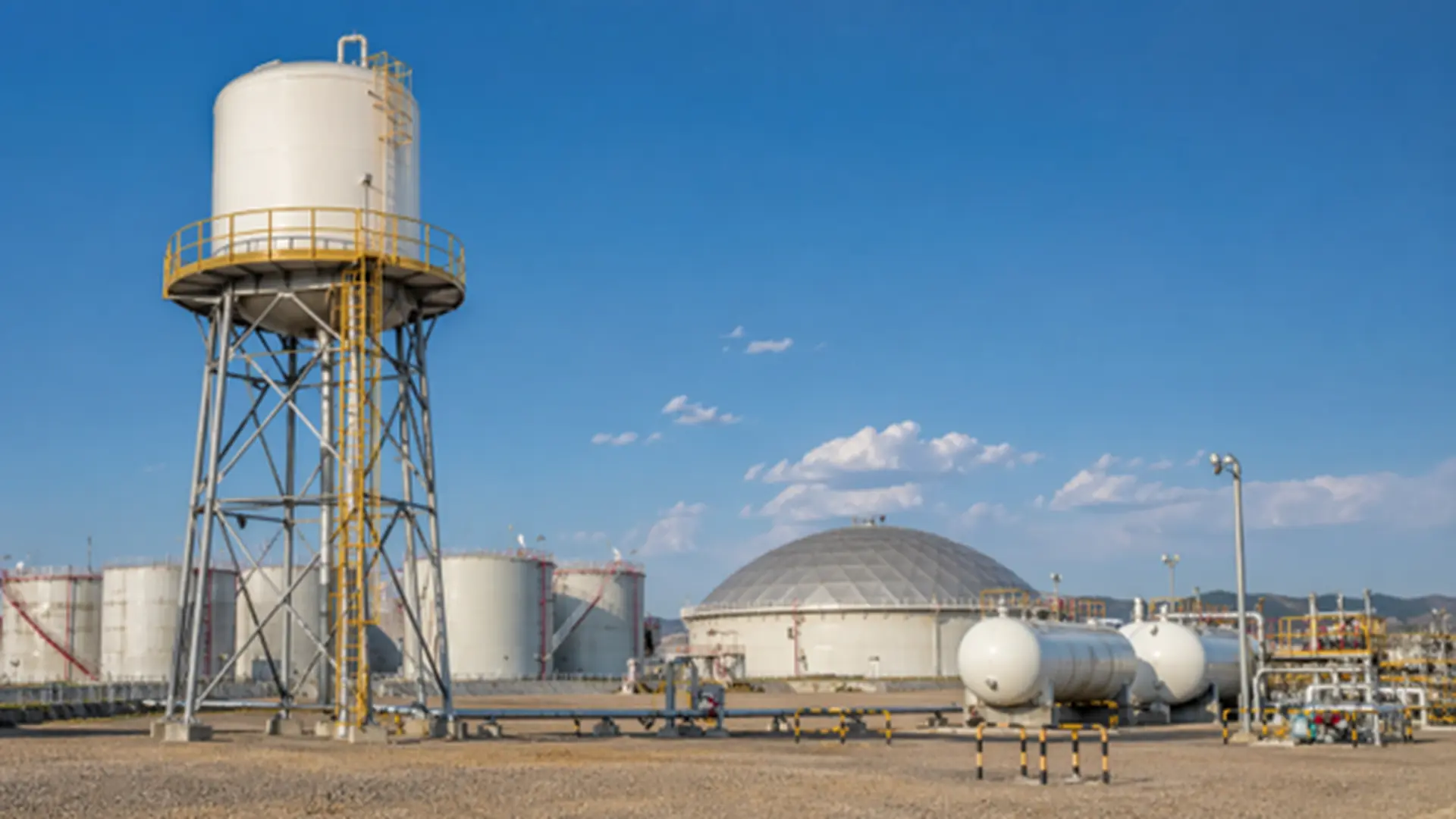
Not all storage tanksare atmospheric, and not all are built under a specific code or standard, although in industrial practice they represent the majority. These structures can be classified into four major categories:
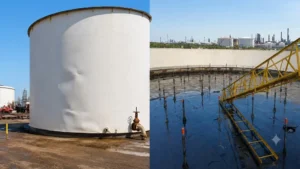
- Aboveground Storage Tanks (AST): Any vessel whose volume is above ground level. These are designed primarily to withstand the weight of the contained liquid. They are not intended to support internal gas pressure and “breathe” at ambient atmospheric pressure. They may be atmospheric (API 650) or low-pressure (API 620).
- Atmospheric storage tanks: Defined by pressure classification, operating at internal pressures up to 2.5 psig (17.2 kPa).
- Elevated storage tanks: Typically atmospheric tanks mounted on towers to generate hydrostatic pressure through gravity, governed by AWWA D100.
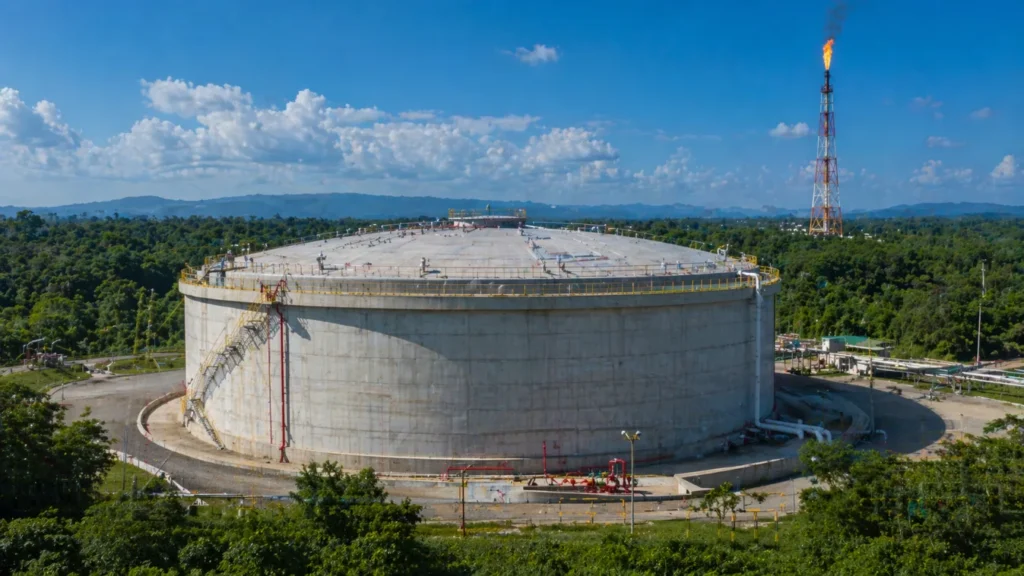
- Concrete storage tanks: Used in environmental engineering and LNG applications, governed by ACI 350 and ACI 372.
The domain of atmospheric pressure (API 650)
Atmospheric storage tanks designed under API 650 are intended to withstand internal pressure not exceeding the weight of the roof plates. These units are the industry standard for storing crude oil, gasoline, and produced or formation water.
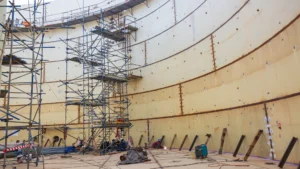
The integrity of these storage tanks critically depends on the shell-to-bottom joint design. In large-diameter tanks (greater than 50 meters), differential settlement can induce unaccounted bending stresses in the first shell course. According to API 653 Appendix B, verticality and roundness are mandatory inspection parameters to prevent collapse due to elastic instability.
Low pressure and cryogenic storage (API 620 and API 625)
Design parameters shift significantly when fluid volatility requires higher pressures. Under API 620, tanks can operate up to 15 psig (103.4 kPa). The design changes dramatically: the bottom is no longer simply flat but requires substantial anchoring systems to resist uplift forces.
For liquefied gases such as LNG, API 625 introduces double-containment systems, where a primary 9% nickel steel tank is protected by a secondary prestressed concrete container designed under ACI 376. This configuration minimizes catastrophic release risks and optimizes thermal management, maintaining boil-off gas (BOG) below 0.05% of total volume per day.
Integrity challenges and downtime reduction
One of the greatest challenges in the energy sector is reducing unplanned outages. An internal inspection shutdown of a 500,000-barrel tank can result in losses exceeding $250,000 USD per day in lost revenue alone. This highlights the importance of a robust inspection, monitoring, and maintenance planning strategy.
Bottom corrosion: The hidden enemy
The storage tanks bottom is the most vulnerable area due to galvanic and microbiologically influenced corrosion (MIC). Magnetic Flux Leakage (MFL) technology has evolved to enable high-resolution scanning. However, the real technical value today lies in Risk-Based Inspection (RBI), following API 580/581.
RBI allows internal inspection intervals to be extended up to 20–30 years based on probability and consequence of failure. This requires an efficient cathodic protection (CP) system, monitored through corrosion coupons and tank-to-soil potential readings maintained between -850 mV and -1200 mV (NACE International, 2021).
Elastic stability and buckling phenomena
A critical risk is vacuum-induced collapse. During rapid emptying operations, a malfunction of pressure/vacuum relief valves (PVSV) can generate a negative pressure as low as 1 inch of water column—sufficient to implode a tank if stiffening rings are not properly designed according to API 650 Section 5.9.
Floating roof dynamics and emissions control
In the storage tanks of volatile hydrocarbons such as gasoline, vapor space management is essential. Internal Floating Roofs (IFR) and External Floating Roofs (EFR) present complex mechanical challenges:
Pontoon mechanical integrity
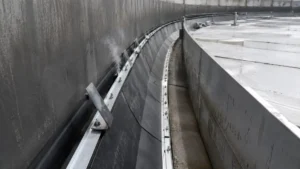
Floating roofs rely on pontoon buoyancy. A weld failure can cause roof tilting, potentially leading to contact with the tank shell. According to IEA (2022), mechanical failures in floating roofs account for 15% of loss-of-containment incidents. Ultrasonic testing (UT) and electrical continuity verification (shunts) are essential to prevent electrostatic discharge-induced fires.
Thermal efficiency and VOC emissions
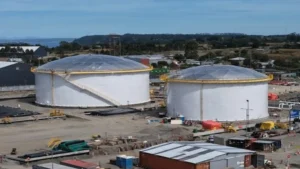
For maximum efficiency, selecting primary and secondary seals in accordance with EPA and API standards is critical. Poor sealing in a light crude tank can result in VOC emissions exceeding 5 tons annually. Current industry trends favor aluminum geodesic domes, which reduce wind loads and decrease evaporation losses by up to 90%, improving both profitability and environmental compliance (IRENA, 2023).
Innovation in materials and sustainability
The industry is transitioning toward materials with longer life cycles and lower carbon footprints. Modern installations, storage tanks increasingly incorporate alternative materials.
Concrete and specialized coatings
Concrete designed under ACI 350 offers superior resistance to environmental corrosion. Durability depends on maintaining a water-to-cement ratio below 0.40 and using appropriate additives. For acidic water storage tanks, high-solids epoxy coatings with dry film thickness (DFT) exceeding 20 mils (500 microns) are mandatory. Surface preparation via abrasive blasting to achieve a CSP 3 anchor profile (per ICRI) is critical for coating performance (NACE International, 2021).
Fiber Reinforced Plastic (FRP) and Polymers
FRP storage tanks designed under ASME RTP-1 are gaining traction in the storage of aggressive chemicals and lithium. As non-conductive materials, they eliminate the need for cathodic protection.
Conceptually, FRP behaves similarly to reinforced concrete: the resin provides form, while the fiberglass provides structural strength. These storage tanks are preferred because, unlike steel, plastic does not corrode when exposed to strong acids or lithium salts. However, their main technical challenge is permeation. Inspection requires acoustic emission (AE) analysis to detect microfractures under load.
Future storage tanks systems: Hydrogen and Lithium
The advancement of the energy transition is driving new challenges in the integrity of storage tanks, particularly in applications associated with green hydrogen and lithium. These energy vectors introduce degradation mechanisms and operating conditions that go beyond traditional design paradigms.
In the case of hydrogen, the primary challenge lies in hydrogen embrittlement, a phenomenon in which hydrogen atoms diffuse into the steel’s crystalline lattice, reducing ductility and promoting crack initiation and propagation under relatively low stress levels. This effect becomes more severe at high pressures, typically above 300 bar, and under cyclic loading conditions.
In response, materials engineering has evolved toward the development of microalloyed steels with improved resistance to hydrogen diffusion, as well as the implementation of internal polymer liners that act as permeation barriers. Additionally, specialized heat treatments and advanced coatings are used to mitigate hydrogen uptake, alongside stringent quality control in welds, which are often the most critical zones for failure initiation.
On the other hand, lithium-related storage, particularly in the form of concentrated brines, introduces challenges primarily of a chemical nature. These fluids are highly aggressive due to their content of chlorides, sulfates, and other compounds that accelerate localized corrosion mechanisms such as pitting and stress corrosion cracking. In this context, storage tanks must be designed using materials with high chemical resistance, including titanium alloys, high-performance stainless steels, or non-metallic solutions such as fluoropolymer (PTFE) linings and composite systems.
Thermal control also becomes a critical factor. Temperature variations can lead to salt precipitation, affecting system operability and potentially compromising structural integrity through solid deposits, blockages, or differential stress concentrations. For this reason, modern designs incorporate temperature monitoring and control systems, as well as configurations that facilitate fluid mixing or recirculation.
Overall, both hydrogen and lithium are redefining design criteria, material selection, and inspection strategies within the industry. Managing these storage systems requires a multidisciplinary approach that integrates materials science, fracture mechanics, process control, and advanced monitoring technologies, aligning with the evolving demands for safety and sustainability in next-generation energy infrastructure.
Conclusions
In the 21st century, the Storage Tanks Integrity has emerged as a central pillar of industrial asset management, moving beyond the traditional maintenance approach to establish itself as a discipline of advanced engineering. The convergence of design codes such as API, ASME, and ACI, along with advanced predictive analytics tools, including risk-based inspection (RBI), digital twins, and smart instrumentation, is redefining industry standards for safety, reliability, and operational performance.
Under this approach, efficiency is no longer a circumstantial outcome but depends on structured, data-driven strategies. The reduction of unscheduled downtime is supported by predictive models and continuous monitoring, enabling optimized decision-making throughout the asset’s lifecycle. Consequently, the design, construction, and inspection of storage tanks are evolving toward more resilient systems capable of meeting the energy sector’s growing technical, economic, and environmental demands.
References
- American Concrete Institute (ACI). (2020). ACI 350-20: Code Requirements for Environmental Engineering Concrete Structures.
- American Petroleum Institute (API). (2020). API Standard 650: Welded Tanks for Oil Storage (13th ed.).
- American Petroleum Institute (API). (2014). API Standard 653: Tank Inspection, Repair, Alteration, and Reconstruction (5th ed.).
- American Society of Mechanical Engineers (ASME). (2019). ASME RTP-1: Reinforced Thermoset Plastic Corrosion-Resistant Equipment.
- IEEE. (2024). Advancements in Hydrogen Storage Materials for Large-Scale Energy Systems.
- International Energy Agency (IEA). (2022). Global Energy Review.
- International Renewable Energy Agency (IRENA). (2023). Energy Transition and Infrastructure Storage Trends.
- NACE International. (2021). Corrosion Control in the Refining Industry.
- U.S. Environmental Protection Agency (EPA). (2021). Technical Report on VOC Emissions from Storage Tank Seals.