
Table of Contents
- What is NDT certification?
- ISO 9712, PCN, and ASNT systems
- Impact of certification
- NDT Levels 1, 2, and 3
- Impact of incorrect NDT level assignment
- Level 3 and asset integrity
- How to choose the right certification
- Impact of NDT certification on decision-making
- Common mistakes in NDT certification
- Training vs certification
- Impact of working without NDT certification
- NDT certification in a global context
- Industry voice: applied NDT training
- Impact of training on industrial results
- Application of NDT certification in industrial environments
- Where to obtain NDT certification
- Conclusions
- References
- Frequently Asked Questions (FAQs)
NDT certification is a critical factor in ensuring the reliability of inspection processes across industries where asset integrity directly impacts safety, operational continuity, and regulatory compliance. In sectors such as oil and gas, power generation, and industrial manufacturing, inspection results are not isolated technical outputs, they are decision-making inputs that influence whether assets continue operating or require intervention.
Certification frameworks such as ISO 9712, PCN, and ASNT-based systems differ in structure, recognition, and industrial application. Understanding these differences, along with the implications of NDT Levels 1, 2, and 3, is essential for aligning technical competencies with real operational requirements and project expectations.
What is NDT certification?
NDT certification is the formal process by which a professional’s competence to perform, interpret, and supervise non-destructive testing is validated under recognized standards or certification schemes. Its primary purpose is to ensure that inspection activities are executed consistently, reliably, and without compromising the integrity of the components being evaluated.
In industrial practice, three closely related concepts must be clearly distinguished:
- Training, which involves acquiring theoretical knowledge and practical skills
- Qualification, which demonstrates the ability to perform a specific inspection technique
- Certification, which formally validates those competencies through standardized evaluation
This distinction has direct operational consequences. A technician may be trained in ultrasonic testing or radiographic inspection, but without a recognized certification, their results may not be accepted in audits, regulatory inspections, or contractual evaluations.
From a mechanical integrity perspective, certification functions as a risk mitigation mechanism. It reduces variability in inspection practices, increases the reliability of diagnostic outcomes, and ensures that inspections are conducted according to standardized technical criteria. This is particularly critical in environments where asset failure can lead to safety incidents, environmental impact, or significant economic losses.
ISO 9712, PCN, and ASNT systems
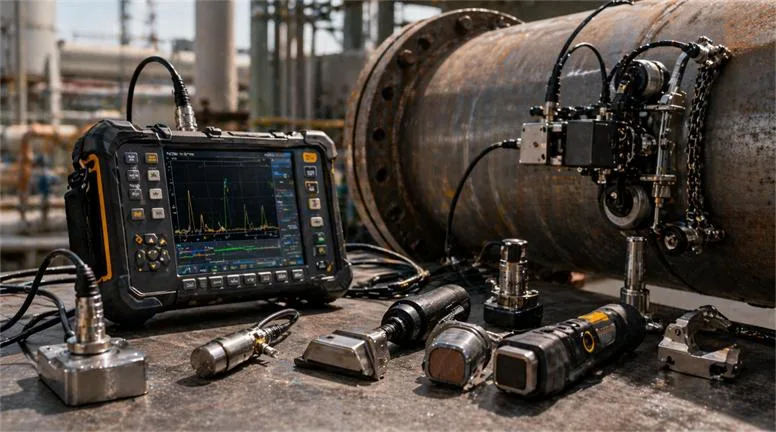
Different certification systems define how NDT personnel are evaluated and recognized, each with specific implications for industrial application.
ISO 9712 establishes an independent certification framework in which a third-party body evaluates and certifies personnel. This approach ensures consistency, traceability, and international recognition, making it widely accepted in projects that require regulatory compliance and standardized procedures.
PCN certification, administered by the British Institute of Non-Destructive Testing (BINDT), builds upon ISO principles but introduces more rigorous assessment criteria. It is particularly valued in industries such as offshore operations, oil and gas, and critical infrastructure, where inspection reliability is a key factor in risk management.
ASNT-based systems, such as SNT-TC-1A, follow an employer-driven model. Certification is managed internally, allowing for greater operational flexibility. However, its recognition depends on client requirements and project specifications, which may limit its applicability in international or highly regulated environments.
Comparison of certification systems
| Scheme | Certification model | Technical validation | Industrial application |
| ISO 9712 | Independent | Third-party evaluation | International projects, audits |
| PCN | High-rigor certification | BINDT-controlled exams | Oil & gas, offshore |
| ASNT SNT-TC-1A | Employer-based | Internal procedures | Local operations |
| ASNT ACCP | Centralized | Standardized evaluation | Projects requiring additional validation |
Each scheme reflects a different balance between flexibility and standardization, influencing how certification is perceived and accepted in industrial contexts.
Impact of certification
The selection of an NDT certification scheme has direct implications for both personnel acceptance and operational reliability. In highly regulated environments, certifications such as ISO 9712 and PCN provide a higher level of confidence due to their standardized evaluation processes and international recognition.
In contrast, ASNT-based certification may be sufficient for internal operations or lower-criticality environments, provided it aligns with client expectations.
For both professionals and organizations, certification is not merely a technical requirement. It is a strategic factor that affects employability, contract eligibility, and the reliability of inspection results in real industrial scenarios.
NDT Levels 1, 2, and 3
NDT certification is structured into hierarchical levels that define the scope of responsibility, technical autonomy, and decision-making authority of inspection personnel. Understanding these levels is essential for assigning roles correctly in industrial operations and ensuring that inspection results are both reliable and actionable.
Each level reflects not only technical competence but also the degree of accountability in the inspection process.
Level 1: Execution under supervision
Level 1 personnel are responsible for carrying out inspections following established procedures and under direct supervision. Their role is primarily operational.
Typical responsibilities include:
- preparing equipment and materials
- performing tests according to instructions
- recording inspection data
However, they are not authorized to interpret results or make acceptance decisions. In industrial environments, Level 1 technicians support inspection activities but do not influence final evaluations.
Level 2: Interpretation and operational decision-making
Level 2 certification represents a significant step in responsibility. These professionals are qualified to:
- interpret inspection results
- evaluate discontinuities
- select appropriate inspection techniques
- supervise Level 1 personnel
In practice, Level 2 personnel are the backbone of field inspection teams. Their ability to interpret results directly affects maintenance decisions, shutdown planning, and operational safety.
Level 3: Technical authority and strategic role
Level 3, is the highest certification level and carries strategic responsibility within inspection programs.
Level 3 professionals are responsible for:
- Developing and approving inspection procedures
- Interpreting applicable codes and standards (API, ASME, ISO)
- Defining acceptance and rejection criteria
- Supervising overall inspection programs
At this level, NDT is integrated into asset integrity management, influencing long-term operational strategies rather than isolated inspection activities.
Impact of incorrect NDT level assignment
Incorrect assignment of NDT certification levels can lead to significant technical and operational risks in industrial environments. When personnel are assigned responsibilities beyond their certification level, the likelihood of misinterpretation, incorrect evaluations, and poor decision-making increases.
In inspections involving critical assets such as pipelines, pressure vessels, or industrial structures, these errors can result in:
- Inaccurate defect assessment
- Inappropriate acceptance or rejection decisions
- Compromised asset integrity
In real operations, this may translate into:
- Unplanned failures
- Safety incidents
- Increased operational and maintenance costs
For this reason, organizations do not only require certified personnel, but professionals whose certification level is aligned with the complexity of the inspection task and the specific requirements of the project.
Level 3 and asset integrity
Level 3 professionals play a central role in ensuring that inspection activities align with both technical standards and operational requirements.
Unlike Levels 1 and 2, which focus on execution and interpretation, Level 3 defines the technical framework under which inspections are conducted. This includes the development of procedures, validation of methodologies, and alignment with international standards.
In asset-intensive industries, such as oil and gas or power generation, this role is critical because inspection outcomes directly influence decisions related to maintenance, repair, and continued operation.
For example, when evaluating a pressure vessel or pipeline, Level 3 professionals must determine:
- Which inspection methods are appropriate
- How results should be interpreted
- What acceptance criteria apply under specific standards
Their decisions affect not only compliance but also operational risk.
Integration with standards and codes
Level 3 certification requires deep knowledge of standards such as:
- API codes
- ASME standards
- ISO frameworks
The ability to interpret and apply these standards in real operating conditions ensures that inspections are technically valid and aligned with regulatory requirements.
Operational impact of Level 3 oversight
The absence of Level 3 supervision can lead to:
- Inconsistent inspection procedures
- Incorrect interpretation of results
- Misalignment with standards
In critical assets, this may result in:
- Operational failures
- Safety risks
- Increased maintenance costs
For this reason, Level 3 is not only a certification level but a key component of mechanical integrity programs.
How to choose the right certification
Choosing the appropriate NDT certification requires aligning professional goals with industry demands and project requirements.
Based on career development
For early-career professionals, internationally recognized certifications such as ISO 9712 or PCN provide a strong foundation. These certifications facilitate mobility across projects and regions while ensuring that competencies meet global standards.
Progression toward Level 2 certification is essential, as it enables participation in inspection interpretation and decision-making.
Based on industry requirements
Certification requirements vary significantly depending on the sector.
In industries such as:
- Oil and gas
- Offshore operations
- Energy infrastructure
Clients often require ISO 9712 or PCN certification due to their international recognition and standardized evaluation processes.
In contrast, ASNT-based certification may be sufficient in internal operations or less regulated environments.
Based on responsibility level
As professionals assume higher responsibilities, particularly at Level 3, certification must support advanced competencies such as:
- Standards interpretation
- Procedure development
- Technical decision-making
The certification framework must reflect the complexity of the role.
Based on project and client requirements
In many cases, certification is defined by:
- Contractual specifications
- Regulatory requirements
- Client expectations
Misalignment between certification and project requirements can limit access to opportunities and reduce technical credibility.
Impact of NDT certification on decision-making
Choosing the right NDT certification requires evaluating more than technical content. Professionals and organizations must also consider market recognition, practical applicability, and long-term career or operational value.
A poorly aligned certification decision can limit access to projects, reduce acceptance in audits, or restrict participation in international contracts. In contrast, certification aligned with recognized standards such as ISO 9712, PCN, or ASNT-based requirements can open opportunities in more demanding industrial markets.
For companies, this decision also affects the reliability of inspection programs. The right certification framework helps ensure that inspection personnel meet project expectations, client requirements, and the technical demands of real operating environments.
Common mistakes in NDT certification
Lack of market alignment
One of the most common mistakes is selecting certification without considering where it will be applied.
Different industries and regions recognize certifications differently. A certification that is valid in one context may not be accepted in another, affecting employability and project eligibility.
Confusing training with certification
Training provides knowledge, but certification validates competence.
Professionals often assume that completing training programs is sufficient. However, certification requires formal evaluation under recognized standards. Without it, inspection results may not be accepted in audits or contractual environments.
Misalignment between certification level and responsibilities
Another frequent issue is selecting a certification level that does not match the professional’s role.
Examples include:
- Assigning Level 1 personnel to tasks requiring interpretation
- Insufficient certification for supervisory positions
This misalignment can reduce operational effectiveness and introduce technical risks.

Training vs certification
Training and certification serve complementary but distinct roles in professional development.
Training focuses on building technical knowledge and practical skills. It prepares professionals to perform inspection techniques and understand underlying principles.
Certification, on the other hand, validates that those skills meet industry standards and can be applied consistently in real-world scenarios.
In industrial environments, training alone is not sufficient. Without certification:
- Inspection results may lack credibility
- Professionals may not meet contractual requirements
- Technical decisions may be questioned
For this reason, certification acts as the formal validation layer that ensures competence is recognized and accepted across projects and industries.
Impact of working without NDT certification
A professional may be well trained, but without formal NDT certification, their work may lack technical validity in real industrial projects. In regulated environments, inspection results must be supported by recognized certification frameworks to be accepted in audits, contractual evaluations, and compliance processes.
For this reason, training should be understood as a necessary but not sufficient step. It provides the technical foundation, but certification is what formally validates those competencies and allows them to be applied in operational contexts.
Without certification, professionals may face limitations such as:
- Rejection of inspection results
- Restricted access to projects
- Reduced credibility in technical decision-making
In industrial practice, certification is what transforms knowledge into recognized and applicable competence.
NDT certification in a global context
The global trend is moving toward integrated models where training, evaluation, and certification are aligned with international standards and the real needs of the industry.
Today, professionals are not only expected to pass an examination. They must also develop competencies that can be applied in the field under real operating conditions. This has driven the growth of training models that combine theoretical knowledge, practical instruction, and specific preparation for recognized certification schemes such as ISO 9712 and PCN certification.
For operators, inspectors, and technical teams, this approach is critical. A certification only has real value when it is supported by practical competence, correct interpretation of standards, and the ability to perform under the conditions found in industrial assets such as pipelines, pressure vessels, storage tanks, heat exchangers, and energy infrastructure.
Industry voice: applied NDT training
Industry experience shows that the most effective programs are those that integrate technical training with certification preparation under recognized standards. This combination allows professionals to move beyond academic learning and develop the practical judgment required in real inspection scenarios.
An example of this applied approach is the model developed by Lavender International, an institution specialized in NDT training and certification. Its approach combines technical preparation, evaluation under international standards, and practical application in industrial environments.
This type of training model allows professionals not only to meet certification requirements such as ISO 9712 or PCN certification, but also to build competencies aligned with the real demands of the energy and industrial sectors.
In practice, this means inspectors are better prepared to understand procedures, select appropriate methods, interpret results, and support decisions that affect asset integrity, safety, and operational continuity.
Impact of training on industrial results
The evolution of the industry requires training to be more than academic. It must be oriented toward measurable results in the field.
Professionals trained under models aligned with international certification schemes tend to show greater adaptability, stronger acceptance in projects, and better long-term professional growth. For companies, this translates into more reliable inspection programs, fewer interpretation errors, and better alignment with client and regulatory requirements.
In this context, the combination of structured training and recognized NDT certification becomes a determining factor for ensuring real, sustainable competence over time.
For operators and industrial organizations, the key lesson is clear: certification should not be treated as a document to satisfy a requirement, but as part of a broader competency system that connects training, field performance, technical judgment, and asset integrity.
Application of NDT certification in industrial environments

In real industrial operations, NDT certification directly impacts the reliability and effectiveness of inspection processes. Certified personnel are essential in evaluating critical assets such as pipelines, pressure vessels, heat exchangers, and structural components.
Their role ensures that inspection results are:
- technically accurate
- aligned with standards
- applicable to operational decision-making
This is particularly important in industries where asset failure can lead to safety risks, environmental impact, or significant financial losses.
Certification also supports compliance with regulatory requirements and contractual obligations, making it a key factor in maintaining operational continuity and ensuring the integrity of industrial systems.
Where to obtain NDT certification
NDT certification can be obtained through various recognized pathways, depending on the required level and industry context.
Common options include:
- ISO 9712 certification bodies accredited by recognized organizations
- PCN certification administered by the British Institute of Non-Destructive Testing (BINDT)
- ASNT-based systems such as SNT-TC-1A or ACCP
In addition to certification bodies, specialized training institutions provide integrated programs that combine technical preparation with certification readiness.
Organizations such as Lavender International exemplify this approach by offering structured training aligned with international standards and focused on real industrial application. Their programs are designed to prepare professionals not only to pass certification exams but also to perform effectively in operational environments.
When selecting a certification pathway, it is essential to consider recognition, industry requirements, and alignment with professional objectives.
Conclusions
Selecting the appropriate NDT certification requires a clear understanding of technical requirements, industry expectations, and professional goals. Certification frameworks such as ISO 9712, PCN, and ASNT-based systems provide different approaches to validating competence, each with specific implications for industrial application.
Understanding the responsibilities associated with NDT Levels 1, 2, and 3 is essential for ensuring that inspection activities are carried out effectively and aligned with asset integrity objectives.
Certification is not only a technical validation—it is a strategic tool that influences employability, project access, and the reliability of inspection results. Organizations and professionals must align certification decisions with real operational needs to ensure that competencies are both recognized and applicable.
Institutions such as Lavender International contribute to this process by bridging the gap between training and certification, enabling professionals to develop competencies that meet the demands of modern industrial environments.
References
- International Organization for Standardization. ISO 9712: Non-destructive testing — Qualification and certification of NDT personnel. ISO.
- American Society for Nondestructive Testing. SNT-TC-1A: Personnel qualification and certification in nondestructive testing. ASNT.
- American Society for Nondestructive Testing. ANSI/ASNT CP-189: Standard for qualification and certification of nondestructive testing personnel. ASNT.
- British Institute of Non-Destructive Testing. PCN certification scheme overview. BINDT. https://www.bindt.org
- Hellier, C. Handbook of nondestructive evaluation (2nd ed.). McGraw-Hill Education.
- Raj, B., Jayakumar, T., & Thavasimuthu, M. Practical non-destructive testing. Woodhead Publishing.
- Blitz, J., & Simpson, G. Ultrasonic methods of non-destructive testing. Springer
- API. API Recommended Practice 580: Risk-based inspection. American Petroleum Institute.
- API. API Recommended Practice 581: Risk-based inspection methodology. American Petroleum Institute.
- ASME. Boiler and Pressure Vessel Code (BPVC), Section V: Nondestructive examination. American Society of Mechanical Engineers.
- Lavender International. NDT training and certification programs. https://www.lavender-ndt.com
- World Federation for Non-Destructive Testing. Guidelines for NDT personnel qualification and certification. WF-NDT.
- Inspenet. (2026). Certificación en ensayos no destructivos: ISO 9712, PCN y Nivel 3 NDT. https://inspenet.com
Frequently Asked Questions (FAQs)
What is the difference between ISO 9712 and PCN certification?
ISO 9712 defines the standard for personnel certification, while PCN is a certification scheme based on that standard and administered by BINDT, widely recognized in critical industries.
What is required to become Level 3 NDT?
Level 3 certification requires advanced experience, specialized training, and successful completion of rigorous examinations focused on standards interpretation and procedure development.
Which NDT certification is best for international work?
ISO 9712 and PCN certifications are the most widely recognized globally, particularly in sectors such as oil and gas, energy, and infrastructure.
Does NDT training guarantee certification?
No. Training provides the knowledge and skills, but certification requires formal evaluation under recognized standards.