Table of Contents
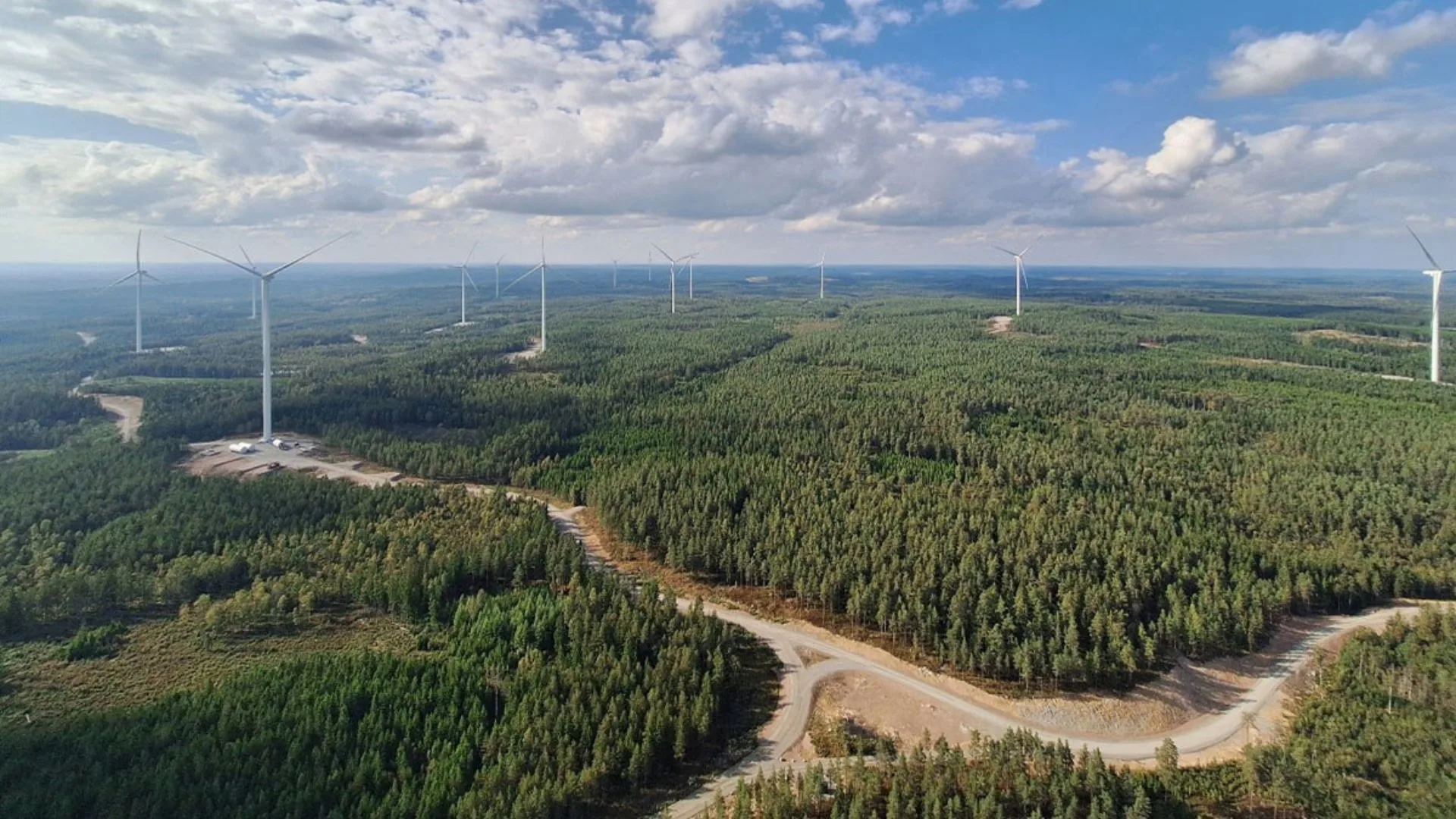
The Bruzaholm wind farm, located in Sweden, began operations with an installed capacity of 138 MW, an associated energy storage system and a strategic power supply agreement with Volvo Group.
Developed by Vattenfall, the park is located approximately nine kilometers east of Eksjö, in the Småland region. The facility is part of the company’s renewable energy expansion strategy in Europe and strengthens its presence in the onshore wind sector.
Furthermore, approximately 50% of its production will be allocated to the Volvo Group through a long-term power purchase agreement (PPA). This supply will allow the company to support its industrial operations in Sweden, including projects related to electrification and battery production.
Infrastructure and operation of the Bruzaholm wind farm
With a total capacity of 138 MW, the project comprises 21 wind turbines supplied by Siemens. These turbines reach a total height of 240 meters and have rotors with a diameter of 170 meters, allowing for optimized wind energy capture in the area.
The park is currently operational and is managed entirely by Vattenfall, which holds a 100% stake in the project. Maintenance is carried out from a local base in Mariannelund, while monitoring is performed remotely 24/7.
One of the most important features of the Bruzaholm wind farm is its integration with a battery storage system. This installation, also commissioned in 2026, has a capacity of 38 MW and a storage capacity of 38 MWh.
Thanks to this infrastructure, the park can contribute to the stability of the electrical grid by storing energy during periods of low demand and releasing it when needed. It also facilitates better management of the variability inherent in wind power generation.
The park’s surroundings consist mainly of productive forests on rolling terrain, with wetlands, streams, and areas of historical significance. Archaeological remains have been identified in the area, including ancient agricultural fields, the foundations of rural dwellings, and prehistoric burial monuments.
In environmental matters, the project incorporates specific measures for the protection of local wildlife. For example, a monitoring program for the capercaillie, a common species in the region, has been implemented. Furthermore, the turbines include a system known as “bat mode,” which suspends operation during warm summer nights to reduce the impact on these species.
Source and photo: Vattenfall