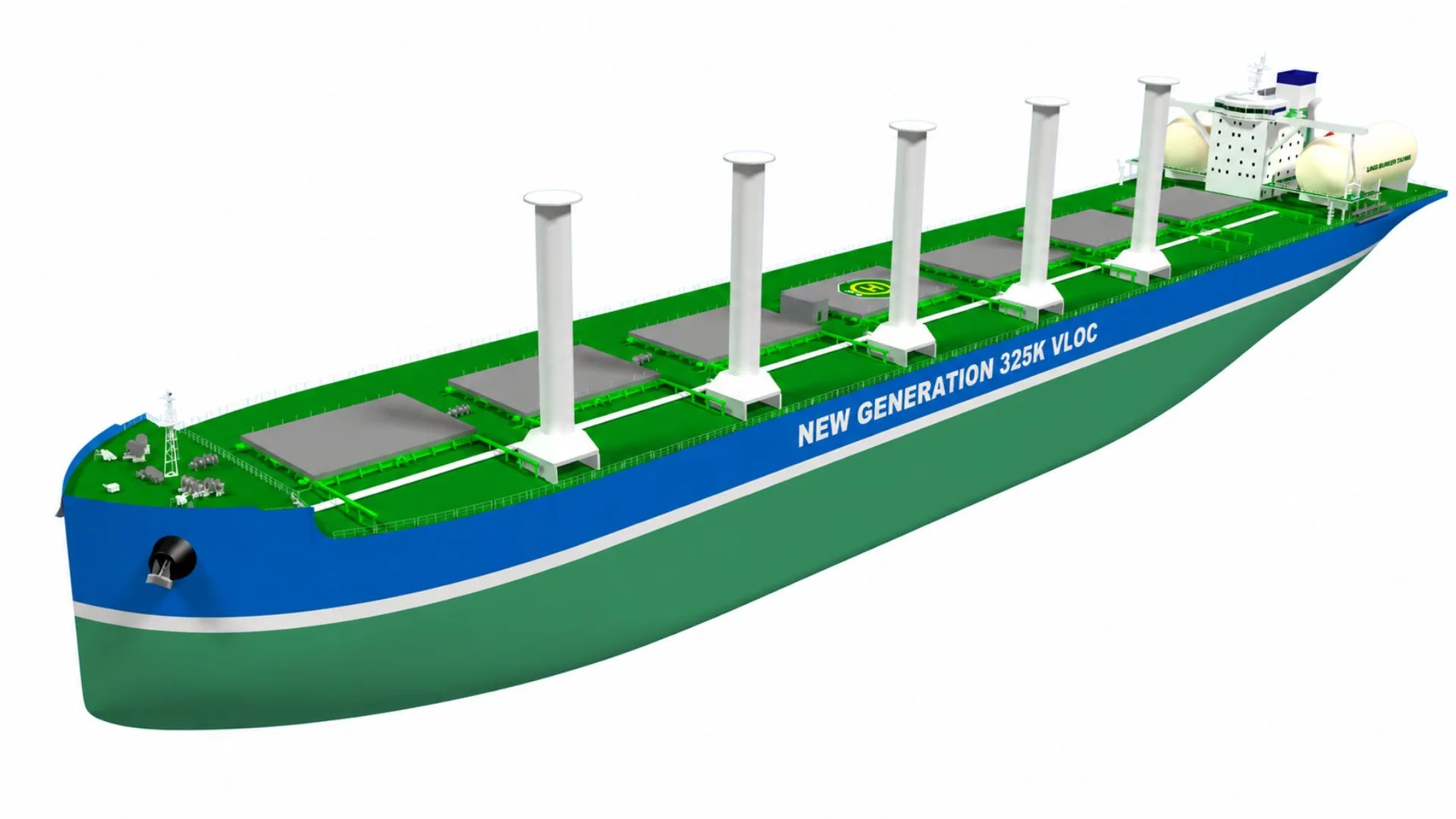
Swiss firm WinGD has secured the world’s first orders for ethanol-powered engines for large ocean-going vessels. The systems will be installed on two 325,000 DWT Newcastlemax bulk carriers operating for Brazilian mining company Vale under long-term contracts with Shandong Shipping Corporation.
The vessels will be built by the Chinese shipyard Beihai Shipbuilding and will be equipped with 6X82DF-M/E six-cylinder engines designed to run primarily on ethanol. Engine delivery is scheduled for early 2029.
WinGD expands the use of ethanol as a marine fuel
With this project, WinGD introduces for the first time its X-DF-M/E platform, specifically optimized for ethanol in ocean navigation. The company adapts an architecture previously developed for methanol by modifying the fuel delivery and injection pressure to compensate for ethanol’s lower energy density.
According to the company, both technologies share similar combustion properties, which facilitates the transition between alcoholic fuels in large-scale marine applications.
Volkmar Galke, WinGD’s executive sales director, stated that the new orders represent a validation of more than ten years of research into alternative fuels for the marine sector.
He also highlighted that the availability of infrastructure and the technological maturity of ethanol are beginning to generate greater confidence among shipowners and operators interested in accelerating maritime decarbonization.
Vale is committed to reducing emissions in maritime transport
The project is part of Vale’s strategy to reduce the carbon footprint of iron ore transport between Brazil and China. According to research conducted by the mining company, the use of ethanol can reduce greenhouse gas emissions by up to 90% compared to heavy fuel oil, depending on the fuel’s life cycle.
Rodrigo Bermelho, Vale’s shipping director, noted that the adoption of ethanol will allow for a combination of operational efficiency and energy flexibility in ships that transport minerals to international markets.
Furthermore, the executive indicated that this initiative could encourage new investments in alternative fuels within global maritime transport over the coming decades.
The maritime industry is accelerating the energy transition
Interest in ethanol as a marine fuel has grown due to its commercial availability and competitive prices in producing regions like Brazil. This scenario opens up new options for shipping companies seeking to reduce emissions without relying exclusively on a single energy technology.
With the addition of ethanol to its portfolio, WinGD expands fuel flexibility for two-stroke marine diesel engines. The X-DF-M/E platform joins the X-DF-A, powered by ammonia, and the X-DF-HP, for high-pressure liquefied natural gas.
All platforms share a common engine architecture designed to facilitate future conversions and offer energy alternatives adaptable to different regulatory and commercial scenarios in maritime transport.
Source and photo: Wingd.com