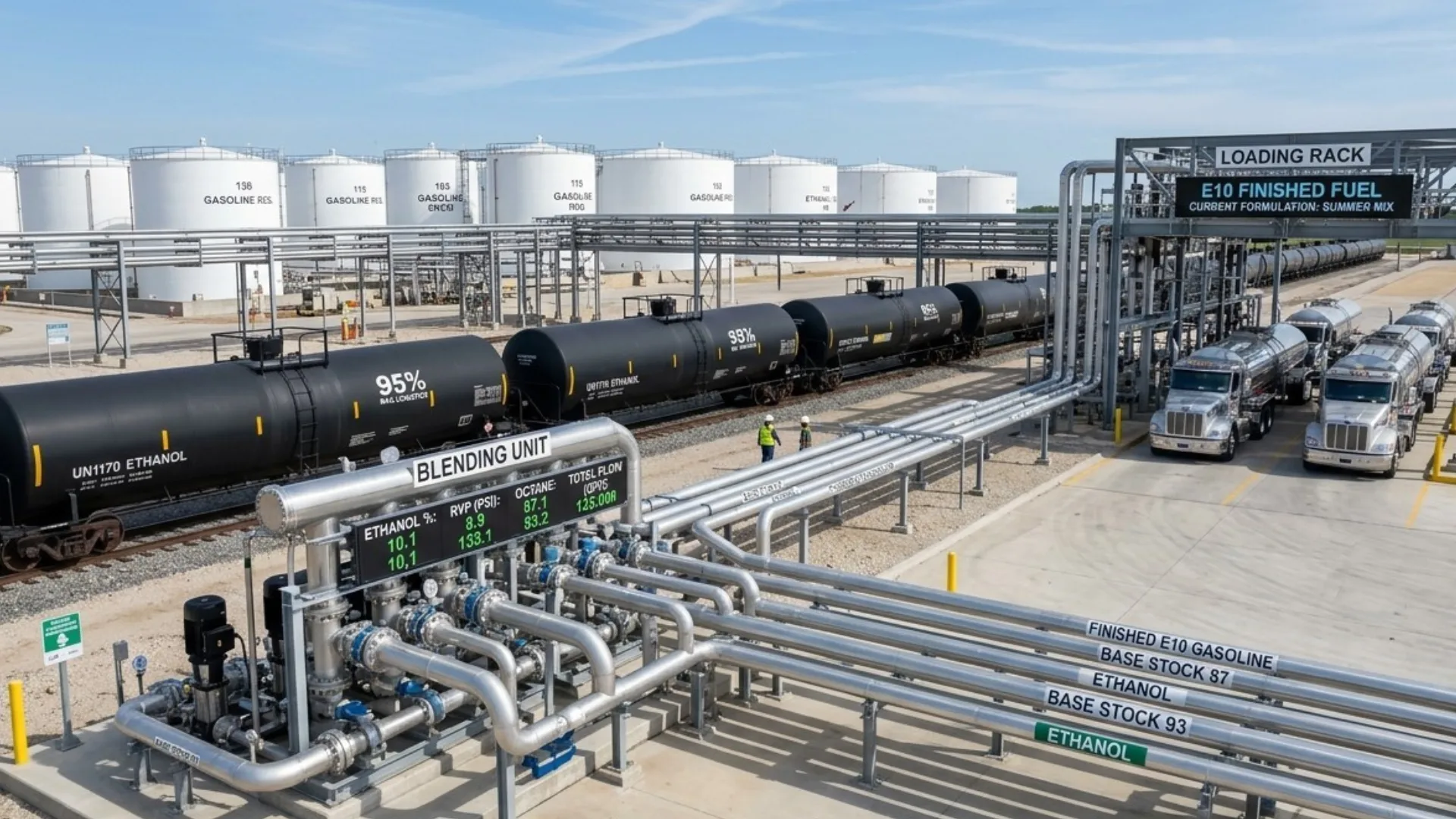
Hydrocarbons and additives define 90% of the volume
Motor gasoline is not a virgin product but a complex combination of hydrocarbons and additives. The main component is base gasoline, produced through catalytic cracking and distillation. Molecular precision at this stage is critical to ensure that the octane rating (AKI) meets minimum levels of 87 for regular and 91-93 for premium. This technical configuration prevents premature detonation, protecting the mechanical integrity of modern engines under high-load conditions.
Reid Vapor Pressure Control Optimizes Performance
Adjusting Reid Vapor Pressure (RVP) represents the biggest logistical challenge for refineries, depending on market seasonality. During the summer period, RVP must be reduced below 9.0 pounds per square inch (psi) to limit evaporative emissions. The use of 10% ethanol acts as a strategic, low-cost oxygenate, allowing operators to use lower-grade naphthas while maintaining energy performance and complying with federal emission regulations.
RFS Regulations Impact Refining Operating Margins
The Renewable Fuel Standard (RFS) mandates the massive integration of biofuels, directly affecting terminal logistics. Since ethanol cannot be transported via pipelines due to its high affinity for water, refineries must manage a parallel supply chain using rail and tanker trucks. This logistical complexity influences the ROI of refining assets, where formulation stability is key to absorbing fluctuations in heavy and light crude oil prices.
E15 Blends Require Infrastructure Updates
The transition to 15% ethanol (E15) fuels requires a thorough audit of tank and dispenser integrity at service stations. Elastomeric materials must be resistant to higher alcohol concentrations to prevent chemical corrosion failures. The viability of these new formulations will depend on the technical responsiveness of the supply chain and the evolution of air quality standards in the country’s main logistical hubs.
Original source: EIA – Today in Energy