Table of Contents
The start of operations at the Kalundborg Bioenergy plant sets a fundamental precedent in the global market. This infrastructure consolidates an integrated logistical route that extends from gas separation at the source to its final geological confinement in depleted offshore reservoirs.
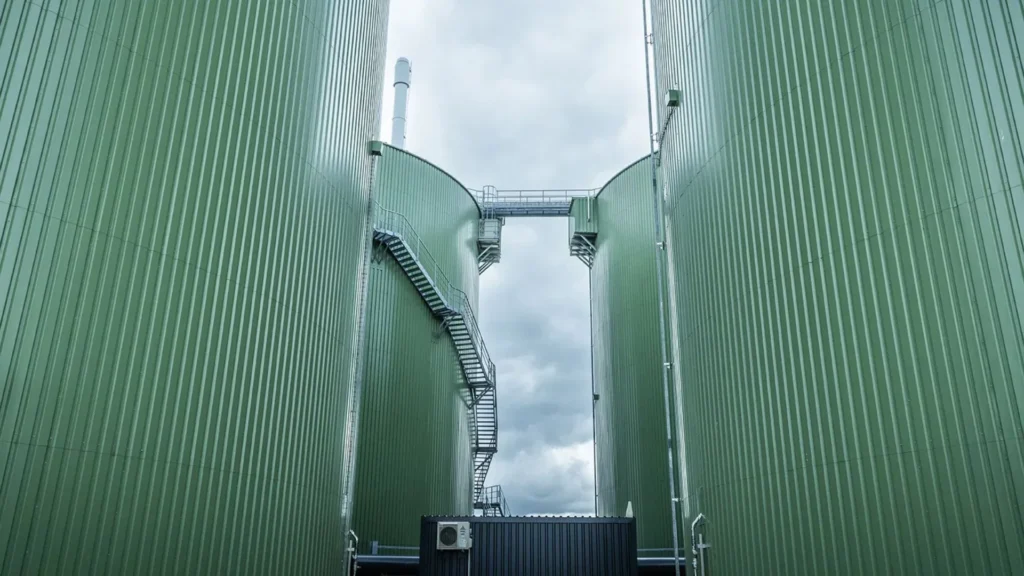
The infrastructure of the Kalundborg Bioenergy plant
The implemented operational process is based on the utilization of residual gases derived from the decomposition of industrial and agricultural organic matter. Through advanced compression and liquefaction systems, the plant manages to isolate carbon dioxide with an optimal purity level for subsequent logistical handling.
Likewise, the financial viability of this scheme demonstrates that the private sector can structure sustainable negative-emission projects without relying exclusively on experimental public financing schemes.
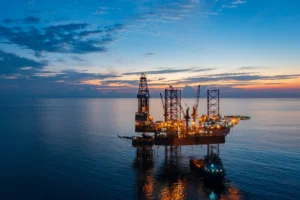
The transport logistics move the liquefied vector toward the geological structures of the Danish sector of the North Sea, integrating directly with the Project Greensand infrastructure. The processed gas is injected into stable subsea formations that have held hydrocarbons for millions of years, guaranteeing long-term hermetic isolation.
In this way, the European energy ecosystem acquires a tangible tool to balance the emission profiles of industrial sectors that are difficult to electrify.
The operating firm’s volume forecasts point to an initial capture of 27,000 tons of carbon dioxide per year at said facility. However, the expansion strategy contemplates the integration of similar technologies at the Horsens and Herning centers with the goal of reaching an annual processing capacity of 200,000 tons by the end of the decade.
This mitigated volume is equivalent to removing a significant number of internal combustion vehicles from circulation, consolidating Denmark’s position as the central logistical hub for carbon sequestration on the continent.
Source and photo: Bigadan