Asset integrity: how AI improves industrial management
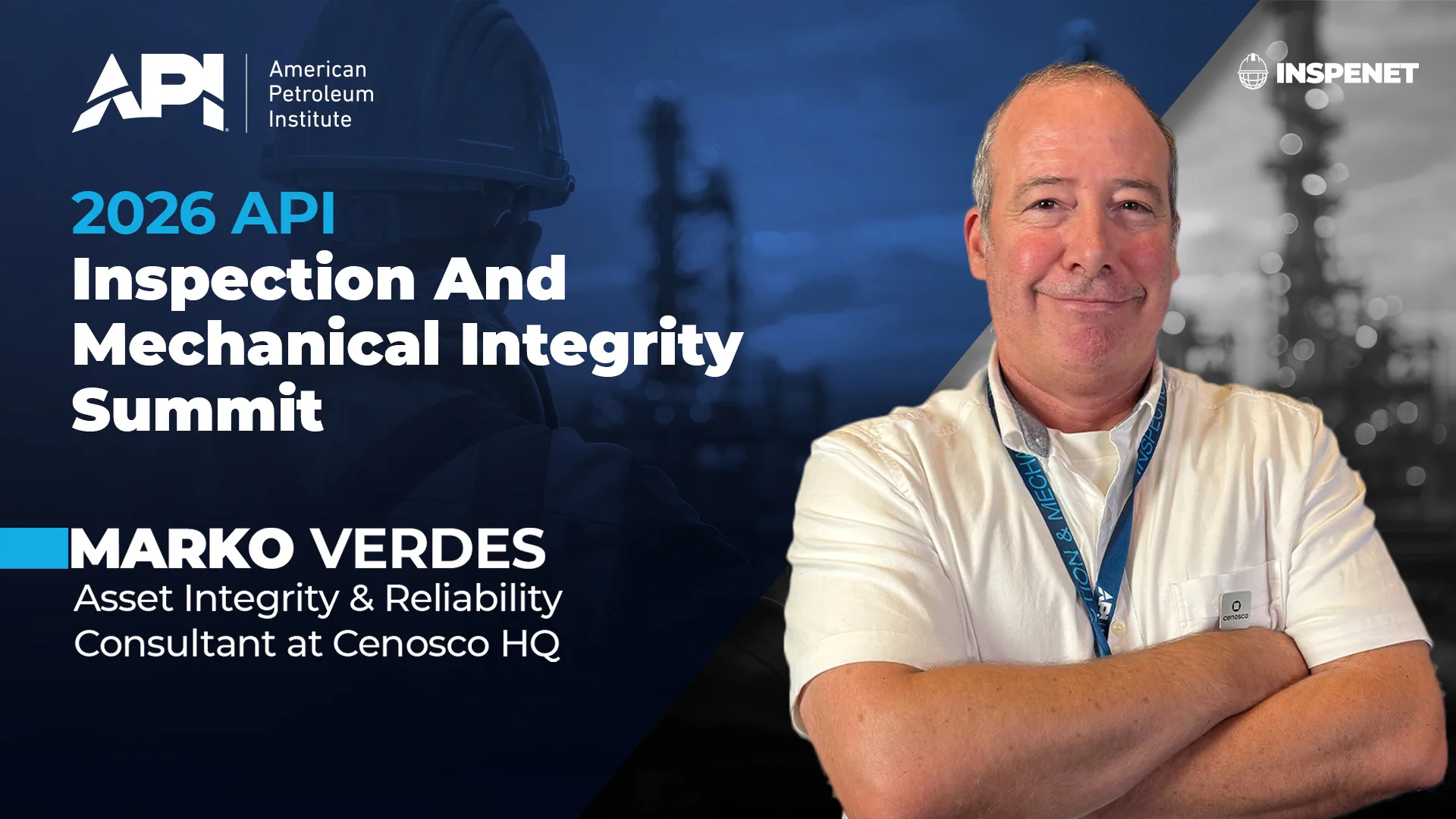
During API Summit 2026, Marko Verdes, Asset Integrity and Reliability Consultant at Cenosco, explained how the industry is changing its approach to managing asset integrity. The discussion focused on the shift from static inspection models to dynamic schemes that combine operational data, sensors, statistical analysis, and artificial intelligence.
This change responds to a clear need: to make faster and better-informed decisions about critical equipment. However, Verdes emphasized that technology still needs to work in conjunction with technical expertise. According to the specialist, AI can guide, summarize information, and detect patterns, but final validation remains in the hands of experienced professionals.
From static RBI to dynamic risk management
First, Verdes pointed out that many organizations are migrating from static risk-based inspections to dynamic risk-based inspection models. In a traditional approach, assessments are updated at specific times and typically rely on periodic inspection campaigns. In contrast, a dynamic approach incorporates new information as it becomes available.
Thus, sensor data, process changes, corrosion logs, and advanced inspection results can modify the equipment strategy. This capability allows for adjusting inspection frequencies, priorities, and scopes based on the actual risk and the observed degradation mechanism.
In addition, Cenosco works with semi-quantitative and quantitative methodologies such as API 581. The proposal consists of bringing these methods together within the same environment so that each company can apply the level of analysis that best suits its assets, processes, and operational maturity.
Artificial intelligence is already involved in inspections
Furthermore, artificial intelligence already has concrete uses in asset integrity management . According to Verdes, one of its applications is summarizing years of inspection data. This function can reduce the time a specialist spends reviewing documents, histories, and scattered observations.
It can also help identify potential degradation mechanisms based on stored data. In this way, the system provides initial guidance on problems that could affect a device and on aspects that warrant further review.
However, Verdes described this stage as early. The models can still deliver incomplete data or conclusions that require context. Therefore, AI functions as a support resource and not as an automatic authority capable of defining an inspection strategy on its own.
Human judgment retains the final decision.
At this point, one of the central ideas of the interview emerges: for Verdes, AI will not replace professionals. However, someone who knows how to use it will have an advantage over someone who chooses to ignore it.
Artificial intelligence will not replace humans, but the person who uses AI will be much better than the one who does not.
Marko Verdes stated.
The difference will lie in the ability to ask better questions, review results, and detect errors. An engineer can use AI to speed up a search or compare historical data, but they must verify whether the answer matches the asset's actual conditions.
Likewise, every recommendation must be questioned before being implemented, as asset integrity involves decisions that affect safety, operational continuity, and costs. Therefore, any suggestion generated by a model needs to be subject to technical criteria, internal procedures, and clearly defined responsibilities.
Technology brings speed, the professional brings context, experience, and judgment.
Break down silos to make better decisions
Verdes highlighted another widespread problem in the industry: the siloed nature of information between departments. One area might have corrosion data while another keeps process records. Maintenance might use a different system than inspection, and project teams might organize documentation using a different logic.
When these groups don't share information, the strategy loses precision; one discipline may act without knowing about a relevant change recorded by another. Tasks may also be repeated, or plans may be maintained that no longer reflect the team's actual state.
The best-performing companies typically have robust processes that define who performs each task, when it should be done, and what information needs to be shared. Furthermore, they prevent each group from working in isolation, disconnected from the rest of the team.
Therefore, breaking down silos is a basic condition for more reliable management. The quality of the decision depends as much on technical analysis as on the ability to gather comprehensive data.
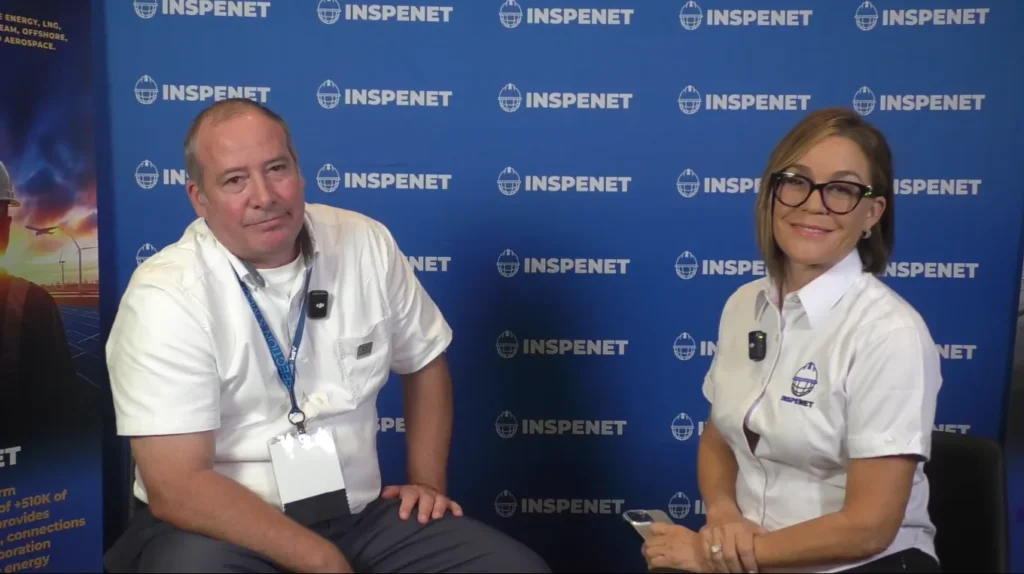
IMS gathers information from different disciplines
In this context, Cenosco's IMS platform aims to centralize information from various sources. The system can manage static equipment, rotating assets, electrical components, instruments, civil structures, and other types of industrial equipment.
Within a single view, the user can access calendars, RBI analyses , corrosion data, component specifications, and equipment history. This organization reduces the need to open multiple screens or search for information in separate folders.
Furthermore, the platform maintains a record of actions , allowing the team to see who made a change, what data was modified, and when it occurred. This record helps maintain control over information and facilitates internal reviews.
Permission management also plays a crucial role. Multiple disciplines can work on the same asset without affecting fields belonging to another specialty. For example, a pressure equipment professional can access the necessary information without modifying data managed by civil engineering or process engineering.
A simple experience on a complex foundation
Although the system should be easy to use, its internal structure is complex. Verdes explained that the platform receives information from different applications and must convert it into data that is understandable to the user.
This challenge increases when the same team has different names in each system; the identifier used in SAP may not match the name of the process historian or the reference included in project documents. Without a clear relationship between these records, the information can become fragmented.
Therefore, a good interface is not just about displaying clean screens; it must also translate data, recognize equivalencies, and present a coherent view of the asset. The user needs simplicity while the platform handles the complexity in the background.
Integrations will shape the coming years
Looking ahead, Verdes believes that interfaces will be one of the areas with the greatest need for development. Asset integrity management requires connections with SAP systems, CMMS platforms, data historians, document repositories, and tools used in projects or plant shutdowns.
Each source contains a piece of the equipment's history. The goal is to bring those pieces together to create a single source of information that serves inspection, maintenance, reliability, and operations.
However, simply connecting systems is not enough. Integrations must recognize different formats, resolve inconsistent names, and keep data up to date. They must also prevent duplication and allow users to understand the origin of each record.
Consequently, the systems will be simpler for the user and more sophisticated internally. This combination will be key to providing useful information without increasing the workload of the technical teams.
Connected data and better-prepared specialists
Finally, Verdes' vision reflects Cenosco 's approach and combines three elements: dynamic RBI, data integration, and human participation. AI can already streamline tasks and support analysis, but its value depends on the quality of the information and the expertise of the person interpreting the results.
Companies that define clear processes, share data, and keep their strategies up to date will be better prepared to manage critical teams. They will also be able to leverage technology without losing control over decisions that require technical accountability.
Asset integrity is moving towards a more connected model. In this scenario, the advantage will not be in replacing the specialist, but in giving them better tools to make decisions more quickly, with context, and with greater accuracy.
For more content about API Summit 2026, visit our LinkedIn profile.
Source: Inspenet.