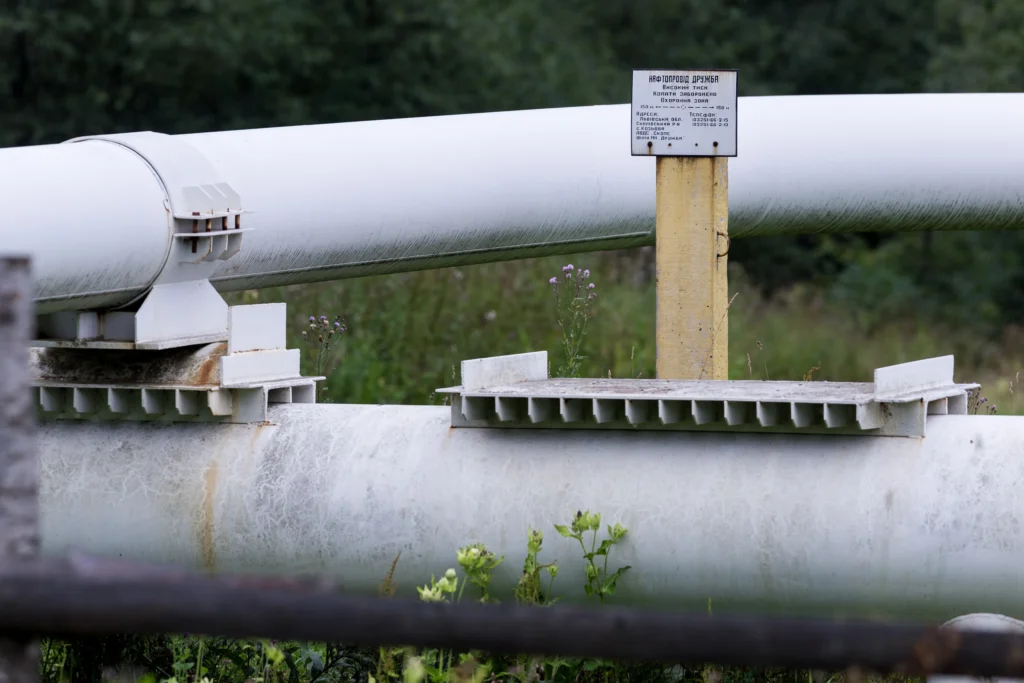
According to sources cited by Reuters, Russia is preparing to suspend the transit of oil that Kazakhstan sends to Germany through the Druzhba pipeline on May 1, 2026.
The German government has already been informed of this decision, but there is no formal notification from Moscow yet. The Kremlin, for its part, has shown contradictory signals, such as Deputy Prime Minister Alexander Novak confirming the suspension citing “technical limitations,” while spokesperson Dmitry Peskov said he was unaware of the measure.
Why is it important for Germany?
This suspension directly hits the PCK refinery in Schwedt, one of the largest in Germany, located about 100 km northeast of Berlin. It is the main source of fuel for the capital, supplying 90% of the gasoline and heating for the Berlin and Brandenburg region.
- Dependence on Kazakh crude: In 2025, Kazakhstan sent around 43,000 barrels per day of oil to Germany through this route.
- How much it affects the refinery: Kazakh crude represents approximately 17% of the Schwedt refinery’s total needs. On a large scale, it accounts for nearly 12% of all crude oil that Germany imports by pipeline.
What alternatives does Germany have?
Germany is already designing a plan to supply the Schwedt refinery through other routes, such as the Polish port of Gdansk or the German port of Rostock. The German government ensures that the country’s general supply is not at risk, but the impact on Berlin and its metropolitan area is undeniable.
This crisis adds to the general instability caused by the war in the Middle East, which has paralyzed energy shipments from the Persian Gulf. In response to this global shortage, airlines such as Lufthansa have already begun canceling flights.
Impact on Europe
The possible shutdown of the Druzhba pipeline highlights the fragility of the European energy system in the face of external factors. Germany, which has already reduced its dependence on Russian oil, remains exposed to risks derived from infrastructure and geopolitics.
In this scenario, the diversification of routes and suppliers remains a strategic priority to ensure supply stability.
Source: Reuters