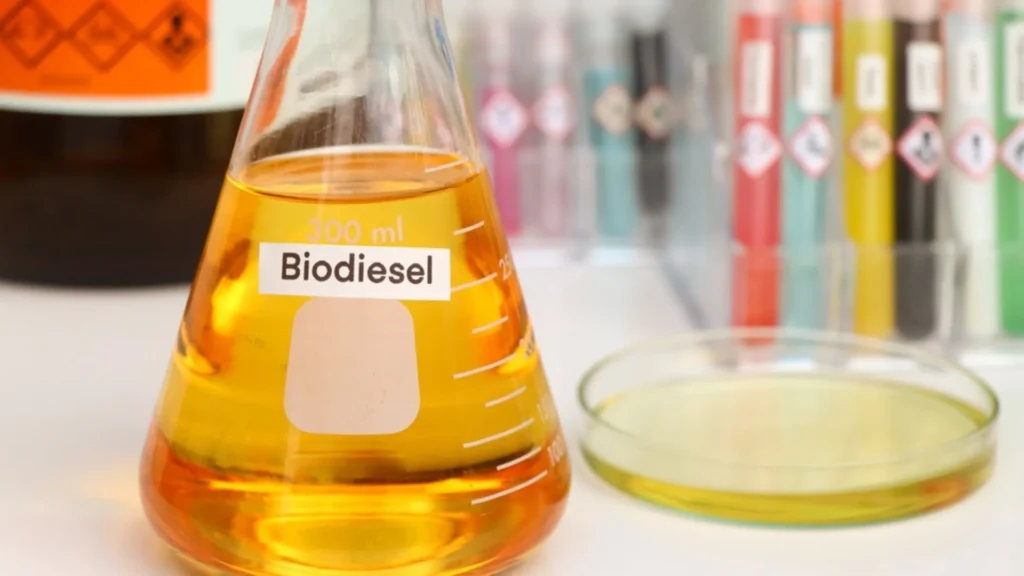
Queensland will allocate A$25 million to a renewable diesel project at the Lytton refinery in Brisbane, aiming to strengthen local fuel supply and reduce its exposure to imports. The initiative, developed in conjunction with Ampol, plans to transform waste, vegetable oils, and animal fats into renewable fuel starting in 2028.
Renewable Diesel to Strengthen Energy Security
Initially, the state government presents the investment as a practical response to a more strained and costly international market. The rising oil prices and pressure on supply chains have brought back to the forefront a priority Australia has been discussing for years: producing more fuel domestically.
In this case, the project will leverage the Lytton refinery to adapt existing infrastructure and enable the production of 20 million liters of renewable diesel annually. This capacity still represents a small fraction of Australia’s daily oil consumption, but it sends a clear signal about the direction of regional energy policy.
Lytton Refinery Prepares to Process Alternative Feedstocks
Furthermore, the focus is on non-fossil raw materials that are already available in various production chains. Industrial waste, used vegetable oils, and animal fats can be integrated into the process to generate a fuel compatible with conventional diesel engines.
This technical detail is key because it reduces adoption barriers. By being usable in the current transport infrastructure and fuel-intensive productive sectors, renewable diesel gains appeal as a transition option to reduce emissions without requiring immediate changes to fleets and equipment.
Queensland Aims to Open the Door to a Local Biofuels Industry
Moreover, the state plan does not end with this initial module. Queensland has already made it clear that it has more funds to continue promoting biofuels and sees room to scale production to hundreds of millions of liters by the beginning of the next decade.
This expectation connects with a long-standing demand from the Australian agricultural sector, which has long called for an industry capable of converting its produce and by-products into higher value-added fuels. The problem, until now, has been profitability. Many producers argue that without public support, it is difficult to justify large-scale investments.
Less External Dependence and More Control Over Supply
Likewise, the political message from the Queensland government points to a broader objective: reducing vulnerability to external markets and logistical disruptions. The David Crisafulli administration stated that the state cannot continue to rely entirely on international supply chains to meet a strategic need.
The combination of local refining, new routes for biofuels, and increased capacity to store and process fuel reinforces this vision. In a context of geopolitical volatility and high prices, Queensland’s move seeks to gain room for maneuver and diversify its supply matrix.
A Project with Energy and Industrial Scope
Finally, the investment also has an industrial interpretation. The development of renewable diesel can activate new supply chains, attract capital towards lower carbon intensity fuels, and provide a more stable commercial outlet for residual raw materials.
If the project meets its initial goals, Queensland could position itself as an Australian benchmark in alternative liquid fuels. Beyond the initial volume, what is relevant is that the state is beginning to build its own capacity in a segment that combines energy security, waste utilization, and the transition to new energies.
Source: Reuters
Photo: Shutterstock