The review of oil contracts in Venezuela is moving key pieces in the service industry. Companies that for years maintained oil rigs and specialized storage equipment began to withdraw them for assembly, inspection and repair, in view of the possibility of new drilling campaigns in the country.
According to information published by Reuters, at least 14 oil rigs are in the process of evaluation or refurbishment. Nine units, with estimated capacities between 500 and 1,500 horsepower, have already left storage to be prepared for land operations, while five others are still under technical review before an eventual transfer to the field.
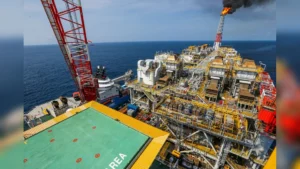
Oil platforms in Venezuela driven by contract review
Since January, when a reform of Venezuela’s reform of Venezuela’s main oil law was approved, foreign and local producers have filedSince January, when a reform of Venezuela’s main oil law was approved, foreign and local producers have submitted documentation to ratify or modify their agreements. The process is due to be completed by the end of July and has already generated initial agreements for area extensions, new blocks and asset swaps.
In this context, oil rigs in Venezuela are back at the center of operational planning. Service companies are seeking to anticipate drilling demand, especially in projects linked to joint ventures between PDVSA and private operators.
In addition, suppliers seem more willing to work with traditional PDVSA partners with stronger payment histories. That condition weighs in a market where financial delays and international sanctions have for years reduced the activity of service companies such as SLB, Halliburton, Baker Hughes and Weatherford.
Orinoco and Maracaibo concentrate equipment demand
The planned deployment targets mainly the Orinoco Belt and Lake Maracaibo. Lake MaracaiboVenezuela’s two major oil producing areas. In both regions, operators will require drilling rigs, auxiliary equipment and specialized services to sustain any increase in activity.
Likewise, producers such as Chevron, Repsol and Shell have announced projects or expansions that would require more drilling units. Although several of PDVSA’s partners have not yet closed their campaign plans, the search for oil drilling rigs already reflects an expectation of greater operational movement.
Oil Minister Paula Henao has also submitted additional equipment requirements, including pumps, frequency converters, wellheads, valves, pipelines, gas compressors and chemicals for drilling, production, processing and transportation of oil and gas.
Repairing in Venezuela can be faster than importing
For companies that already have oil rigs stored in Venezuela stored in Venezuela, local reactivation offers an advantage over importing equipment. Bringing heavy machinery from abroad requires contracts, licenses and authorizations from both Caracas and Washington, which can lengthen deployment times.
However, the repair will not be minor. Some rigs would require investments in excess of US$1 million per unit before returning to the field. For that reason, certain suppliers would be looking for contracts of around 12 months to justify the refurbishment costs.
This point is key to the pace of recovery. Without firm agreements, payment guarantees and clear permits, rig availability will not necessarily translate into immediate drilling.
Venezuela seeks to increase crude oil production
The reactivation of oil platforms in Venezuela occurs while the country is trying to increase its production. According to presentations attributed to the Oil Ministry and seen by Reuters, the objective would be to take pumping to 1.37 million barrels per day by the end of the year, compared to a current level of around 1.1 million barrels per day.
The operational challenge remains broad. The Baker Hughes rig report recorded only two active drilling rigs in Venezuela at the end of March, associated with Chevron projects according to sources cited by Reuters. In addition, the Ministry would have identified the need for 93 rigs through 2028 to boost production, mainly in the Orinoco Belt.
In addition, in Lake Maracaibo, Maurel & Prom is expected to complete the installation of at least one drilling barge this year. drilling barge. This would join another jackup unit operated by China Concord Resources Corp. in an area where oil infrastructure remains strategic.
Signal of confidence, but with pending risks
The outflow of equipment from warehouses suggests that oil service companies oilfield services see a window of opportunity in Venezuela. Even so, recovery will depend on the speed with which contracts are closed, permits are granted and stable commercial conditions are assured.
In industry terms, the move is relevant because stockpiled rigs can accelerate operational response to new deals. However, bureaucracy, penalties, remediation costs and payment concerns will continue to shape the actual drilling schedule.
Source: Reuters
Photo: Shutterstock