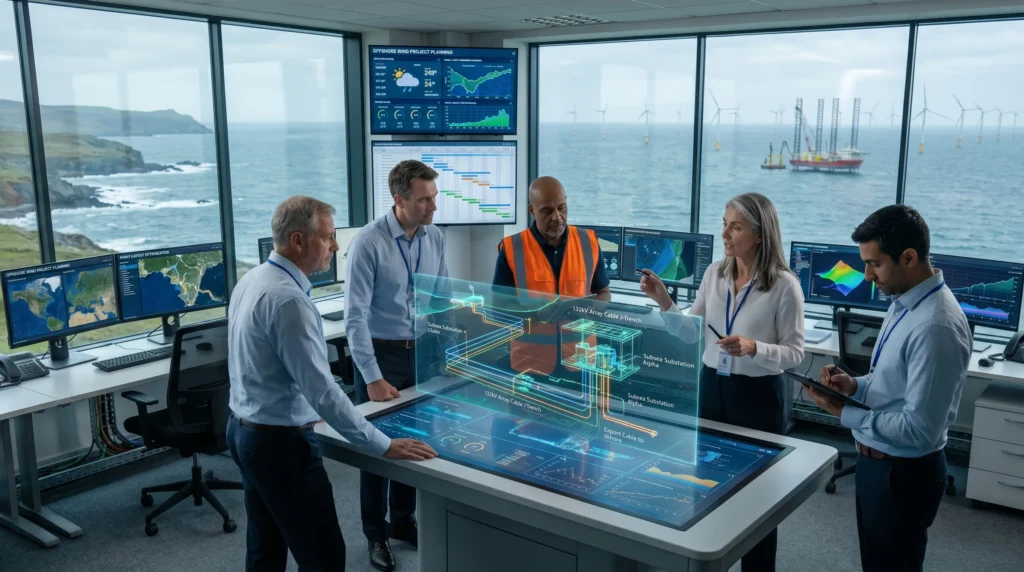
Offshore engineering is establishing itself as a key component for the development of offshore wind energy, subsea transmission, and port infrastructure projects in Europe. The increase in investment in marine assets and the growing technical complexity of offshore installations are driving a greater demand for specialized design, structural analysis, risk assessment, and technical consultancy services throughout the entire project life cycle.
In this context, the emergence of new specialized firms reflects how the market seeks to respond to the challenges associated with the expansion of offshore wind farms, subsea cables, energy ports, and future decommissioning initiatives—sectors that continue to gain relevance within the European energy transition.
Offshore engineering drives new specialized firms
The sustained growth of specialized marine projects continues to generate opportunities for consulting and engineering firms. In this context, the firm Insight Marine began operations in Ireland with the aim of offering technical and commercial services for offshore wind energy developers, transmission system operators, port owners, and investors linked to the maritime sector.
The company was founded by Paul Doherty, a professional with more than two decades of experience in offshore wind energy projects, subsea cable installation, and port infrastructure modernization in Europe.
Subsea cables gain strategic relevance
The growth of the energy transition is increasing the need for new subsea electrical connections to transport energy from offshore wind farms to consumption centers.
The expansion of these projects has driven the demand for services related to subsea cable assessment, structural analysis, marine infrastructure design, and critical asset management. These systems have become fundamental components for improving the integration of renewable energies within European power grids.
Ports and marine infrastructure face new challenges
The transformation of the offshore sector is also generating greater pressure on ports, maritime terminals, and specialized supply chains. The construction and maintenance of offshore energy assets require facilities capable of supporting complex logistical operations and large-scale equipment.
As a result, engineering applied to ports and maritime works has become a key element in ensuring the efficient execution of projects related to offshore wind energy, subsea transmission, and offshore operations.
Offshore growth demands greater technical specialization
In addition to the development of new projects, the market is driving services associated with forensic analysis, finite element modeling, assessment of marine structures, and offshore decommissioning programs.
The combination of regulatory requirements, technical complexity, and increased investment is generating a growing demand for specialists capable of reducing risks, optimizing designs, and improving the reliability of critical infrastructure within the maritime and energy sectors.
The future of offshore engineering in Europe
The expansion of offshore wind energy, subsea transmission systems, and port infrastructure is redefining the role of offshore engineering within the global energy transition. As new offshore projects increase in scale and complexity, the need for specialized knowledge will continue to grow to ensure more efficient designs, safe operations, and proper management of technical and commercial risks.
In this scenario, offshore engineering is emerging as an increasingly decisive factor for the development of marine energy infrastructure, driving new opportunities for companies capable of providing technical expertise in increasingly demanding and competitive markets.
Source: Marinelink