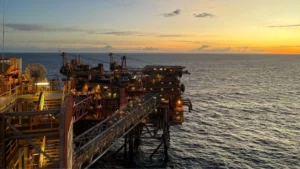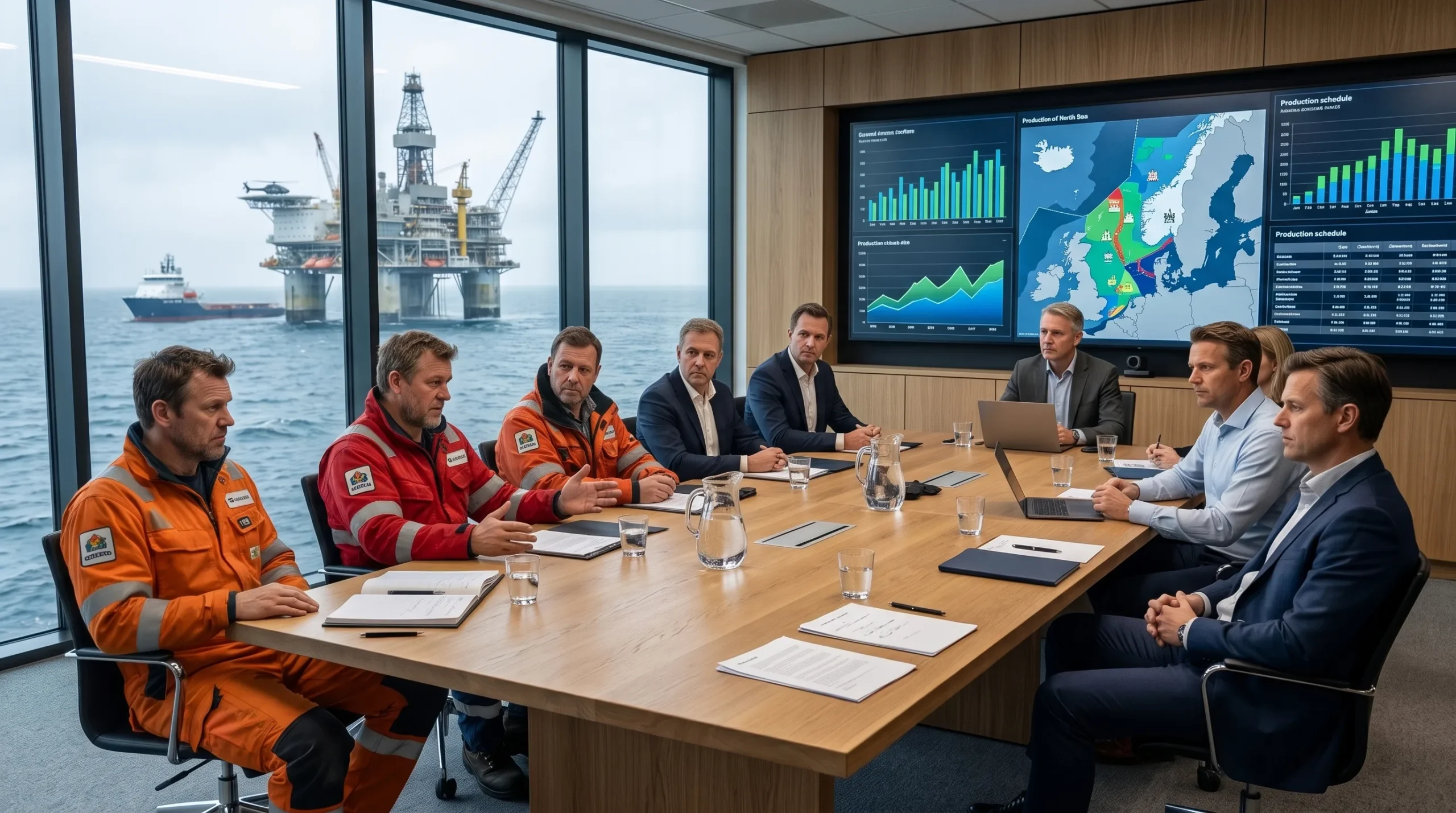
The potential Norway offshore strike enters a critical phase: workers and employers in the sector initiated mandatory mediation on Tuesday to attempt to prevent a stoppage that could disrupt the country’s oil and gas production, the largest energy producer in Western Europe.
The wage dispute involves thousands of workers in the sector, primarily represented by the Industri Energi union, and the main operators active on the Norwegian continental shelf, including Equinor, the state-owned company that dominates national production. The threat of a Norway offshore strike has put European energy markets on alert.
Norway Offshore Strike: Mediation as Last Resort Before Stoppage
Mediation was activated after direct negotiations between unions and the employers’ association Offshore Norge failed to reach an agreement on wage increases. According to sources close to the process, the dispute centers on the revision of base salaries and additional benefits for platform workers. The Norway offshore strike scenario would generate disruptions in energy supply across Europe.
The Norwegian state mediator has a defined deadline to attempt to bring the positions closer together. If mediation fails, the strike could be declared with only a few hours’ notice, which would increase pressure on the industry at a time of high energy demand in Europe.
“A prolonged strike in the Norwegian offshore sector would have an immediate impact on gas flows to the European continent, especially at a time when storage inventories are still below historical levels for this time of year,” note European energy market analysts. Sector analysts warn that the Norway offshore strike could have a direct impact on natural gas prices in Europe.
Norway Produces Nearly 2% of Global Oil Supply
Norway extracts approximately two million barrels of oil per day and supplies around 30% of the gas consumed by the European Union, according to data from the International Energy Agency. Any significant interruption in its offshore operations would have direct repercussions on European energy markets.
Equinor, which operates the country’s main fields including Johan Sverdrup and Troll, has indicated that it is closely monitoring the situation and has contingency plans in place. However, a large-scale strike would seriously compromise its ability to maintain current production levels.
Market analysts note that the timing is especially delicate, as European natural gas prices have remained volatile during the first half of 2026 due to the combination of lower renewable production, reduced inventories, and increased global competition for liquefied natural gas.
Recent Precedents Complicate Negotiations
This is not the first time the Norwegian offshore sector has faced a strike threat. In 2022, a platform workers’ stoppage was prevented just hours before its start thanks to government intervention, which decreed mandatory arbitration citing risk to national and European energy supply.
On that occasion, the government action generated criticism from unions, which argued that the measure violated the right to strike. This situation has created a climate of greater tension in current negotiations, with workers more reluctant to accept concessions without concrete guarantees.
“The offshore sector is strategic for Norway, but that cannot mean that workers always lose their right to negotiate on equal terms,” stated a union representative quoted by local media, reflecting the mood among platform workers.
Potential Impact on Energy Markets
Markets have begun to reflect the uncertainty. European natural gas futures registered moderate increases following the mediation announcement, although market operators are awaiting the outcome of the process before adjusting their positions significantly.
For the global oil sector, a strike in Norway would add another pressure factor in a market already strained by OPEC+ production decisions and uncertainties about demand in China and Europe. Reuters reported that the parties have 72 hours to reach an agreement before the formal strike protocol is activated.
The situation will be closely monitored by European energy ministers, who in recent months have intensified their efforts to secure energy supply amid the decline in Russian gas and competition with Asia for LNG available in spot markets.
Sources: Reuters | Offshore Norge | Equinor