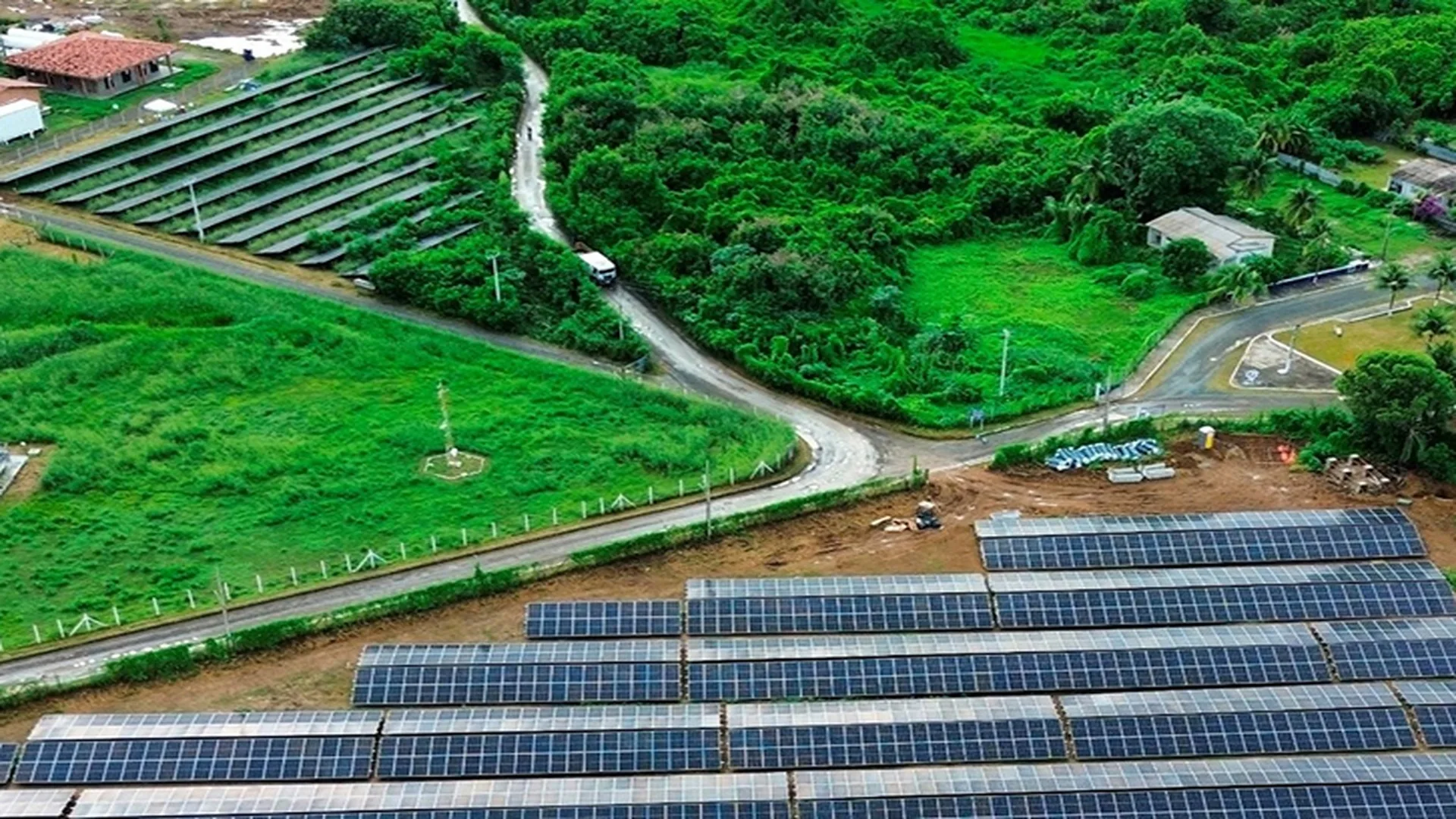
Iberdrola has completed the first phase of the Noronha Verde project in the Brazilian archipelago of Fernando de Noronha after installing 4,800 solar panels and beginning tests to supply energy to the local electricity grid. This figure represents approximately 15% of the future photovoltaic plant that the company is developing together with its subsidiary Neoenergia.
Likewise, the project seeks to transform the island into one of the main benchmarks of energy self-sufficiency in Latin America through a system that combines solar generation and storage with high-capacity batteries.
A solar plant to reduce the use of fossil fuels
The project involves the installation of more than 30,000 solar panels and a total capacity of 22 MWp, along with 49 MWh of energy storage. The infrastructure will cover the equivalent energy consumption of approximately 9,000 homes.
Currently, Fernando de Noronha relies heavily on biodiesel-based electricity generation. With the progressive commissioning of the newsolar plant, it is expected that the use of fossil fuels will be significantly reduced and the archipelago’s energy stability will be improved.
In addition, the initiative incorporates smart grid technologies and distributed microgeneration solutions to optimize the electricity supply on the island.
Neoenergia is leading the execution of the project
The initiative is being developed by Neoenergia, Iberdrola’s Brazilian subsidiary, with an estimated investment of 350 million reais, equivalent to more than 50 million euros. The project is being carried out in collaboration with the Brazilian Federal Government and the State of Pernambuco.
Iberdrola’s CEO, Ignacio Galán, officially presented Noronha Verde alongside the Brazilian Minister of Mines and Energy, Alexandre Silveira, during November of last year as part of the Mais por Noronha program.
This program promotes sustainable electrification solutions through electric vehicle charging infrastructure, solar systems in homes, and the deployment of smart grids.
A sustainable energy model for Latin America
Fernando de Noronha is recognized by UNESCO as a Natural World Heritage Site, which makes the project a highly complex technical and environmental challenge.
The integration of photovoltaic generation and battery storage will increase the island’s energy security and move towards a more efficient and sustainable electricity model.
According to the planned schedule, Iberdrola will complete the total construction of Noronha Verde by the end of 2026, marking one of the largest island energy transition initiatives in the region.
Source and photo: Iberdrola