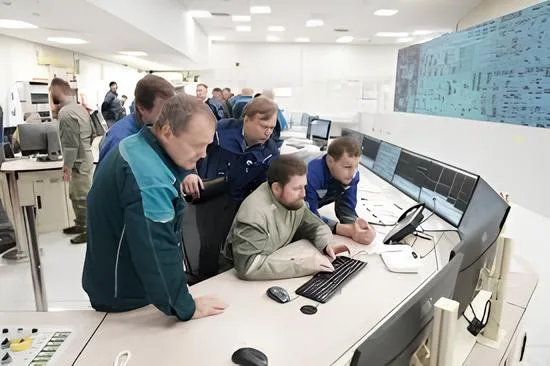
Unit 1 of the Kursk-2 Nuclear Power Plant has successfully completed its comprehensive testing program, positioning it for its upcoming entry into commercial operation under the regulatory oversight of Rostekhnadzor.
Led by Rosatom, the project thus validates one of the country’s most advanced nuclear developments, after completing dynamic tests, system verification, and confirmation of design parameters under real operating conditions.
During the pilot phase, the unit has already generated more than one billion kWh, a key indicator of operational stability and technological maturity ahead of its final authorization for continuous operation.
VVER-TOI raises the bar compared to previous reactors
The technological core of the Kursk-2 project is the VVER-TOI reactor, an evolution of pressurized water designs that introduces substantial improvements over earlier generations such as the RBMK-1000 and VVER-1000.
From a technical standpoint, the VVER-TOI increases output to approximately 1,255 MW, representing an increase of around 25% compared to previous designs. In addition, it doubles the service life of key equipment, optimizing the asset life cycle.
Unlike RBMK reactors, characterized by less robust containment configurations, the VVER-TOI incorporates advanced passive and active safety systems, representing a qualitative leap in nuclear safety standards.
Passive safety redefines nuclear risk management
One of the most significant advances in the VVER-TOI design is the integration of passive safety systems, capable of operating without human intervention or an external power supply, which significantly reduces the likelihood of critical failures.
Among these innovations is the core melt localization system, designed to contain and stabilize molten material in extreme scenarios. This type of technology marks a substantial difference compared to earlier generations.
The combination of active and passive systems creates a redundant architecture that improves operational resilience, aligning with international standards for Generation III+ reactors, focused on minimizing the risks of severe accidents.
Kursk-2: Energy strategy drives Russia’s nuclear transition
The development of Kursk-2 is part of a national strategy aimed at progressively replacing RBMK-1000 reactors with safer and more efficient technologies, ensuring the stability of the power system in key regions.
In addition to improving supply reliability, these new units help increase installed capacity and consolidate low-carbon power generation, a strategic factor in Russia’s energy policy.
In this context, Rosenergoatom continues to position itself as a decisive factor in nuclear expansion, with plans that include the construction of dozens of new units through 2042, strengthening its technological and operational leadership.
Source and photo: https://atommedia.online/