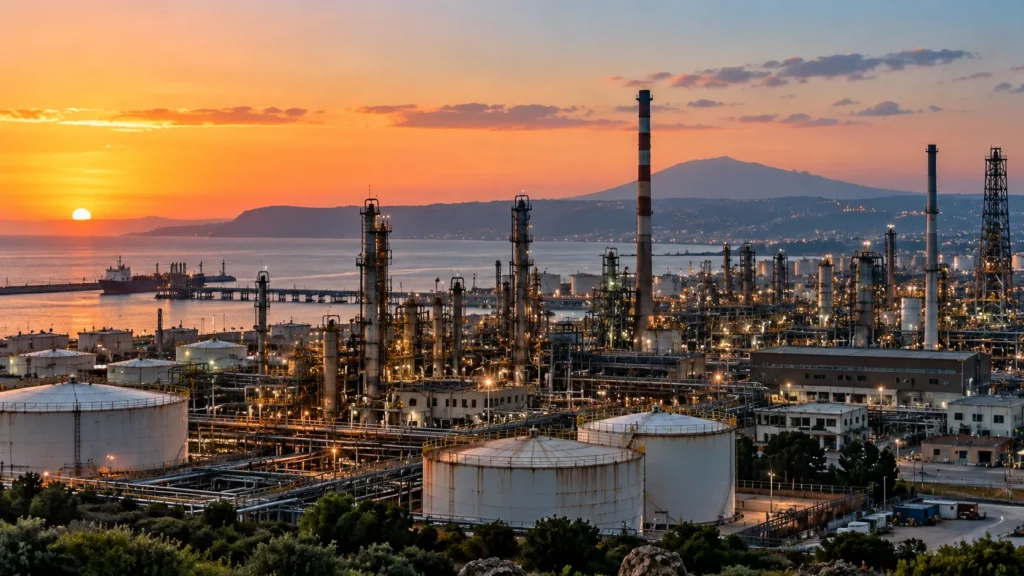
The ISAB refinery in Sicily is entering a new phase following Ludoil’s acquisition of a 51% stake, with the company planning to invest €1.3 billion over the next five years to restart and modernize processing units, restore capacity, and expand the production of fuels such as SAF and HVO. The complex accounts for more than 20% of Italy’s refining capacity.
The investment goes beyond the change in ownership. The new industrial plan calls for work on existing infrastructure at the Priolo North and IGCC South complexes, bringing units that had remained out of service back online while combining conventional refining with a progressive expansion into lower carbon intensity fuels.
ISAB Refinery to Receive €1.3 Billion to Modernize Its Units
Ludoil Capital completed the acquisition of a 51% stake in ISAB from GOI Energy after receiving the corresponding approvals. The transaction gives Ludoil industrial control of the complex located between Priolo, Melilli, and Syracuse, whose enterprise value was set at approximately €1 billion.
The scale of ISAB makes the modernization a significant project for the Italian downstream sector. Reuters notes that the complex accounts for more than one fifth of the country’s refining capacity, while the company plans to allocate approximately €1.3 billion in CAPEX over the next five years.
A significant portion of the capital will be used to restore operating capacity at existing facilities. The program includes the restart and modernization of the primary distillation unit and the HDS desulfurization unit at Priolo North, as well as solvent deasphalting (SDA) and a thermal cracking unit in the South area.
The stated objective is to increase processing capacity and shift the complex’s output toward distillates with lower sulfur and carbon content. Rather than expanding through a new refinery, the strategy seeks to recover and modernize existing brownfield infrastructure.
This type of intervention presents different challenges from those of a greenfield project. Recovering out of service units requires verifying mechanical condition, auxiliary systems, instrumentation, utilities availability, and commissioning sequences before capacity can be restored. Industrial experience with brownfield restart and refinery modernization shows precisely that restarting a unit does not simply involve reenergizing its equipment, but rather restoring interdependent process systems.
ISAB Combines Conventional Refining With SAF and HVO
The second pillar of the program changes the scope of the investment. Ludoil wants to use part of ISAB’s infrastructure to expand renewable fuel production and progressively develop an integrated biofuel chain.
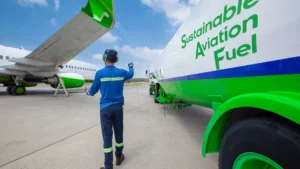
The process has already begun. In July 2026, ISAB began co-processing renewable feedstocks in the Priolo North FCC unit, a facility traditionally associated with converting heavy fractions into higher value products. The strategy calls for using non-food vegetable oils to produce biogasoline and sustainable aviation fuel, while the new plan also incorporates HVO.
The roadmap initially calls for leveraging existing facilities and subsequently developing dedicated units. This model allows renewable feedstocks to be progressively integrated into conventional assets, reducing the need to immediately replace the entire refining infrastructure.
The trend is already emerging at other major complexes. HVO and SAF production at European refineries shows how conventional facilities are incorporating new processing chains to serve renewable fuel markets.
Why Is the ISAB Refinery Strategic for Italy?
ISAB’s importance within the Italian system explains why the transaction received special regulatory treatment. The acquisition was reviewed under Italy’s Golden Power mechanism, while the antitrust authorization process and the assessment under European foreign subsidies regulations concluded without conditions, according to information released about the transaction.
The asset’s relevance increases in an international market exposed to supply disruptions. Reuters notes that the acquisition comes as disruptions to refined products from the Middle East have put pressure on diesel and aviation fuel markets.
The complex will also remain connected to the international crude oil market. ISAB maintains a long-term supply and marketing agreement with Trafigura through 2033. Under the contract, the trader supplies crude oil and other feedstocks to the refinery and purchases approximately 90% of its refined petroleum products.
Therefore, the acquisition changes the industrial control of the asset but does not eliminate its integration with international supply and marketing chains.
Modernization Could Change the Production Profile
Ludoil’s project combines two strategies that for years progressed separately at many refineries: restoring conventional capacity and preparing existing facilities to produce lower carbon intensity fuels.
HDS will strengthen the production of fuels with lower sulfur content, while SDA and thermal cracking can expand the capacity to upgrade heavy streams within the refining scheme. In parallel, co-processing and future dedicated units will allow the share of renewable products to increase.
SAF holds a particularly important position within this transformation. Other projects, such as SAF production through co-processing at the Cartagena Refinery, show how existing refineries can use infrastructure and operational expertise to progressively introduce fuels aimed at decarbonizing aviation.
The strategy will also have an impact on industrial employment. Ludoil is maintaining the current workforce and estimates that the investments could involve around 1,000 additional workers during the five-year implementation period, across engineering, logistics, and construction. Once the program is completed, operations would require approximately 100 new specialized technicians and operators, according to the plan released by the company.
What Will Actually Change at the ISAB Refinery?
The central element will be the combination of restart, modernization, and product diversification. If the program is implemented as planned, units currently out of service will return to the production scheme while the refinery increases its exposure to SAF, HVO, and other biofuels.
However, the €1.3 billion announcement represents an investment plan for the next five years, not new capacity that is already available. The ultimate effect on processing, yields, biofuel production, and reliability will depend on project execution, unit commissioning, and subsequent operating performance.
For the European downstream sector, ISAB therefore represents a relevant case: a major refinery is not immediately abandoning conventional processing, but instead seeks to modernize its existing infrastructure while incorporating new renewable fuel chains.
That combination could shape much of the evolution of European refineries over the coming years: extracting greater value from existing assets, improving fuel specifications, and simultaneously adapting facilities designed for petroleum to an energy market that increasingly demands lower carbon intensity products.