Greece’s Independent Power Transmission Operator (IPTO) announced the completion of the fourth and final phase of the Southern Cyclades electrical interconnection project.
An infrastructure that incorporates the islands of Santorini, Folegandros, Milos and Serifos into the National Electricity Transmission System through the Attica region.
With the completion of the works, Greece finalizes one of the most significant transmission projects developed in the Aegean Sea, designed to improve power supply reliability, reduce dependence on local fossil-fuel-based generation, and enable greater integration of renewable energy.
A submarine network modernizes the island power system
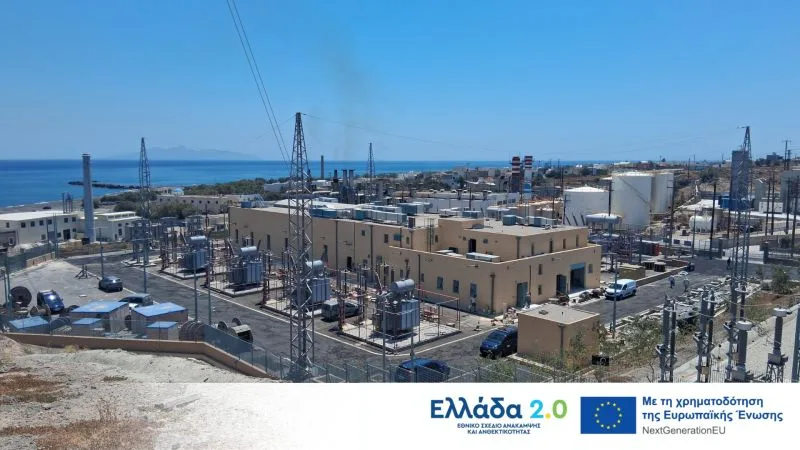
The project included the installation of 294 kilometers of high-voltage cables, both submarine and onshore, as well as the construction of four gas-insulated digital substations (GIS), creating an infrastructure capable of transmitting power from the mainland grid to the islands with higher levels of stability and operational efficiency.
Progressive integration into the national system will begin with Santorini, from where the phased integration of the remaining islands connected during this final phase of the project will be carried out.
Greece: Greater reliability and lower environmental impact
The new infrastructure will make it possible to progressively replace island power generation based on less efficient thermal plants, reducing both supply-related emissions and the system’s operating costs.
According to IPTO, the interconnection will increase the archipelago’s energy security, reduce the islands’ environmental footprint, and lower charges associated with Public Service Obligations (PSO), a mechanism used to finance the high cost of supplying isolated power systems.
A strategic investment for the energy transition
The final phase of the project represented a total investment of €385.7 million, partially financed with €164.5 million from the Greece 2.0 program of the European Union Recovery and Resilience Facility, as well as loans from the European Investment Bank (EIB) and other resources aimed at strengthening the national energy infrastructure.
The modernization of the transmission grid is part of Greece’s strategy to increase the resilience of the power system and prepare the infrastructure needed for greater penetration of renewable generation in the Aegean Sea.
Source and photo: https://www.linkedin.com/