Höegh Evi validates its ammonia cracker
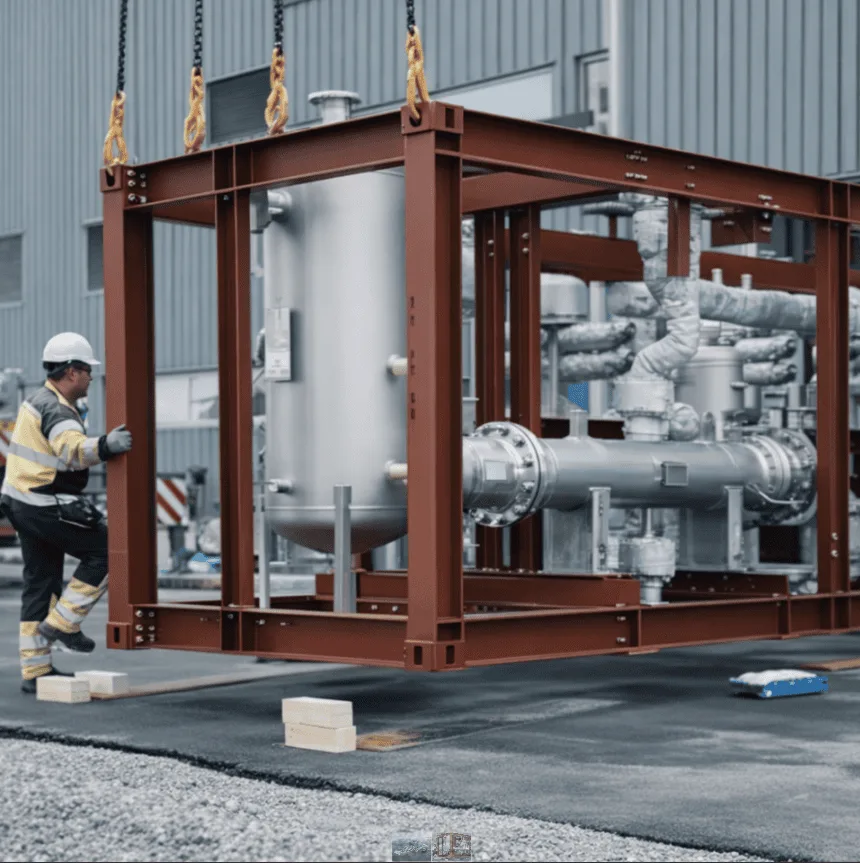
Höegh Evi and Nord Gas Solutions (formerly Wärtsilä Gas Solutions) completed performance testing of their ammonia-to-hydrogen cracking technology at Sustainable Energy’s pilot plant in Stord, Norway.
The unit demonstrated strong performance in conversion rate, efficiency, hydrogen yield, and operational flexibility, producing hydrogen with purity above 99.5% through a unique and stable process, as both companies confirmed.
The modular design allows the unit to be installed both at floating terminals and at onshore plants. Höegh Evi is developing floating terminals with industrial-scale hydrogen supply capacity of up to 200,000 tonnes per year, within a consortium that includes BASF, the catalyst supplier, the University of South-Eastern Norway, Sustainable Energy, and the Norwegian Institute for Energy Technology (IFE), supported by Norway’s Green Platform programme.
Fifteen months between building and validating the equipment
What this week’s statement omits is that the physical cracker is not new: Höegh Evi and its partners had already announced in April 2025 the completion of construction of this same equipment, presented at the time as “the world’s first floating ammonia-to-hydrogen cracker”.
In other words, between completing construction and formally validating its performance, nearly fifteen months of commissioning tests elapsed—the real maturation time required by any first-of-a-kind (FOAK) technology before it can be scaled commercially.
That timeframe matters because it reveals where the inefficiency really lies in the imported hydrogen supply chain: not in hardware construction or financing—the project received around €5.9 million from the Norwegian Government.
That is only 50% of the total budget, with the remainder provided by the industrial partners, but rather in demonstrating consistently that the process operates stably and with the purity required for industrial use. Only after that validation can a technology be considered ready for a final investment decision (FID).
Ammonia: the preferred vector for those imports
The European Union aims to consume 20 million tonnes of renewable hydrogen per year by 2030, half of it through imports from regions with abundant and low-cost renewable energy.
Ammonia—more energy-dense and easier to transport by ship than liquid hydrogen—is emerging as the preferred vector for those imports, and floating terminals like Höegh Evi’s, with storage capacity of up to 120,000 m³ of ammonia, seek to avoid building fixed port infrastructure while hydrogen demand remains uncertain.
Source and photo: https://hoeghevi.com/