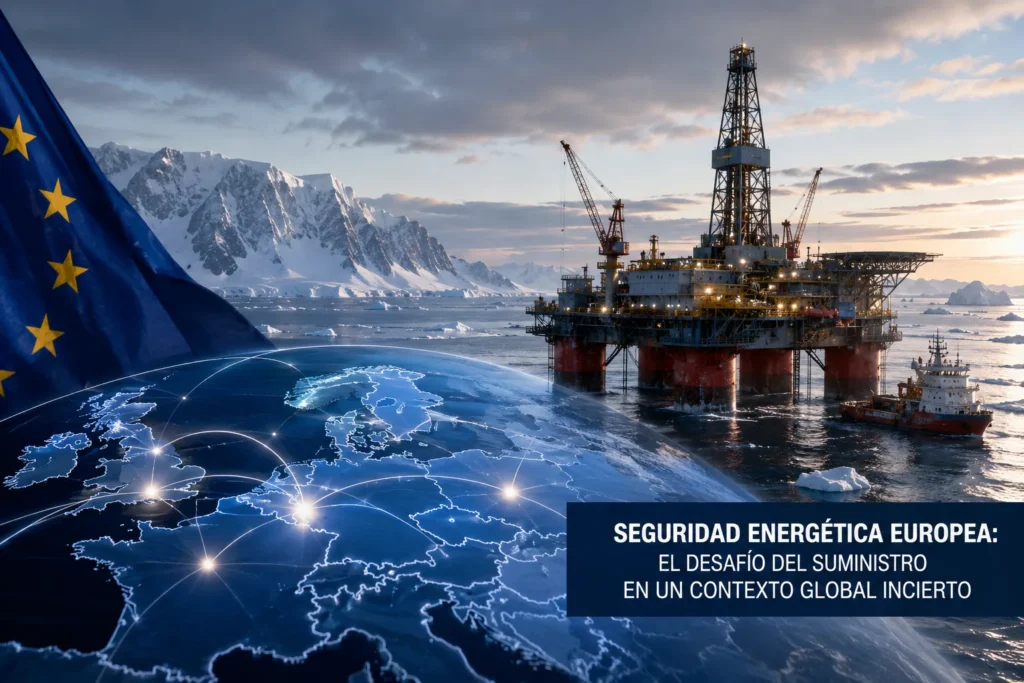
European energy security faces a new strategic dilemma: maintaining a stable supply of oil and gas without expanding production in environmentally sensitive regions such as the Arctic. The debate is gaining momentum again as Norway defends its northern resources as a guarantee of supply for Europe, while pressure grows from investors demanding that the energy transition and ESG criteria be prioritized.
Norway has established itself as one of Europe’s most important energy suppliers following the reshaping of the continental gas market. Its role as an exporter of pipeline natural gas makes it a key player in regional energy stability, especially in a context marked by geopolitical tensions, LNG volatility, and the need to reduce dependence on external supplies that are more exposed to maritime or political risks.
European energy security amid the decline of the North Sea
The debate over the Arctic comes at a time when mature North Sea fields are facing a gradual decline in production. For Norway, developing new areas could offset that decline and sustain its export capacity over the coming decades.
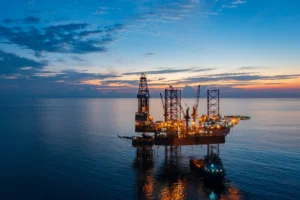
From an industrial perspective, exploration in Arctic areas represents a complex technical frontier. Operations require offshore infrastructure capable of withstanding extreme conditions, specialized logistics, advanced environmental monitoring, spill prevention technologies, and high asset integrity standards. This increases costs, but also opens opportunities for engineering, inspection, maintenance, subsea, corrosion control, and remote monitoring providers.
European energy security drives new energy decisions
The gradual decline in production from mature North Sea fields has led Norway to consider developing new resources located in Arctic regions. For Oslo, these reserves represent an opportunity to maintain its role as a strategic supplier of hydrocarbons to the European market, especially after the continent increased its reliance on Norwegian gas following the reduction of imports from Russia.
The debate has intensified in a geopolitical context marked by volatility in energy markets and recent tensions in the Middle East—factors that have once again highlighted the importance of diversifying supply sources and strengthening European energy resilience.
Investors question Arctic oil expansion
Several European financial institutions and investment funds recently expressed their opposition to expanding exploration projects in the Norwegian Arctic, arguing that these initiatives could increase environmental risks in one of the planet’s most sensitive ecosystems and make it harder to meet Europe’s established climate targets.
Investors argue that capital allocation should prioritize low-emission technologies and projects aligned with the energy transition. This stance reflects the growing influence of ESG criteria on financing decisions within the international energy sector.
Although environmental concerns continue to gain weight in financial markets, the debate highlights the differences between investors’ priorities and the supply needs European countries face.
Norway defends offshore oil development
The Norwegian government maintains that exploration in the Arctic is a necessary alternative to offset the natural decline in production in other areas of the country and preserve the security of energy supply to Europe.
Authorities also argue that Norway’s oil industry operates under some of the world’s most stringent environmental and regulatory standards, which would allow new offshore projects to be developed with high levels of operational safety and environmental control.
From an industrial perspective, expanding these activities also represents opportunities for companies linked to offshore engineering, industrial inspection, mechanical integrity, shipbuilding, subsea systems, and technologies for operations in extreme environments.
The balance between energy and transition will continue to shape Europe’s agenda
Norway’s case illustrates one of the main challenges currently facing the international energy sector: balancing the need to ensure a reliable supply of hydrocarbons with pressure to accelerate the transition toward lower-impact sources.
As Europe seeks to reduce its emissions and move toward a more sustainable energy mix, market realities continue to show that oil and gas play a fundamental role in ensuring the stability of the energy system, especially during periods of geopolitical uncertainty or supply chain disruptions.
The evolution of this debate will influence future offshore investments, European energy strategy, and the development of new capabilities to ensure secure supply over the coming decades.
Source: Oil Price