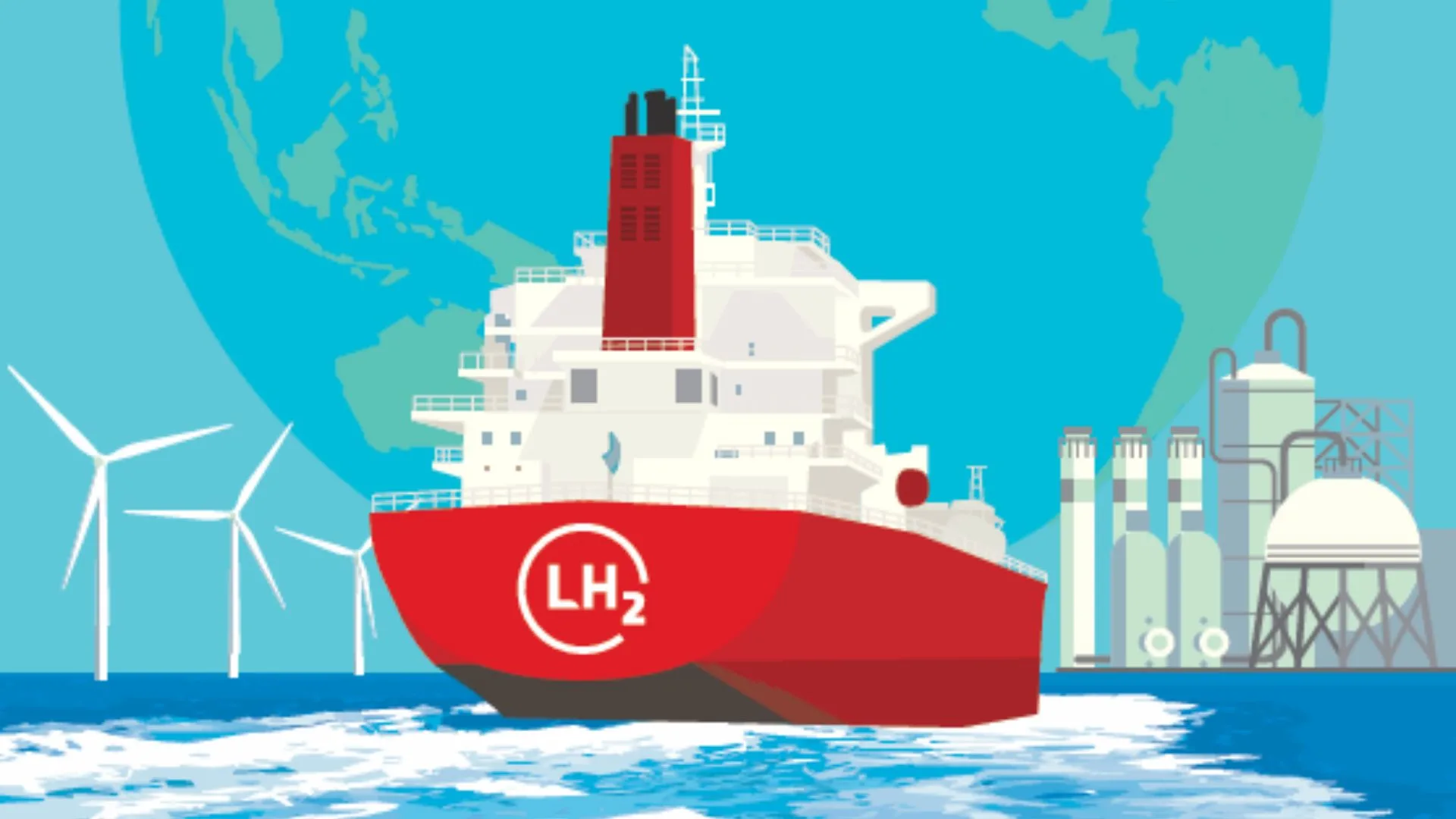
ClassNK updated its Guidelines for Liquefied Hydrogen Transport Vessels with the publication of Edition 3.1, incorporating safety requirements adopted by the International Maritime Organization (IMO) for the bulk transport of this fuel.
The revision introduces technical criteria aimed at new liquefied hydrogen vessel designs. These include requirements for membrane-type cargo containment systems, vacuum insulation, and the selection of materials used in equipment exposed to hydrogen.
Likewise, the new guidelines seek to provide shipyards, designers, and shipowners with a clearer technical reference during design studies, safety assessments, and the processes required to obtain the corresponding maritime approvals.
IMO Expands Requirements for Transporting Liquefied Hydrogen
This change responds to the evolving landscape of maritime hydrogen transport. The development of these types of vessels is progressing as an alternative for moving large quantities of this energy carrier, while different design concepts from those used in early projects are emerging.
In particular, membrane-type cargo containment systems have gained greater relevance. This evolution led the IMO’s Maritime Safety Committee to revise its recommendations during MSC 111.
Resolution MSC.597(111) establishes the revised interim recommendations for the bulk transport of liquefied hydrogen. ClassNK incorporated these provisions into Edition 3.1, along with knowledge gained from demonstration vessels and research and development projects.
New Requirements for Membrane Tanks and Vacuum Insulation
One of the main changes affects liquefied hydrogen transport vessels equipped with membrane tanks that use vacuum insulation.
The guidelines detail criteria related to the design of these insulation systems. They also cover monitoring devices, pressure control equipment, and measures for emergency response.
These requirements allow developers of new vessels to have internationally recognized safety criteria from the early stages of the project.
This way, studies aimed at demonstrating design safety can proceed with a defined technical reference before requesting approval from the Flag State Administration.
Materials and Welding Receive Greater Attention
Another central point of Edition 3.1 is the selection of metallic materials used in hydrogen-related equipment.
ClassNK updated verification procedures applicable to materials, testing, and quality control based on its experience in design reviews and technical project evaluations.
The objective is to consider, from the engineering stage, degradation phenomena that can affect vessel components when operating under the particular conditions required for transporting liquefied hydrogen.
Among the phenomena considered are low-temperature embrittlement, hydrogen embrittlement, and hydrogen attack.
Welding practices are also part of this revision. A more precise evaluation of materials and joints can reduce the need for subsequent design modifications or additional technical verifications.
Safety for a New Generation of Hydrogen Vessels
The development of liquefied hydrogen carriers poses technical challenges distinct from those encountered in other gas transport vessels.
Therefore, ClassNK’s update connects new containment system concepts with IMO-approved criteria and experience gained from demonstration projects.
With Edition 3.1, future designs have a more detailed reference for addressing vacuum insulation, pressure control, emergency response, and material behavior.
This technical framework gains relevance as interest in large-scale hydrogen transport increases and the maritime industry explores new configurations to do so safely.
Source and photo: ClassNK