The Aphrodite field is moving forward again in Trinidad and Tobago after Shell and the National Gas Company (NGC) reached an agreement on commercial terms for natural gas supply. The agreement resolves the pricing dispute that had delayed the project and clears the way for production to begin in the second quarter of 2027.
The development has significance beyond a single offshore project. Trinidad and Tobago is seeking to recover gas volumes after years of declining production that have reduced LNG exports and affected feedstock supplies for its petrochemical industry. Aphrodite could become a new source of gas that takes advantage of energy infrastructure already in place.
Aphrodite Field Overcomes a Key Obstacle to Its Development
The commercial resolution represents a significant change from the situation just a month ago. Shell had released the jack-up rig initially scheduled to drill the Aphrodite well after failing to reach commercial terms with NGC. The project had been temporarily stalled despite having a final investment decision in place since 2025.
The agreement now allows development to resume, with first gas expected during the second quarter of 2027, according to Gerald Ramdeen, chairman of NGC. Shell confirmed that it continues to work with the state-owned company to strengthen the countrys gas supply, although it noted that the commercial details remain confidential.
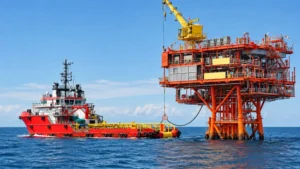
Aphrodite was discovered in 2022 in the East Coast Marine Area (ECMA) of Trinidad and Tobago. The previously announced development concept includes a single-well subsea tieback connected to existing infrastructure, with the gas routed through the Dolphin A platform. Estimated peak production is around 107 million cubic feet per day (MMscf/d).
The use of existing infrastructure is technically significant because it allows new reserves to be brought online without building an entirely independent processing and transportation chain from scratch.
Why Is Aphrodite Important for Trinidad and Tobago Gas Supply?
The Caribbean country has considerable gas and LNG infrastructure, but it needs new sources of feedgas to offset the depletion of mature fields. NGC acts as an aggregator, purchasing gas from producers to supply downstream customers, including the petrochemical industry and Atlantic LNG, in which Shell holds a 45% stake.
Aphrodite will not solve the structural supply deficit on its own. Reuters describes its expected contribution as modest, but its production could help restore available volumes for an industrial chain where every additional molecule of gas is increasingly important.
This situation reflects a challenge also seen in other markets: having liquefaction capacity does not guarantee LNG production if there is not enough gas to feed the facilities. The evolution of global natural gas and LNG infrastructure shows how upstream production, transportation, processing and export capacity must advance in a coordinated manner.
Coconut Adds Another 300 Bcf to NGC Supply
Aphrodite is not the only project that could provide new volumes. NGC also agreed to purchase the EOG Resources share of gas from the offshore Coconut project, developed jointly with BP. According to Ramdeen, the agreement would add 300 Bcf of gas to NGC supply.
Unlike some of the gas associated with the LNG value chain, the volumes corresponding to EOG will be directed to the Trinidad and Tobago petrochemical sector. This adds another dimension to the strategy: recovering gas not only for export but also to support local industries that rely heavily on this feedstock.
The need for new offshore developments coincides with growing interest in projects capable of connecting to existing infrastructure, a strategy that can reduce the need for additional facilities and accelerate resource monetization. The development of gas fields using existing offshore infrastructure is gaining relevance precisely because of its ability to integrate new volumes into systems that are already operating.
Venezuela Is Also Part of the Gas Equation
The recovery of Trinidad and Tobago gas supply also includes a regional dimension. Shell and BP are working on cross-border developments that could allow gas produced in Venezuela to be transported to Trinidad for processing and export. Reuters notes that these projects are considered important for replenishing feedgas for Atlantic LNG and supporting the energy sector over the next decade.
The possibility of connecting Venezuelan resources with Trinidadian infrastructure demonstrates the strategic value that gas projects between Venezuela and Trinidad and Tobago are gaining within the Caribbean energy landscape.
The return of Aphrodite to the development schedule is therefore one piece of a much larger strategy. Its planned production in 2027 would join other domestic projects and potential regional supplies aimed at stabilizing a chain connecting offshore fields, subsea infrastructure, petrochemicals and LNG.
For Shell and Trinidad and Tobago, the challenge now shifts from commercial agreement to execution: restoring the schedule, advancing the activities required to develop the field and turning the agreement reached with NGC into available gas molecules during 2027.
Main source: Reuters