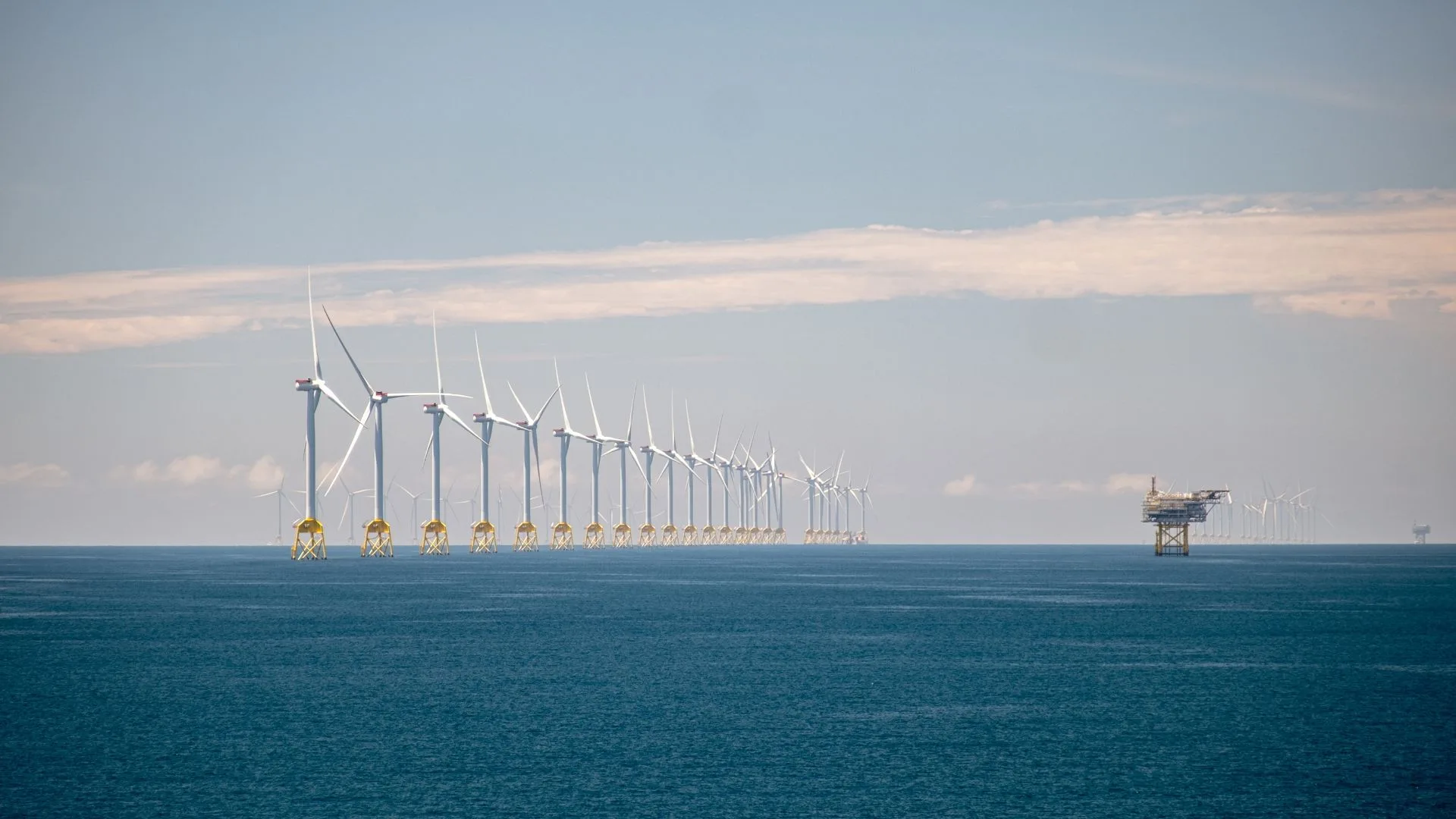
18 MW floating wind turbine it will be the centerpiece of Aura Sul Wind, the pilot project that American Bureau of Shipping (ABS) and Japan Blue Energy (JB Energy) will promote off the coast of Rio Grande do Sul, Brazil. The cooperation was formalized through a memorandum of understanding between the two companies. The agreement includes studies related to reducing port emissions and planning the life cycle of the floating infrastructure. According to information available from the Brazilian Institute of Environment and Renewable Natural Resources (IBAMA), Aura Sul Wind will have a capacity of 18 MW using a single floating unit, the project entered the environmental licensing process for offshore wind installations in 2026.
The 18 MW floating wind turbine will use the Raijin Float platform
For its part, JB Energy plans to install the wind turbine about Raijin Float Aura Sul Wind, a semi-submersible platform made of prestressed concrete developed by the company, is designed to be manufactured in Brazil, a feature that could favor the participation of the local supply chain, IBAMA has already issued the Terms of Reference related to the environmental license for Aura Sul Wind. This procedure establishes the basis for the studies that will analyze the potential impacts of the offshore installation, the use of a floating platform allows wind power generation in areas where the characteristics of the seabed make the use of conventional foundations difficult, in this case, Aura Sul Wind will also serve as a pilot project to evaluate a high-capacity floating solution in Brazilian waters.
ABS will study the reduction of emissions at the Port of Rio Grande
As project planning progresses , ABS will analyze options to reduce emissions from the Port of Rio Grande the study will consider alternatives such as electrification, the integration of renewable energies, and various low-carbon logistics solutions. It will also explore opportunities related to the use of clean fuels and the infrastructure needed to incorporate these technologies into port operations, in this way, the cooperation between ABS and JB Energy will extend beyond the wind turbine itself, the port will play a key role in the strategy, as port facilities will be essential for the logistics operations associated with large-scale floating wind turbines.
The dismantling of Raijin Float will be planned from the beginning
ABS and JB Energy will also study the future from the earliest stages, dismantling of Raijin Float the analysis will cover the removal of the platform, towing and transport operations, and the work required to dismantle the structure once its operational life is over. The study will also consider port logistics, environmental and safety aspects, as well as the possibilities for recycling or reusing the materials used in the concrete platform.
With this approach, the entire infrastructure lifecycle begins to be evaluated from the initial phase of Aura Sul Wind, rather than leaving decommissioning planning until the end of operations, the companies seek to anticipate available technical and logistical alternatives. Rodolfo Gonçalves, CEO of JB Energy, explained that the collaboration will allow port decarbonization, lifecycle analysis, and decommissioning strategies to be incorporated into the project’s development from the outset.
With a planned capacity of 18 MW Aura Sul Wind is thus emerging as a pilot project to evaluate not only floating wind technology, but also the industrial, environmental and port processes necessary for its installation, operation and future removal in Brazil.
Source: Offshore Wind
Photo: Shutterstock