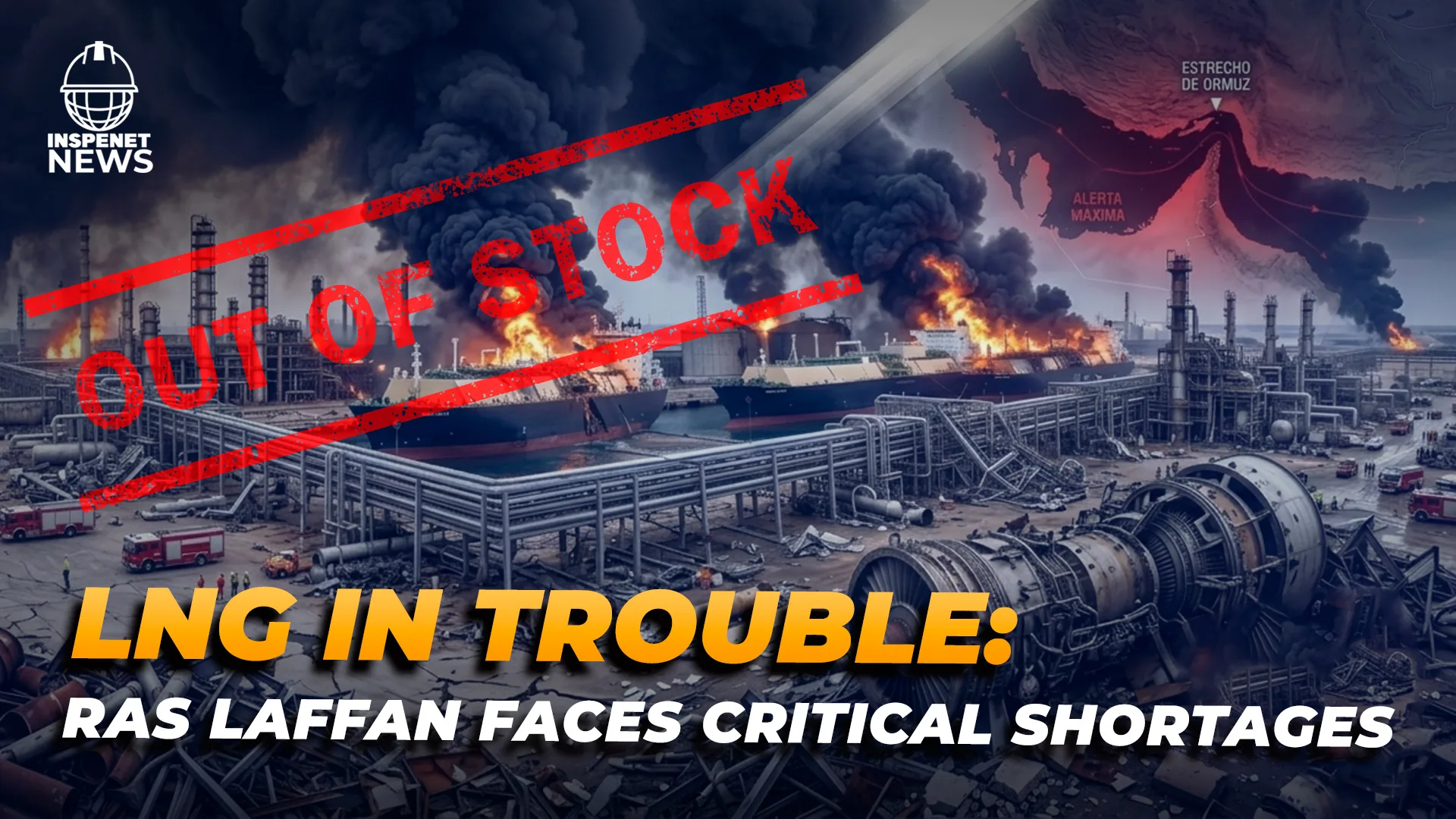
Persian Gulf faces energy crisis amid war
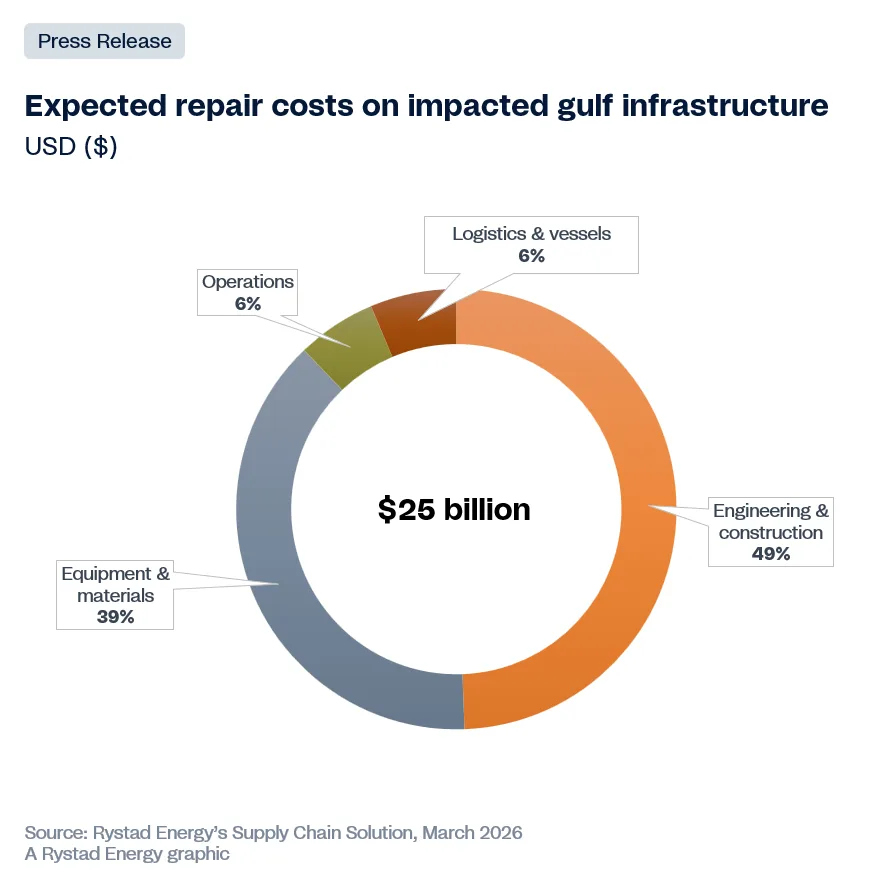
Amid the escalating war in the Middle East, the Persian Gulf is facing significant deterioration in its energy infrastructure. Initial estimates place repair costs at at least $25 billion, a figure that could rise as additional damage is assessed.
In addition, disruptions at processing plants, refineries, and terminals have reduced the region’s operational capacity. This situation is already being reflected in international markets, putting upward pressure on oil prices.
Qatar and Iran bear the greatest damage
On one hand, Qatar stands out as one of the most affected countries. In the Ras Laffan industrial area, the destruction of several LNG plants has led to a nearly 17% drop in production capacity. This reduction represents millions of tons per year removed from the global market.
Similarly, Iran faces a different scenario, sanctions limit its access to Western technology and suppliers, forcing reliance on local and Asian partners. This factor could extend recovery timelines and increase operating costs.
Bahrain and the impact on recent investments
Meanwhile, Bahrain is dealing with a direct blow to its infrastructure following attacks on the BAPCO refinery. The affected facilities included recently modernized units, delaying the recovery of investments made in recent years.
In this context, repairs involve not only physical reconstruction but also the management of contracts, insurance, and additional costs stemming from the conflict.
Industrial limitations slow recovery
However, capital is not the only obstacle. The availability of critical equipment, such as large gas turbines, represents a significant bottleneck. Currently, major manufacturers face delays of two to four years due to high global demand.
This situation complicates the restart of LNG plants and other facilities essential to energy supply.
Local capacity makes the difference
At the same time, recovery speed varies depending on the strength of each country’s industrial ecosystem. In Saudi Arabia, for example, the presence of technical teams allowed operations at some facilities to resume more quickly.
In contrast, countries with less local capacity face slower and more costly recovery processes.
Global impact on oil prices
Finally, the impact of the conflict extends beyond the region. Each day of disruption in the Persian Gulf reduces available supply in international markets, increasing volatility and pushing oil prices higher.
As repair work progresses, operators are prioritizing the restoration of existing production over new developments. This decision could influence the global energy balance in the coming years.
Additional news of interest
New membrane improves hydrogen purity
A team from the Institute of Materials Science of Madrid developed a membrane capable of increasing hydrogen purification efficiency by nearly ten times compared to current technologies. The breakthrough is based on incorporating a porous material that enhances molecular separation, achieving higher gas permeability and improved filtration capacity. Additionally, the manufacturing process reduces production time from days to just hours.
The development responds to growing interest in hydrogen as an energy source, especially in industries requiring high levels of purity. The new technology also stands out for its more sustainable approach, reducing solvent use and minimizing waste generation. Although large-scale application is still under evaluation, its industrial potential is significant, particularly in the petrochemical sector.
Voliro launches batteries that eliminate inspection downtime
Voliro introduced new smart batteries for its industrial drone, the Voliro T, designed to be swapped without shutting down the equipment and to keep operations running. These units allow flights to resume in under 20 seconds and feature real-time monitoring of their status, while also meeting air transport standards. They include features such as self-heating for cold climates and automated management to prevent premature wear.
The system aims to optimize industrial inspections, where time and continuity are critical factors. By eliminating downtime for recharging, more tasks can be completed in less time while improving data quality. This is particularly useful in sectors such as oil, energy, and infrastructure, where constant inspections are required under complex conditions and limited access windows.
Ammonia engine gains power in maritime sector
Wärtsilä announced an upgrade to its Wärtsilä 25 Ammonia engine, which now delivers higher power per cylinder and matches the performance of engines running on liquefied natural gas. This improvement reduces the number of cylinders required in vessels, simplifying design, easing maintenance, and improving operational efficiency. The engine can also be adapted to run on different fuels, expanding its use across various maritime applications.
The new power range positions it as a viable option for both main and auxiliary propulsion. The technology has been validated in recent tests and will be commercially available for delivery starting in 2028. This development responds to growing interest in ammonia as an alternative energy source in the maritime industry, which is seeking to reduce emissions and meet international environmental targets.
TGS strengthens energy exploration in Equatorial Guinea
TGS signed a strategic agreement with Equatorial Guinea to develop and enhance seismic and geophysical data across its offshore basins. The initiative includes reinterpreting legacy data along with acquiring new information, using advanced technologies to gain a more accurate view of the subsurface. The goal is to facilitate future exploration activities and optimize the identification of energy resources in the region.
The agreement includes a comprehensive approach combining data processing, new imaging techniques, and multisensor technology to improve data quality. This will help reduce risks in areas with oil potential and provide companies with a stronger foundation for investment and development decisions in the country.