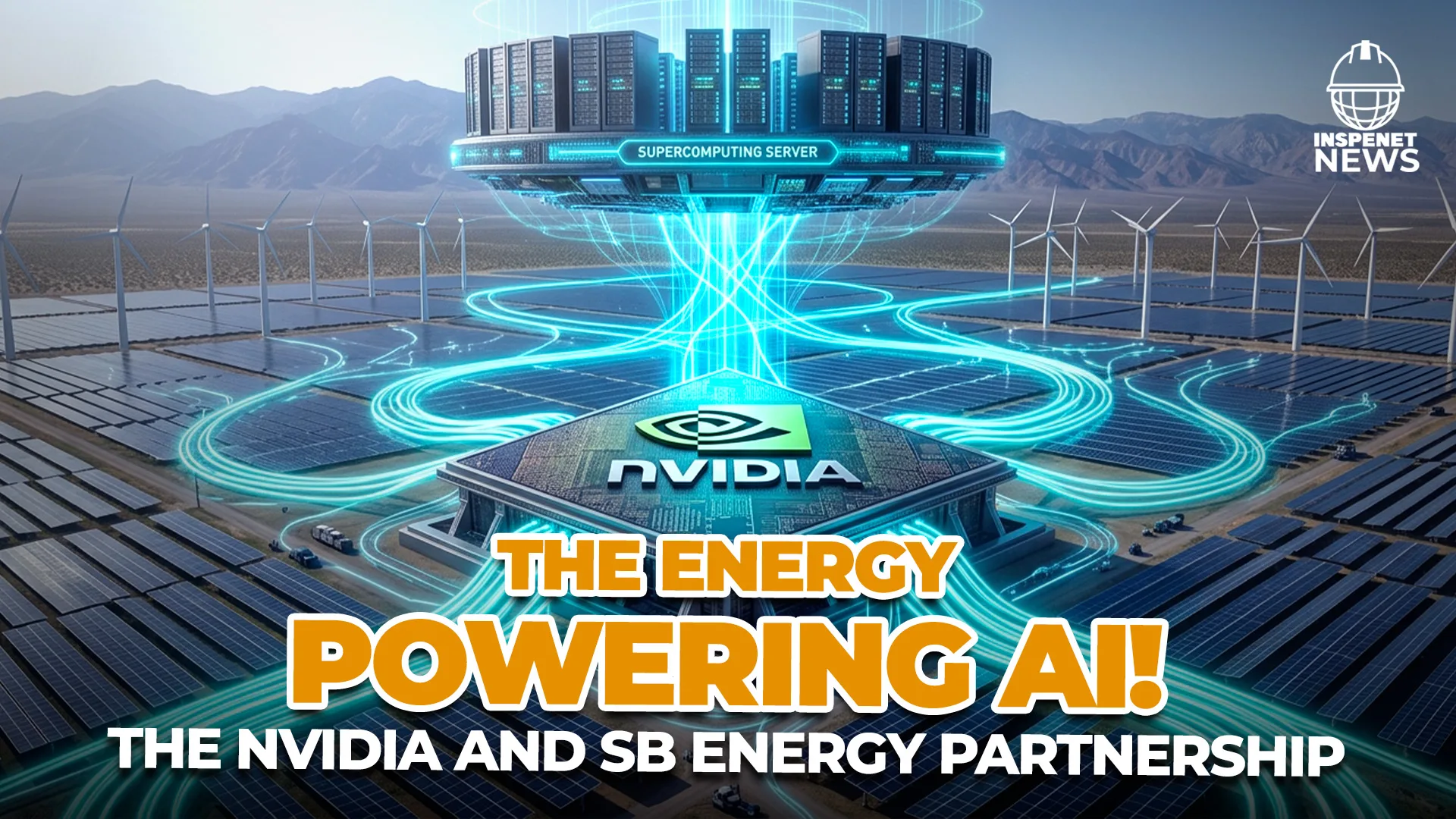
Nvidia is considering investing up to $3 billion in SB Energy
Nvidia is in talks to invest up to $3 billion in SB Energy, a SoftBank Group subsidiary involved in the development of a data center for OpenAI in Ohio , according to a report published by The Information and picked up by Reuters.
Furthermore, the potential deal is part of broader negotiations between Nvidia, OpenAI, and SB Energy . These negotiations involve approximately $100 billion in credit backing to finance the future infrastructure complex.
For now, the deal remains in the negotiation phase. Reuters noted that it could not independently verify the information. Nvidia and SB Energy also did not immediately respond to requests for comment made outside of normal business hours.
Nvidia would divide its potential investment in SB Energy
According to The Information, Nvidia has proposed distributing the $3 billion in two transactions . The first would involve an investment of $1.5 billion when the agreement related to the Ohio project is signed.
Nvidia would subsequently contribute another $1.5 billion as part of SB Energy's planned IPO. This would allow the chipmaker to become one of the project's financial participants and increase its exposure to infrastructure for artificial intelligence workloads.
However, the talks could still change; the figure mentioned represents the maximum that Nvidia is considering investing, according to people familiar with the negotiations cited by The Information.
OpenAI's data center in Ohio expands operations
On the other hand, the potential outlay of 3 billion represents only a portion of the support that Nvidia is discussing for the project.
The company is in talks with OpenAI and SB Energy to provide around $100 billion in credit support related to the future Ohio data center.
This figure highlights the financial needs that accompany the expansion of artificial intelligence infrastructure . Data centers dedicated to these workloads require vast amounts of computing power and energy.
In this scenario, Nvidia could have a stake that goes beyond simply supplying its processors. Its potential investment in SB Energy and the discussed financial backing would also link it to the infrastructure needed to run AI systems.
SB Energy prepares for its initial public offering
Meanwhile, SB Energy plans to go public and could raise at least $5 billion through its initial public offering, according to the information cited.
The potential IPO takes on special importance within the negotiations; half of Nvidia's investment would be associated precisely with that process if the talks materialize under the proposed terms.
SB Energy was founded in 2019 and develops large-scale energy projects and data center infrastructure. It is also backed by OpenAI and operates several campuses designed to meet the growing demand for AI-related workloads .
Therefore, an Nvidia stake would add another connection between the companies that are funding, developing, and using the infrastructure needed to expand artificial intelligence capabilities.
Nvidia could expand its role in AI infrastructure
In turn, the negotiations show how the growth of artificial intelligence is linking chip manufacturers, model developers, energy companies, and data center operators.
Nvidia holds a particularly important position due to the use of its processors in AI systems . A direct investment in SB Energy would extend that relationship to projects responsible for providing the physical and energy capacity to run these workloads.
OpenAI is at the other end of that demand; the development of large-scale data centers would allow for an increase in the infrastructure available to train and operate its models.
SB Energy would act as another component of that chain by constructing energy facilities and projects. SoftBank, as a group related to the company, completes the set of actors involved in the transaction.
The project's financial plans have changed.
Finally, the figures associated with the Ohio project have evolved during the negotiations.
The Wall Street Journal reported that Nvidia had revised its plans to support the proposed OpenAI data center. According to the report, the initial guarantee is now expected to be less than $120 billion, down from the $250 billion previously considered.
Subsequent information places the credit support talks at around $100 billion.
Thus, both the potential €3 billion investment in SB Energy and the financial backing remain contingent upon the outcome of negotiations. Until confirmation is received from the companies involved, the amounts mentioned should be considered part of the ongoing discussions surrounding the project.
News of additional interest
Japan is going to Phobos to look for clues about life
Japan is preparing the MMX space mission to study Phobos and Deimos, the two moons of Mars. The JAXA spacecraft will travel to the Martian environment and remain there for approximately three years. Its primary objective will be to land on Phobos and collect at least 10 grams of material from its surface. The IDEFIX rover will also study the terrain while the spacecraft observes Deimos from space.
The samples could help explain how Mars and its moons formed. They would also allow scientists to study how water and organic materials arrived on the rocky planets during the early years of the solar system. The capsule carrying the samples is scheduled to return to Earth around 2031. MMX involves participation from France, Germany, NASA, and the European Space Agency. China is also aiming to bring back material from the Martian system with Tianwen-3 around that time.
Australia seeks to curb solar panel waste
Australia is considering charging an additional $10 to $20 for each solar panel installed to fund its recycling. The proposal from the Australian Academy of Science, Technology and Engineering aims to create a national program that shares responsibility among manufacturers, importers, and consumers. The problem is growing rapidly: one in three Australian homes has solar panels, and around 300,000 systems are installed each year.
Currently, only 17% of solar panels are recycled, and the country generates approximately 60,000 tons of this waste annually. The government estimates that this figure could reach 90,000 tons by 2030. Although a national pilot program was announced for 2026, its implementation has not yet been finalized. Furthermore, experts warn that the revenue generated by the tax may be insufficient due to the cost of transporting and processing the used panels.
Daihan strengthens its fleet for offshore wind power
Daihan Cable has deployed the Skandi Connector, an 11,000-ton cable-laying vessel acquired in May, to the Nagwol offshore wind project in Yeonggwang, South Korea. The vessel can transport large quantities of cable over long distances and perform laying and burial operations. At Nagwol, it will use a remotely operated underwater vehicle (ROV) to place the cables under the seabed and protect them from potential damage.
The company will combine the Skandi Connector with its vessel Pallos to service submarine cable projects both within and outside South Korea. Having two vessels will allow for better task distribution and enable the company to respond to larger offshore wind projects. The acquisition also expands Daihan Cable's capacity to meet the growing demand for offshore electrical infrastructure.
The US is urging people to choose sides in the AI race.
The United States is preparing a warning for dozens of countries cooperating with Washington on artificial intelligence: participating in rival initiatives led by China could exclude them from its technology alliance . According to an internal draft cited by Reuters, the message would be directed at 35 countries linked to the AI Opportunities Declaration. Washington seeks to strengthen Pax Silica, an initiative that connects AI with semiconductors, critical minerals, and supply chains.
The pressure comes after China launched its own World Organization for Artificial Intelligence Cooperation. Kazakhstan has attracted particular attention because it participates in initiatives by both countries and possesses significant mineral reserves. The United States wants its partners to collaborate on technology projects and reduce their dependence on rival countries. Beijing rejects this approach, arguing that politicizing technology could hinder the global development of AI.