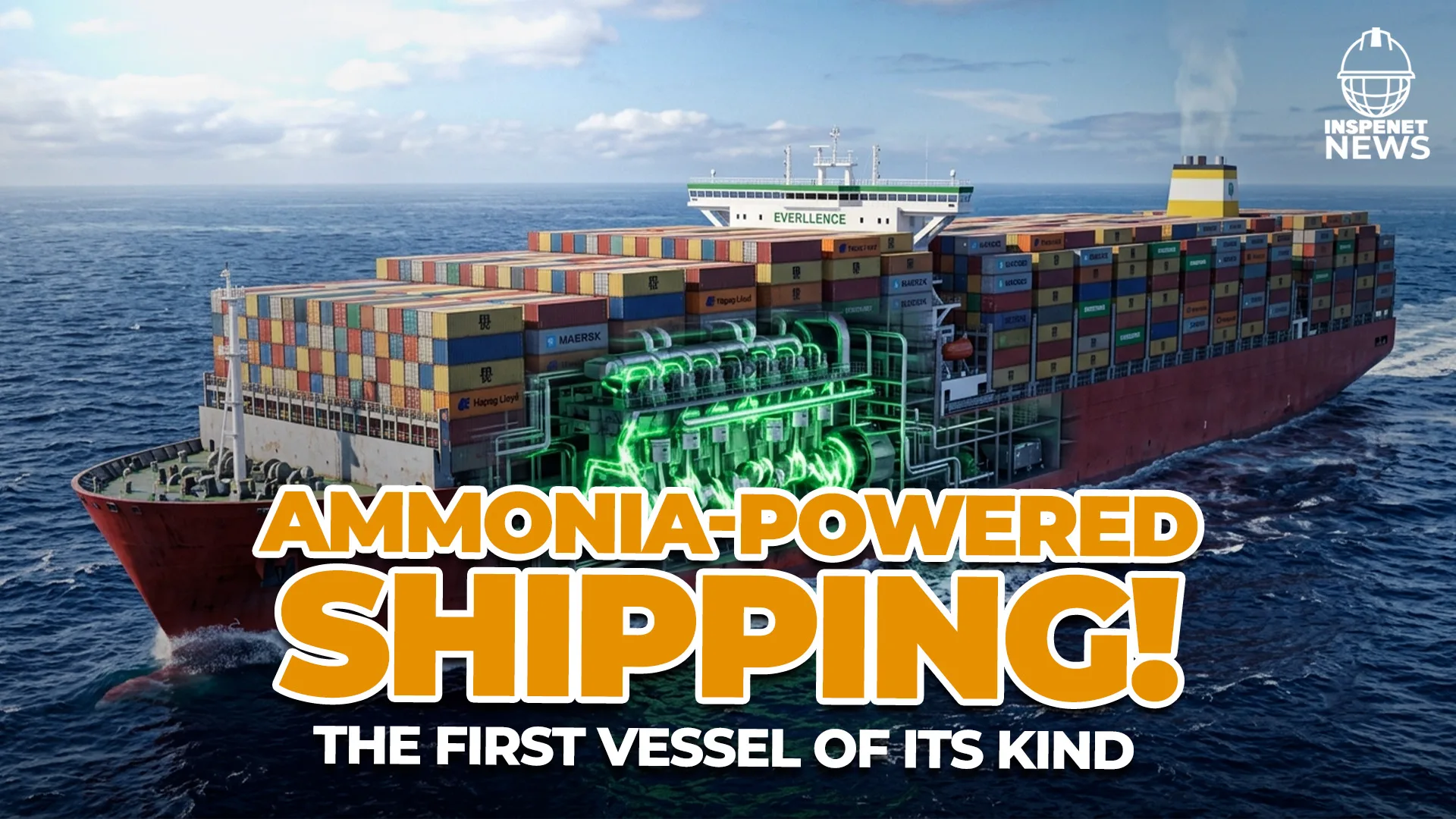
The ME-LGIA engine completes homologation and is nearing its debut at sea
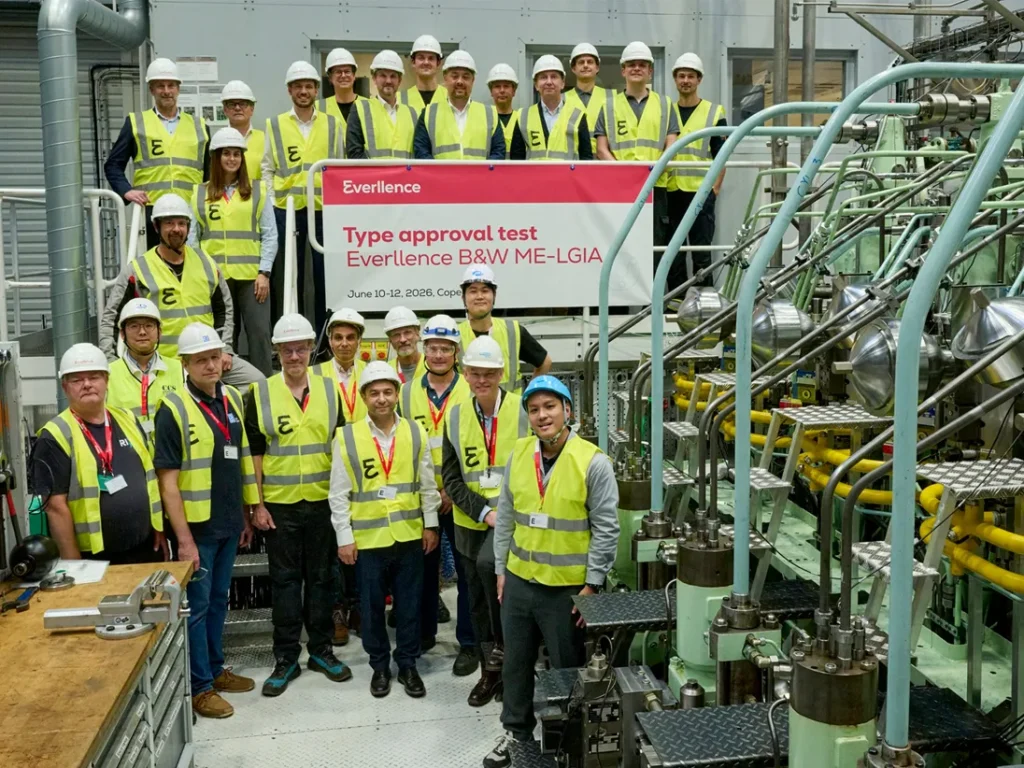
The ME-LGIA engine took another step towards entering service after successfully completing the Type Approval Test (TAT) at Everllence's Copenhagen Research Centre. The test, overseen by eight classification societies between June 10 and 12, 2026, represents the final technical validation before the start of sea trials and ammonia testing.
The approval confirms the maturity of the project
During the evaluation, the manufacturer verified the system's operation in the presence of leading maritime classification societies. Successfully completing this stage demonstrates that the engine meets the established requirements to proceed with its installation on board the first vessels.
Bjarne Foldager, head of Everllence's two-stroke engine division, stated that this test marks the definitive transition from concept development to real-world operation. He also highlighted that the model incorporates digital connectivity and is ready to offer carbon-reduced propulsion through the use of ammonia .
ME-LGIA engine with dual fuel technology
The ammonia marine engine utilizes the diesel principle combined with a dual-fuel system using liquefied gas injection. This architecture leverages technologies already used for hundreds of thousands of operating hours in other company engines, thus reducing the time required to bring it to market.
Everllence officially launched the ME-LGIA range in November 2025 at an event in Copenhagen. Since then, the development has attracted interest from shipowners and operators seeking ways to reduce the environmental footprint of maritime transport.
The ME-LGIA will contribute expertise to the regulations
Furthermore, the company believes that the first commercial operations planned for 2026 will provide valuable information for the development of future regulations on the use of ammonia as a marine fuel.
Ole Pyndt Hansen, senior vice president and director of two-stroke engine research and development, explained that the experience gained from the first vessels will allow the guidelines promoted by the International Maritime Organization (IMO) to be adjusted to real-world operating conditions. He indicated that this knowledge will be crucial for strengthening safety when using this fuel on board.
The end of an era for the research center
Furthermore, the ME-LGIA type approval test marks a significant moment for Everllence for another reason. The company confirmed that this was the last Type Approval Test conducted at its Copenhagen Research Center before the relocation of the facilities to the outskirts of the Danish capital, scheduled for the end of 2027.
With this result, the manufacturer enters the final phase of the engine development program and prepares to begin sea trials, a step that will validate its performance in commercial operation and advance the adoption of ammonia as one of the alternatives for the decarbonization of maritime transport.
News of additional interest
Dana Gas accelerates its growth in Egypt
Dana Gas announced positive results from its drilling program in Egypt after discovering larger-than-expected gas reserves in one of its most recent wells. The company also confirmed that the Egyptian government has settled all outstanding receivables and is making full and timely payments, a situation that strengthens the relationship between the two parties and provides greater financial stability for its operations.
The company indicated that its $100 million investment plan is already showing results, with the first production increase since 2017 expected in the first quarter of 2026. Furthermore, drilling completed in the last year has boosted gas production and expanded available reserves. Following the success of this new discovery, Dana Gas plans to drill four additional wells before the end of 2026 to further develop its assets in the Nile Delta.
Seaspan adapts its first container ship to methanol
PrimeServ, Everllence's after-sales service division, has completed the conversion of the Seaspan Yangtze's main engine to run on dual methanol fuel. The vessel has already returned to service and is the first in a program to modernize five ships in the Hapag-Lloyd fleet. The company noted that this is its thirtieth engine conversion to run on alternative fuels such as methanol, liquefied natural gas (LNG), and liquefied petroleum gas (LPG).
The upgrade allows the vessel to operate with greater flexibility in fuel use and improves its environmental performance without the need to build a new ship. The project also incorporates a remote monitoring system with artificial intelligence to supervise engine performance and facilitate maintenance. According to the company, after the conversion, the vessel achieved a level of energy efficiency that far exceeds current international requirements.
Petrobras and Pemex promote oil alliance
Petrobras and Pemex signed a Memorandum of Understanding to explore opportunities for cooperation in hydrocarbon projects. The agreement contemplates evaluating joint initiatives in oil and gas exploration and production, as well as industrial activities such as refining, petrochemicals, fertilizers, and gas processing. It also includes the exchange of technical knowledge, technologies, and regulatory expertise.
The companies will analyze projects related to mature fields, deep and ultra-deep waters, and the potential of the Gulf of Mexico. They will also work on topics such as energy efficiency, carbon capture, emissions reduction, and lower-carbon fuels. The memorandum will have an initial term of two years and establishes a framework for collaboration to evaluate future opportunities, although it does not imply investment commitments or the creation of a joint venture between the two companies.
Santos launches production of Pikka
Santos has begun continuous oil production at Phase 1 of the Pikka project, located on the northern slope of Alaska. The first wells are already operating with a production of approximately 20,000 barrels per day. Over the next few weeks, the company will begin injecting seawater to maintain reservoir pressure while bringing new wells online, with the goal of gradually increasing production volume.
The company expects to reach peak production of around 80,000 barrels per day during the third quarter of 2026. This first phase will allow the development of approximately 400 million barrels of proven and probable reserves. Furthermore, the project has additional resources that could support future expansion phases and extend its productive life for the coming years.