Industrial sealing to prevent flange leaks
Within the framework of NISTM 2026, one of the most relevant events for the energy storage sector, a recurring theme in industrial operations emerges: the integrity of industrial sealing in piping systems and connections. In this context, Aaron Patterson, Principal Applications Engineer at Lamons Manufacturing & Service Co., provides a technical perspective focused on how to improve the performance of flanged connections.
The expert highlights a critical problem for storage terminals and industrial plants: leaks. These not only affect operational efficiency but also generate risks associated with safety and maintenance. Therefore, industrial sealing plays a decisive role within the operational strategy.
The role of sealing in industry
Firstly, industrial sealing acts as an essential barrier to ensure fluid containment in piping systems. Gaskets and fastening systems work together to maintain the integrity of connections, especially under variable pressure and temperature conditions.
According to Patterson, the correct selection of these elements depends on several operational factors. These include the type of fluid, thermal conditions, and system pressure. Each variable directly influences the material's behavior and its ability to maintain an effective seal.
Likewise, failure in any of these aspects can compromise the overall system performance. For this reason, a technical approach to component selection is important within any industrial maintenance strategy.
Types of gaskets and their application in industrial environments
One of the most relevant aspects of industrial sealing is the diversity of available gaskets and their correct application. Patterson explains that different types are designed to respond to specific conditions.
On the one hand, compressed non-asbestos gaskets are used in general applications where conditions are not extreme. On the other hand, semi-metallic gaskets offer greater resistance in high-temperature and high-pressure environments. Additionally, isolation gaskets fulfill an extra function by preventing galvanic corrosion between dissimilar materials.
Each gasket type behaves specifically under operational conditions. Therefore, selecting an inadequate option can lead to premature failures or containment losses. In this sense, technical knowledge becomes a differentiating element to guarantee system reliability.
Main causes of flange leaks
However, one of the most relevant points addressed in the interview is the origin of leaks in flanged connections. Although often attributed to gasket quality, the reality is more complex.
Among the most common causes are incorrect material selection, poor installation, and improper use of fastening systems. These factors can generate an uneven load distribution, directly affecting sealing performance.
Likewise, changing operational conditions can aggravate these problems if they have not been considered from the initial design. Therefore, preventing leaks requires a comprehensive approach that covers both the product and its installation.
The critical factor: installation and torque in industrial sealing
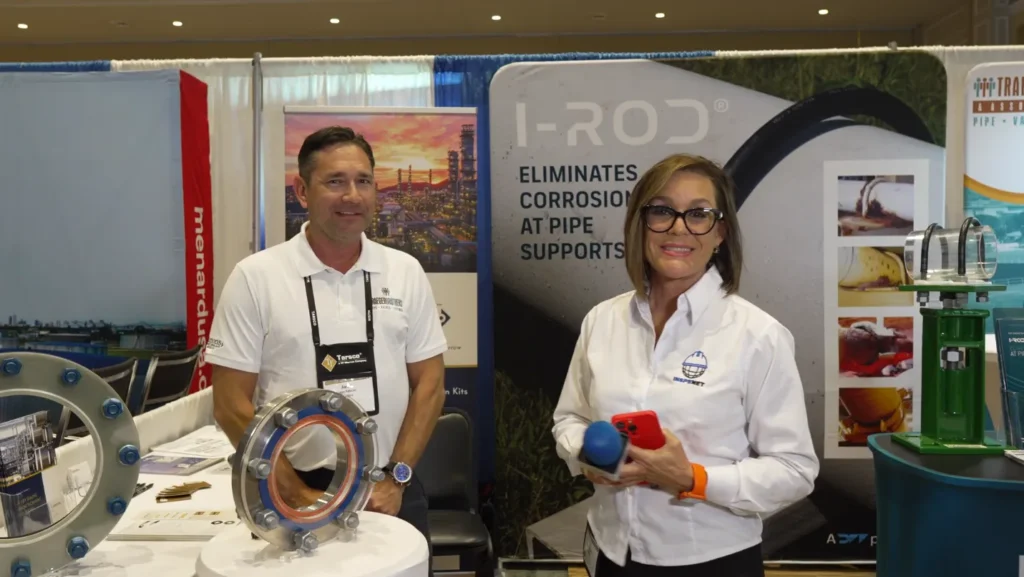
In fact, Patterson emphasizes that one of the most frequent errors in industrial sealing is not in gasket selection, but in bolt tightening. The torque applied during installation is crucial to ensure uniform gasket compression.
Insufficient tightening can lead to immediate leaks, while excessive load can damage the material and reduce its service life. Therefore, applying the appropriate torque according to technical specifications is fundamental.
This approach highlights that industrial sealing performance depends on both the component and the installation process. Consequently, personnel training and the use of appropriate tools are key aspects to avoid operational failures.
Failure analysis as a preventive tool
Furthermore, failure analysis is presented as an essential tool to improve industrial sealing efficiency. By evaluating leaks and field problems, it is possible to identify patterns and correct recurring errors.
This approach allows for optimizing material selection and adjusting installation procedures. Additionally, it contributes to reducing downtime and costs associated with corrective maintenance.
Likewise, integrating this type of analysis into the operational strategy promotes continuous improvement in industrial asset management. In an environment where reliability is key, these practices provide significant technical value.
Conclusion: a comprehensive view of industrial sealing
Finally, the interview with Aaron Patterson reveals that industrial sealing goes beyond gasket selection. The combination of appropriate selection, precise installation, and failure analysis defines the system's actual performance.
In a demanding industrial context, where leaks represent a constant challenge, adopting a comprehensive technical approach like the one promoted by Lamons Manufacturing & Service Co. allows for improved efficiency and reinforced operational safety. In this way, industrial sealing is consolidated as a key element within the management of energy infrastructures.
For more content about NISTM 2026, visit our LinkedIn profile.
Source: Inspenet.