Glamox will illuminate a substation as part of TenneT’s 2 GW program
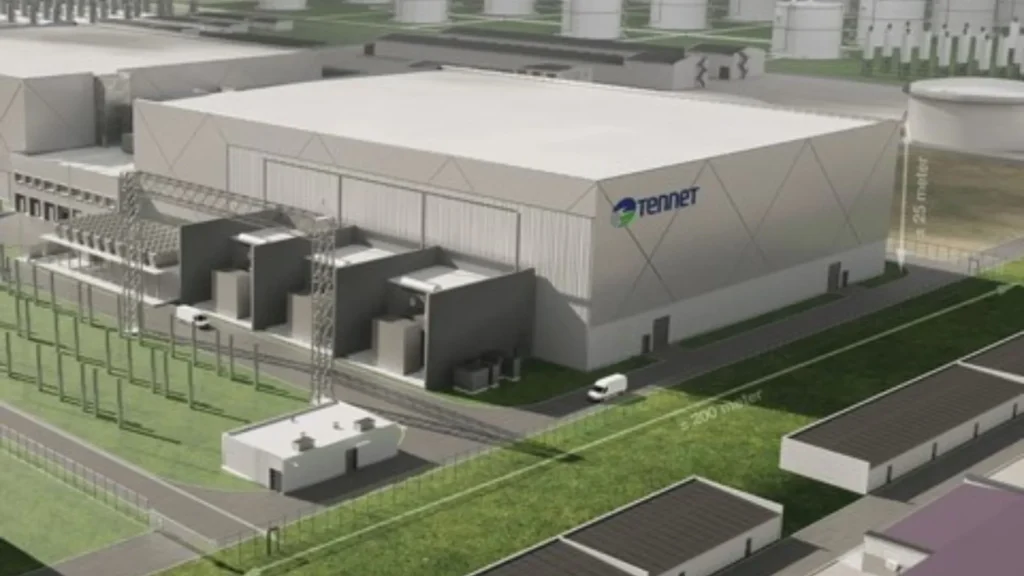
Glamox has been awarded a contract to supply 1,500 LED luminaires for the IJmuiden Ver Alpha onshore substation in Borssele, the Netherlands. The installation is part of TenneT's 2 GW program and will play a key role in integrating offshore wind energy into the national electricity grid.
Glamox expands its involvement in the Tennessee program
In addition to its involvement in offshore converter platforms, Glamox will now supply lighting systems for the first Dutch onshore substation envisaged in this large-scale initiative.
The contract was awarded through SPIE Nederland, the Dutch subsidiary of the SPIE group, which will be responsible for installing the lighting systems in the different areas of the infrastructure.
According to the company, the project includes specific solutions for technical spaces, offices, corridors, outdoor areas, and emergency systems. The luminaires will incorporate DALI control technologies and designs adapted to different operational requirements.
How will the ground substation work?
The IJmuiden Ver Alpha installation will allow the conversion of electricity transported as high-voltage direct current into alternating current suitable for the Dutch electricity grid.
While wind turbines generate alternating current (AC) electricity, the energy is converted to direct current (DC) by offshore HVDC platforms to reduce losses during long-distance transmission. Once on land, the substation will convert the 525 kV DC to 380 kV AC.
offshore wind farms can be efficiently incorporated into the transmission infrastructure of the Netherlands.
A key component for the expansion of the electricity grid
The Borssele substation will be the first of eight similar facilities planned under TenneT's 2 GW program in the Netherlands.
At the same time, the construction of equivalent stations in Germany is also being considered with the aim of strengthening the energy transport capacity from wind farms located in the North Sea.
This deployment is part of European efforts to expand renewable generation and strengthen the transmission networks needed to handle increasing volumes of clean electricity.
LED luminaires designed for critical environments
The scope of the contract includes customized linear luminaires, explosion-proof equipment, emergency systems, office downlights, and exterior lighting solutions for the perimeter of the complex.
In addition, several of the luminaires will incorporate features aimed at reducing light pollution and improving the energy efficiency of the installation.
SPIE highlighted that Glamox met the technical and environmental requirements demanded for the project and valued the collaboration maintained between both companies during the development of the solutions.
Expected deliveries until 2026
The light fixtures will be supplied in six shipments scheduled through October 2026.
The infrastructure will then proceed with its construction and commissioning phase. According to the current plan, the onshore substation will be operational in 2029 and will become a key component for connecting new offshore wind power capacity to the Dutch electricity grid.
For Glamox , this award strengthens its presence in projects linked to both marine and onshore energy infrastructure and expands its participation within TenneT's 2 GW program, one of the most ambitious electricity transmission initiatives associated with European wind power development.
News of additional interest
MODEC seeks FPSO with energy and CO₂ capture
MODEC and Eld Energy signed a memorandum of understanding to develop an electricity generation systemof 1.2 MW for floating production, storage and offloading (FPSO) platforms. The project will combine solid oxide fuel cells with carbon capture technology with the aim of significantly reducing emissions associated with offshore operations.
The agreement stipulates that Eld Energy will be responsible for the design and construction of the energy system, as well as the necessary technical testing. MODEC, for its part, will develop the carbon capture plant and integrate all components onto the FPSOs. The companies have been working together on smaller-scale projects since 2025 and are now looking to expand the system's capacity. The 1.2 MW unit is scheduled to begin onshore testing in 2029 before a prolonged demonstration under real-world conditions.
SBM and Solstad are preparing a new deep-water vessel
SBM Offshore and Solstad Offshore have formed a joint venture to develop a new multipurpose vessel for offshore installation and construction work. As part of this plan, both companies have signed a letter of intent with a shipyard for the construction of the vessel, which is scheduled for delivery in the first half of 2029.
The vessel will be designed to support the installation of offshore infrastructure in shallow and deep waters, including floating production, storage, and offloading (FPSO) platforms. The project leverages the combined experience of both companies in offshore operations and uses the performance of the Normand Installer as a benchmark. The new vessel will be jointly owned by the two companies, with Solstad managing its operation and SBM utilizing it for its projects. When available, it will also be available for charter to other clients.
PETRONAS joins forces to extract more offshore oil
PETRONAS signed a memorandum of understanding with regional exploration and production operators and with Universiti Teknologi PETRONAS to evaluate new opportunities for enhanced oil recovery in offshore fields. The initiative brings together companies from Malaysia, Thailand, and Indonesia with the goal of increasing crude oil production in mature fields and extending their lifespan.
The collaboration will combine the operational experience of the participating companies with the research and laboratory capabilities of the university. The work will include specialized studies and technical testing to develop solutions tailored to the characteristics of each deposit, with the possibility of moving toward pilot projects in the future. The participants also seek to strengthen the region's technical capabilities and generate greater value from existing offshore assets.
Seaspan and Hapag-Lloyd are making progress with methanol-fueled vessels
Seaspan and Hapag-Lloyd have completed the first conversion of a container ship to run on low-carbon methanol as part of the SAVER CleanBlue project. The modernization was carried out on the Seaspan Yangtze, the first of five vessels included in this program, which aims to reduce maritime transport emissions by retrofitting existing ships.
Following this first delivery, four more ships from the same series will undergo the same process. According to the companies, each conversion could reduce CO₂ equivalent emissions by between 30,000 and 50,000 metric tons per year when operating on methanol, which has a lower environmental footprint. In addition to reducing emissions, the upgrades will extend the ships' lifespan and increase their flexibility to use different fuels in the future.