Table of Contents
- The End of Siloed Energy Models
- Geopolitical Pressure and the Redesign of Energy Security
- The Role of Oil & Gas in the Energy Transition
- Critical Infrastructure, Digitalization, and Industrial Efficiency
- Renewables and Grid Stability: The Integration Challenge
- The Energy of the Future: Hybrid and Resilient
- Toward an Integrated Energy Industry
The global energy conversation has long been trapped in a false dichotomy: hydrocarbons versus renewables, the past versus the future. Yet the industrial reality tells a far more complex, dynamic, and strategic story. The energy sector is not moving toward the absolute replacement of one model by another. Instead, it is advancing toward a progressive integration of infrastructures, technologies, and energy sources that must now operate in an increasingly interconnected way. The real transformation is not happening at the extremes of the debate — it is happening in the capacity to bring together conventional infrastructure, digitalization, operational resilience, and new energy sources within a single industrial ecosystem.
In this new context, supply security, technological convergence, and operational continuity are emerging as the foundational pillars of energy systems that are more flexible, more resilient, and better equipped to meet the growing geopolitical, industrial, and environmental demands of today’s world.
The End of Siloed Energy Models
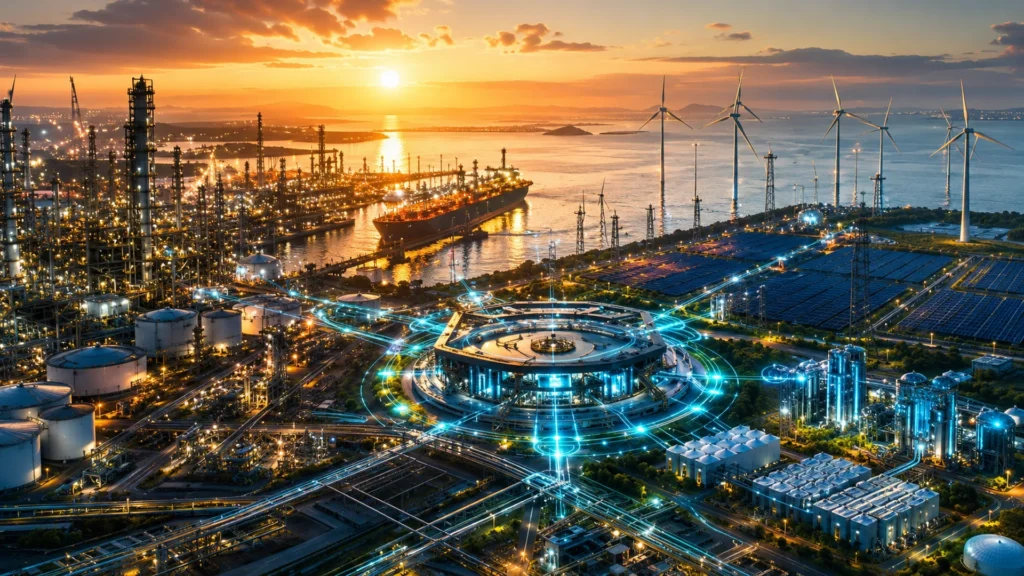
For decades, the upstream, midstream, and downstream segments operated as relatively independent structures. Today, that logic is being replaced by integrated energy architectures where maritime terminals, power grids, refineries, energy storage systems, and renewable generation are beginning to share infrastructure, data, and processes within increasingly interconnected ecosystems. The energy transition no longer depends solely on incorporating new energy sources — it depends on coordinating multiple systems under a unified operational vision.
The growing global energy interdependence has fundamentally changed how industries manage supply, stability, and operational continuity. A disruption in power grids, logistics chains, or transportation networks can simultaneously impact multiple industrial sectors. At the same time, industrial electrification and the convergence of physical infrastructure with digital platforms are redefining operational efficiency. According to the International Energy Agency (IEA), more than 40% of global electricity generation will come from renewable sources by 2030, raising the need for interoperable, resilient energy systems capable of functioning as a unified industrial ecosystem.
| Evolution Toward an Integrated Energy Architecture | ||
| Dimension | Traditional Model (Siloed) | New Architecture (Integrated) |
| Focus | Source substitution | Coexistence and hybridization |
| Infrastructure | Passive physical assets | Predictive digital ecosystems |
| Security | Stock dependency | Systemic resilience and data |
| Role of Gas | Fossil fuel | Bridge energy and grid stabilizer |
The real energy transformation is not taking place at the extremes. It is happening in the intelligent integration of systems capable of coexisting within a shared operational architecture.
Geopolitical Pressure and the Redesign of Energy Security
Energy security has become one of the defining geopolitical factors reshaping the global economy. International conflicts, economic sanctions, and trade tensions have exposed the vulnerability of energy systems that are overly dependent on a single supplier or region. The war between Russia and Ukraine accelerated Europe’s push toward energy diversification, strategic storage reinforcement, and investment in LNG, renewables, and critical infrastructure — all as part of a broader geopolitical resilience strategy.
At the same time, global supply chains face mounting risks tied to trade restrictions, climate events, and dependence on strategic minerals used in renewable technologies and advanced electrical systems. These pressures have driven energy reshoring strategies and industrial relocalization aimed at strengthening autonomy and supply security.
In this context, strategic resilience is no longer just about producing energy. It is about building systems capable of integrating infrastructure, digitalization, and operational continuity under increasingly complex and unpredictable geopolitical conditions.
The Role of Oil & Gas in the Energy Transition
One of the most persistent misconceptions in the energy debate is the assumption that renewables will fully replace hydrocarbons in the near term. Operational, industrial, and geopolitical realities tell a different story: the Oil & Gas sector remains essential for guaranteeing supply stability, supporting strategic industries, and sustaining growing global energy demand within an increasingly hybrid and interconnected architecture.
Natural gas has established itself as one of the primary stabilizers of the global energy system, given its ability to respond rapidly to demand fluctuations and support the integration of intermittent renewable sources such as solar and wind. In power systems where renewables are expanding their share, gas-fired plants provide the grid stability, operational continuity, and energy flexibility needed to manage climatic variability and load imbalances.
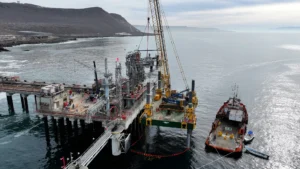
In parallel, the growth of liquefied natural gas (LNG) is transforming global energy geopolitics. The expansion of liquefaction, regasification, and maritime LNG transport terminals has strengthened energy diversification and reduced dependence on single suppliers across regions such as Europe and Asia — particularly in the wake of recent geopolitical tensions.
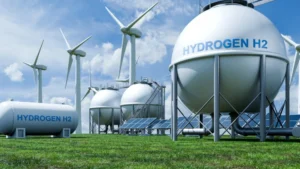
The petrochemical industry also continues to rely on hydrocarbon derivatives for the production of fertilizers, polymers, solvents, and materials used in renewable technologies, batteries, and electric vehicles. Meanwhile, the sector is evolving toward more flexible models through the development of hydrogenready infrastructure capable of progressively incorporating hydrogen into existing systems.
The energy transition does not mean eliminating hydrocarbons. It means integrating them strategically as operational support within more resilient, flexible, and sustainable energy systems — ones where technological coexistence and energy security will be determining factors for industrial development in the decades ahead.
Critical Infrastructure, Digitalization, and Industrial Efficiency
Global energy infrastructure is evolving toward intelligent ecosystems driven by industrial digitalization, automation, and real-time monitoring. Maritime terminals, refineries, power grids, storage systems, and pipelines no longer operate solely as physical assets. They function as interconnected platforms capable of integrating advanced analytics, remote supervision, and predictive management to strengthen operational resilience.
The integration of artificial intelligence (AI), IIoT, edge computing, and SCADA systems enables companies to optimize operations, anticipate anomalies, and convert large volumes of data into strategic decisions in real time. According to the World Economic Forum, energy digitalization could unlock more than $1.3 trillion in value over the next decade through reduced downtime and improved decision-making.
The adoption of digital twins is enabling advanced operational simulations to optimize maintenance and anticipate critical failures. At the same time, smart grids and interconnected energy networks are redefining energy distribution under more flexible and dynamic frameworks. However, this convergence of physical and digital infrastructure also increases exposure to cyber threats — positioning industrial cybersecurity as a strategic priority within a safer, more resilient, and adaptable energy architecture.
Renewables and Grid Stability: The Integration Challenge
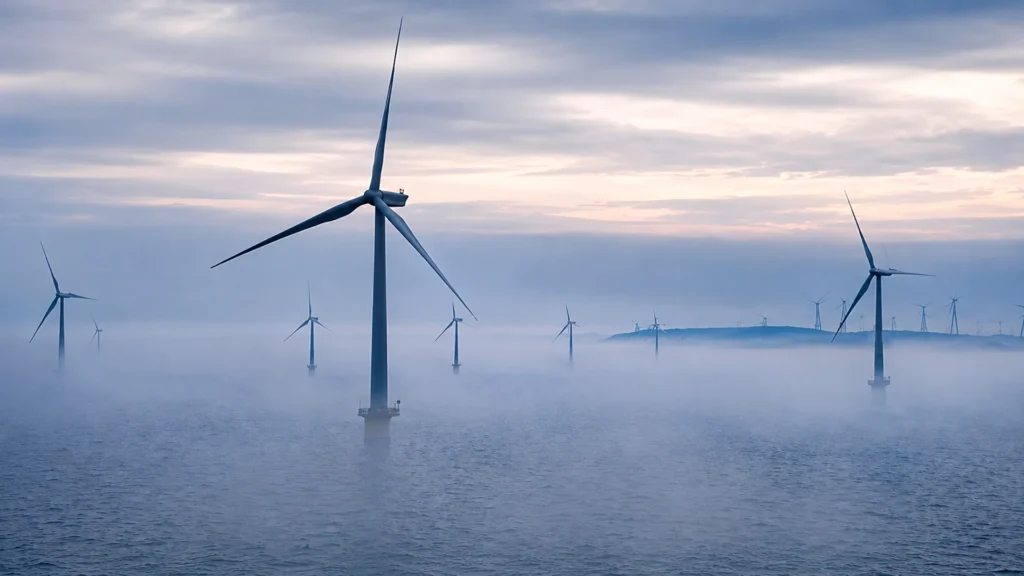
The accelerated expansion of renewable energy represents one of the most significant operational challenges facing global energy infrastructure. Sources such as solar and wind offer important environmental advantages, but they also introduce high levels of intermittency that can affect grid stability and the continuity of electricity supply. In this context, the energy transition requires far more flexible systems capable of balancing constant variations in generation and demand.
Battery-based energy storage and hybrid systems are beginning to play a key role in absorbing surpluses and stabilizing interconnected power grids. However, current storage capacity remains insufficient to fully cover scenarios of high demand or prolonged low renewable generation. As a result, thermal backup systems and natural gas continue to serve as strategic operational support within so-called balancing systems — ensuring reliability, operational flexibility, and energy security throughout the global transition process.
The Energy of the Future: Hybrid and Resilient
The global energy future will not be defined by a single energy source, but by the ability to integrate multiple technologies within a flexible, resilient, and interconnected architecture. The energy transition is advancing toward hybrid models where natural gas, renewable energy, energy storage, industrial digitalization, and smart grids will coexist as complementary components of a single operational ecosystem. Rather than replacing existing systems, the new energy dynamic seeks to balance sustainability, supply stability, and operational continuity in a global environment that is growing increasingly complex and unpredictable.
Energy diversification has become a strategic imperative for reducing vulnerabilities tied to geopolitical tensions, extreme climate events, and economic fluctuations. Countries such as Germany, Japan, and Saudi Arabia are already developing interconnected models that combine gas, hydrogen, batteries, solar energy, and smart grids to strengthen resilience and energy security. In this new landscape, the energy of the future will be neither fully renewable nor fully fossil-based — it will be hybrid, intelligent, and designed to integrate efficiency, operational flexibility, and stability within a single global energy architecture.
Toward an Integrated Energy Industry
The global energy industry is not simply going through a transition — it is experiencing a systemic transformation in which different infrastructures, technologies, and energy sources are beginning to converge under a unified operational vision. The energy future will no longer be defined exclusively by the ability to produce energy more sustainably, but by the capacity to build systems that can operate with resilience, flexibility, and continuity in the face of increasingly complex industrial, climatic, and geopolitical scenarios.
In this new context, technological coexistence is no longer a temporary alternative — it is becoming the core of the new global energy architecture. Renewable energy, natural gas, energy storage, industrial digitalization, and advanced automation are beginning to interact within interconnected ecosystems where operational efficiency depends on the ability to coordinate multiple technologies through intelligent and adaptive platforms.
Operational continuity is thus acquiring unprecedented strategic value. Energy resilience no longer depends solely on having resources available — it depends on building infrastructures capable of anticipating risks, optimizing operations, and responding rapidly to disruptions or shifts in global demand. The true energy transformation will not be built by eliminating existing models, but by integrating them intelligently to strengthen supply security, maximize efficiency, and consolidate energy systems prepared to sustain the industrial development of the future.
This article was developed by Antonio Zavarce, Director of Operations at INSPENET and published as part of the eighth edition of the Inspenet Brief magazine July 2026, dedicated to technical content of the energy and industrial sector.