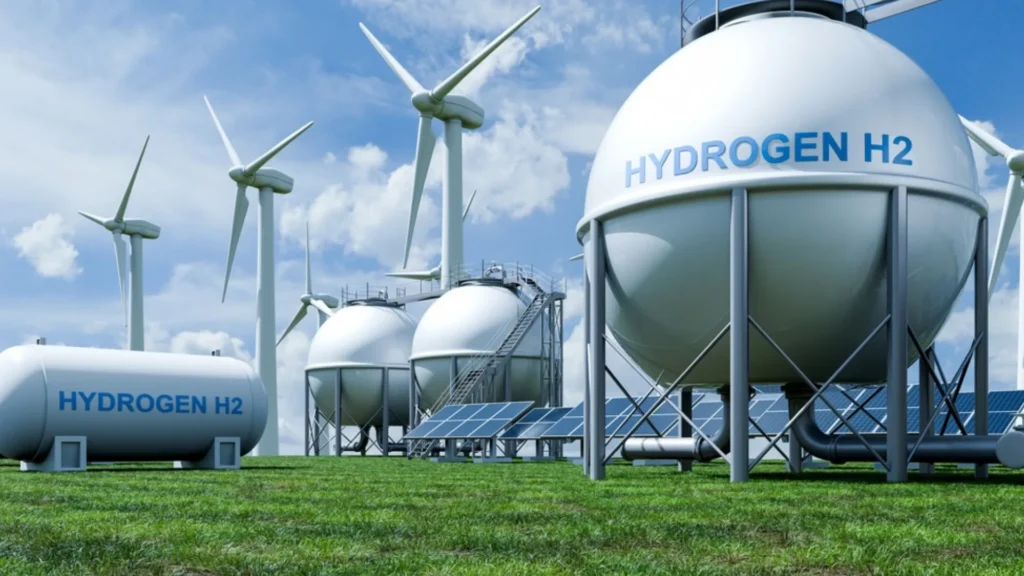
Clean hydrogen emerges as a key element in securing Mexico’s energy future
Mexico has experienced a series of power outages that have exposed the structural weaknesses of its electrical system. At the beginning of 2026, several “massive blackouts” were reported, both in the north of the country and in southeastern states, such as Campeche and Yucatán, among others.
These outages reveal that rapid demand growth, scarce investment in transmission, and the slow incorporation of renewables keep the system under pressure. Studies by IMCO (Mexican Institute for Competitiveness) and industrial organizations indicate that billions of dollars are required in transmission networks to cover the deficit and guarantee a robust supply, especially in the face of summer demand peaks and climate change.
The Mexican energy crisis deepens under the dynamics of global climate change. The State of the Global Climate 2025 Report by the World Meteorological Organization notes that 2025 ranks among the warmest years on record, with an increase of +1.43°C compared to pre-industrial levels. The planet’s energy imbalance has reached historic levels, implying an accelerated accumulation of heat and greater risks for the energy sector: higher infrastructure vulnerability to heatwaves and floods, increased electricity demand for cooling, water stress affecting hydroelectric generation, and greater volatility in renewable energy production.
In this context, foreign companies prioritizing security, continuity, quality, and cleanliness of the power supply when evaluating investments in Mexico. Mexico must, therefore, simultaneously address the improvement of its electrical system and the strategic planning of generation and transmission, aligned with energy transformation, industrial decarbonization, and international climate commitments expressed in the COPs and the Nationally Determined Contributions.
From this perspective, clean hydrogen acquires a strategic role: due to its versatility, it can supply industry, land, maritime, and air transport, energy storage, and, in the medium term, even electricity generation. Mexico possesses clear competitive advantages: high solar radiation, good wind resources, and proximity to key markets, which allow it to aspire to regional leadership in the production of clean hydrogen and its derivatives, such as clean methanol and ammonia.
In this regard, it is relevant that Petróleos Mexicanos (Pemex) has incorporated clean hydrogen into its Sustainability Plan and its 2023–2027 Business Plan, with the aim of replacing gray hydrogen in its refining processes and exploring new business opportunities. In internal estimates of its roadmap, Pemex forecasts that the clean hydrogen market in Mexico could reach 1 billion dollars by 2030, 3 billion in 2040, and 4 billion by 2050.
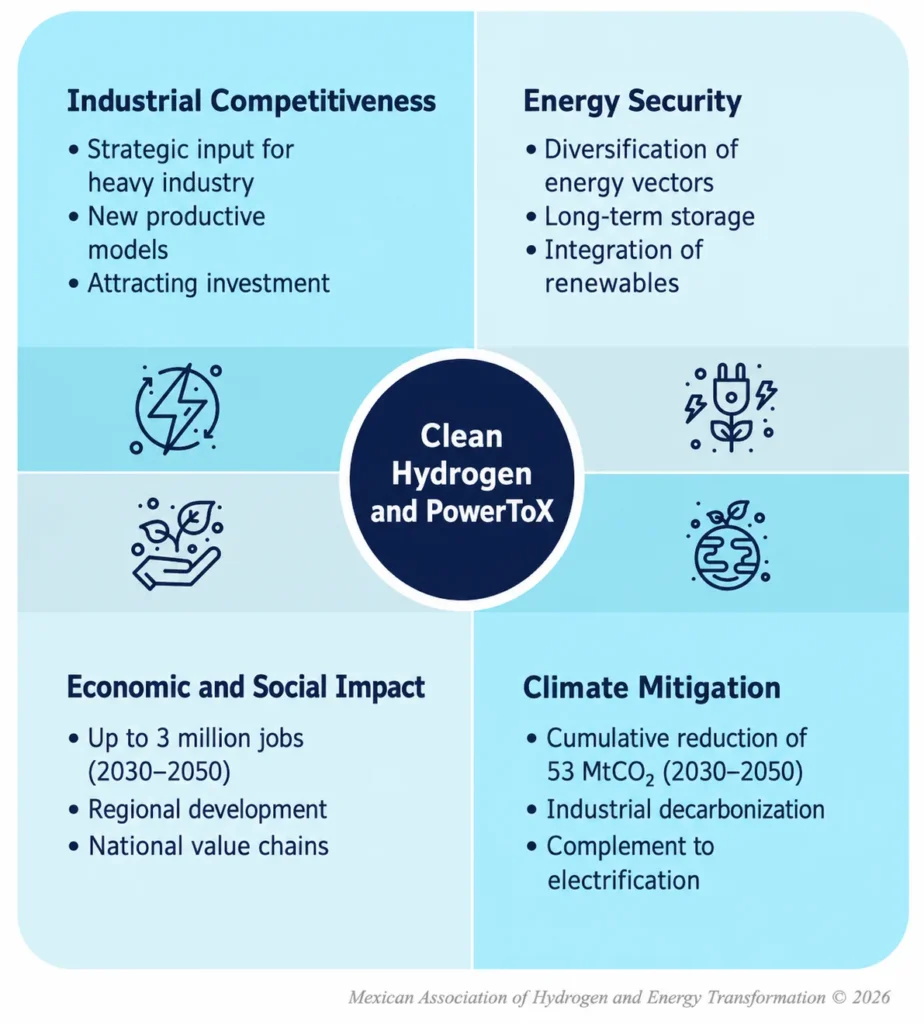
The Mexican Association of Hydrogen and Energy Transformation (H2México) reinforces this vision with its own Roadmap, where it estimates that the size of the clean hydrogen market in Mexico, including private industry projects, could hover around 60 billion dollars by 2050. Currently, 30 projects are being developed, representing an investment of 22.363 billion dollars, with a potential to create 3 million jobs and reduce 53 million tons of CO₂ between 2030 and 2050.
The Ministry of Energy (SENER) has incorporated clean hydrogen into the “Prospects of the National Electric Sector,” now known as the Development Plan for the Electric Sector (PLADESE), forecasting blends of up to 30% clean hydrogen with 70% natural gas in CFE power plants starting in 2036, and has issued guidelines to build a regulatory and origin certification framework.
Pemex, CFE, SENER, and other actors have already incorporated clean hydrogen into their agendas; however, Mexico still lacks a consolidated National Clean Hydrogen Strategy. As a positive step forward, the Ministry of Energy is developing a roadmap to boost the clean hydrogen industry in the country.
Mexico must drive the modernization of its energy system simultaneously with a clear national clean hydrogen strategy, sustained by a stable regulatory framework, realistic ambitions, and decarbonization goals aligned with its international commitments. This roadmap must facilitate inter-institutional coordination, reduce uncertainty for long-term investment, and prioritize transmission expansion, renewable integration, and the reinforcement of resilience against extreme weather events.
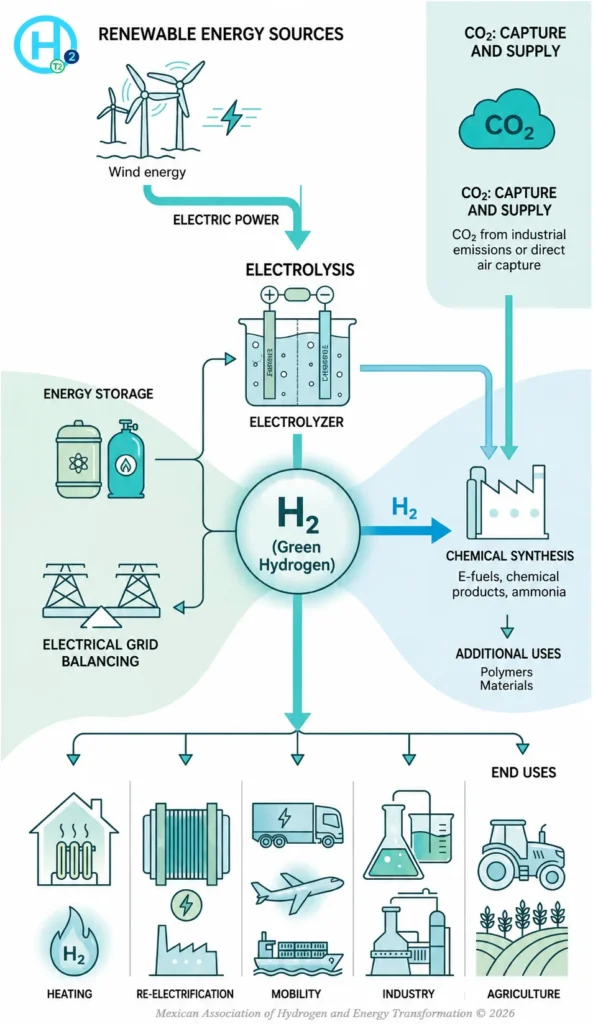
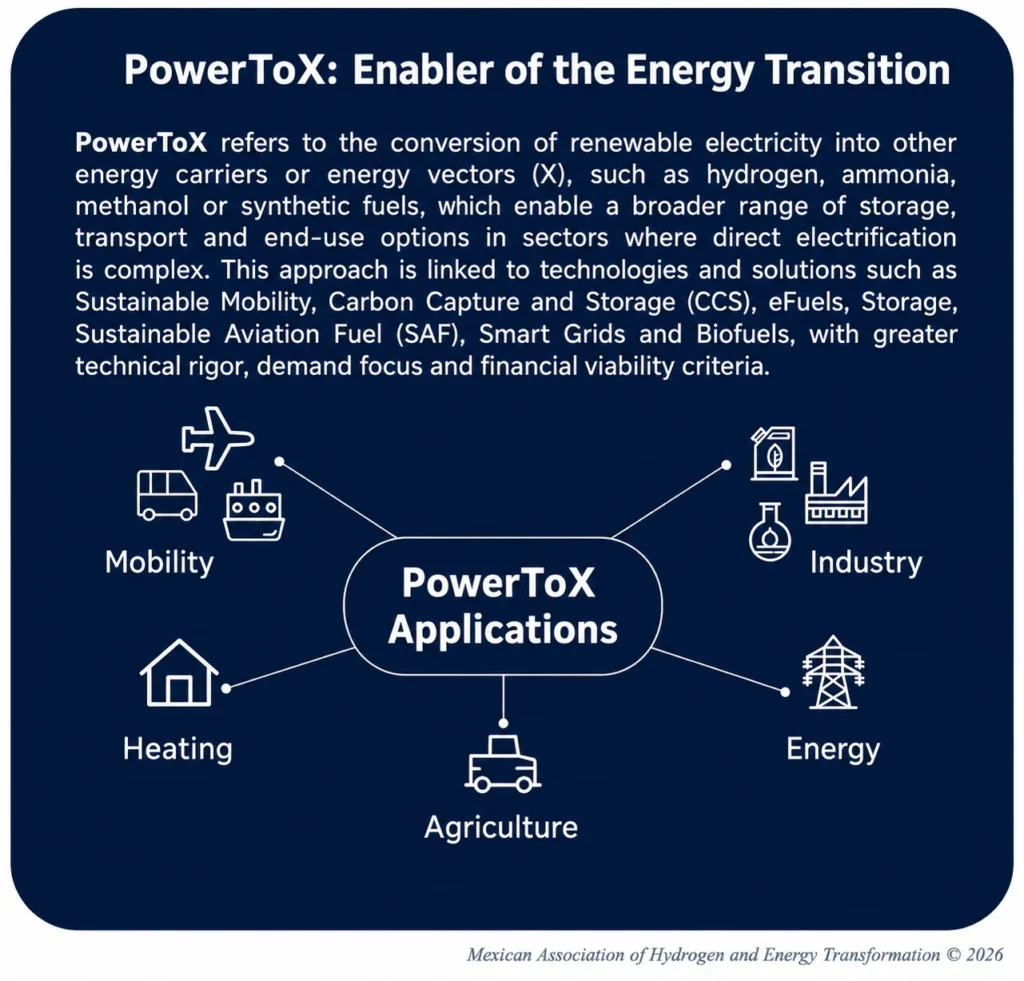
Under this landscape of modernizing the Mexican energy system, the Power-to-X concept can make a significant contribution. Power-to-X designates the conversion of renewable electricity into other energy vectors, such as hydrogen, ammonia, methanol, or synthetic fuels, which offer complementary options for storage, transport, and supply for hard-to-electrify sectors.
As projects advance from planning to execution, clean hydrogen and Power-to-X generate economic, industrial, and environmental benefits; therefore, integrating them into the national strategy will strengthen long-term competitiveness and energy security.
References
- H2México. (2024). Mexico Clean Hydrogen Industrial Strategy 2024. H2México. IMCO. (2024). Blackouts are due to lack of investment in transmission. IMCO.
- World Meteorological Organization (2025). State of the Global Climate 2025. Retrieved from https://wmo.int/publication-series/state-of-global-climate/state-of-global-climate-2025
- Pemex. (2024). Sustainability Plan with a focus on clean and blue hydrogen. Pemex Public Presentation.
- SENER (2023). National Electric Sector Development Plan (PLADESE) 2023-2037. Retrieved from https://base.energia.gob.mx/Prospectivas23/PSE_23-37_VF.pdf
- SENER (2024). Guidelines on clean hydrogen. Retrieved from https://energy21.com.mx/politica-y-normatividad-2023-05-08-se-enfrenta-hidrogeno-verde-retos-de-marco-regulatorio-en-mexico/
- UNFCCC (United Nations Framework Convention on Climate Change). (2023). Mexico’s Nationally Determined Contributions (NDCs). United Nations.
This article was developed by Israel Hurtado of H2México and published as part of the eighth issue of Inspenet Brief magazine (July 2026), dedicated to technical content in the energy and industrial sectors.