Ørsted began 2026 with solid operational performance and increased offshore wind generation. The Danish company reported that its EBITDA, excluding new partnerships and cancellation fees, reached DKK 9.5 billion during the first quarter of the year, within a context marked by the progress of offshore projects in the United States, Europe, and Taiwan.
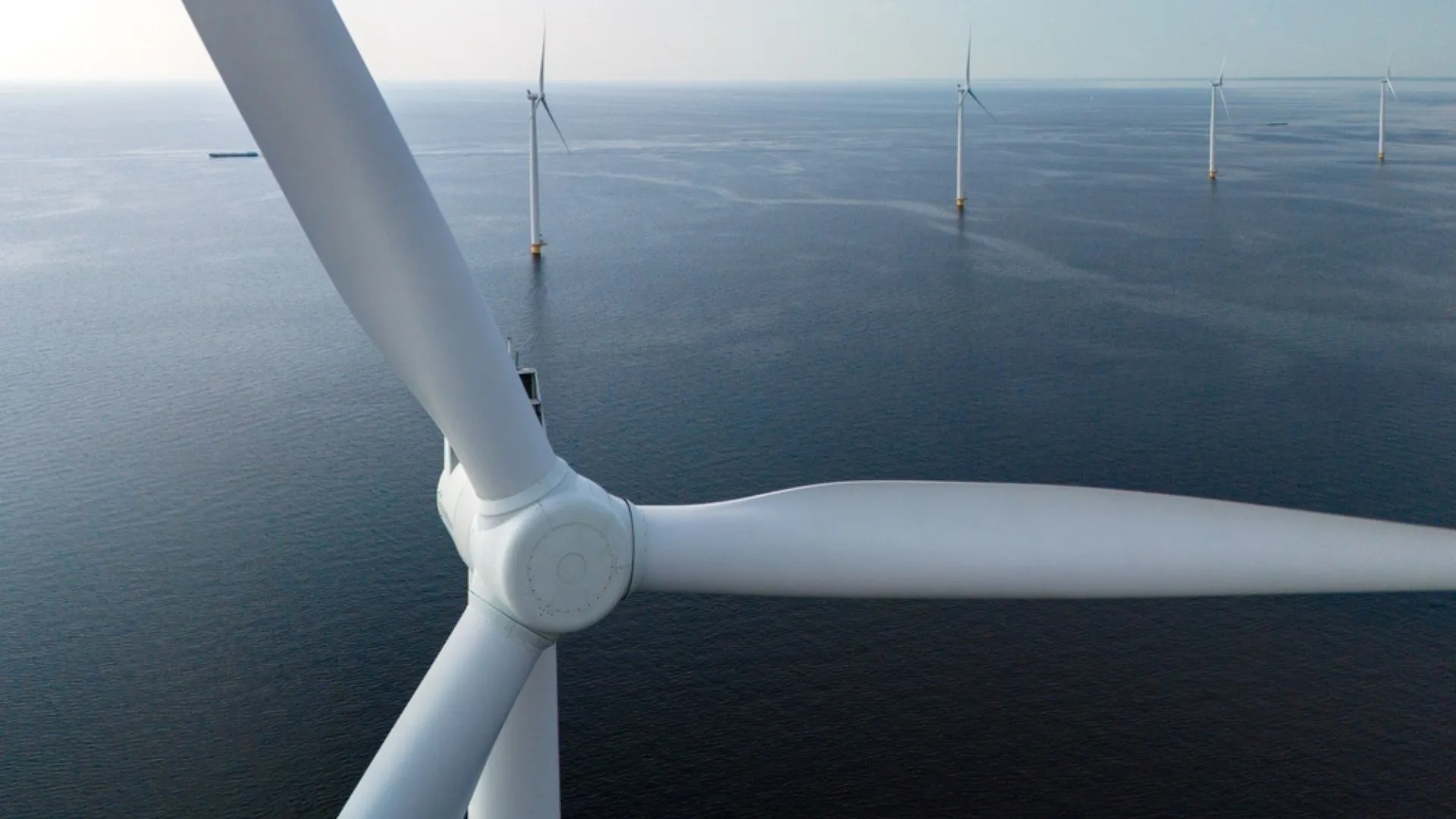
The improvement was primarily supported by a 27% increase in offshore generation compared to the same period in 2025. According to the company, this growth was due to production increases at Borkum Riffgrund 3 and Greater Changhua 4, as well as wind speeds slightly above normal.
Offshore wind drives Ørsted’s results
Furthermore, the offshore business contributed DKK 7.5 billion to EBITDA, representing an increase of DKK 1.2 billion compared to the first quarter of the previous year. This performance reinforces the weight of offshore wind energy within Ørsted’s strategy, especially at a time when the company is maintaining its refocusing process toward Europe and selected APAC markets.
Rasmus Errboe, Group President and CEO of Ørsted, noted that the company produced more renewable energy than ever during the period. In his view, the progress of projects under construction will allow for increased generation during the remainder of the year and meet more demanding energy requirements.
Offshore projects advance across three continents
During the quarter, Ørsted reported significant progress in an 8.1 GW offshore wind construction portfolio. In the United States, Revolution Wind delivered its first power to New England, while Sunrise Wind achieved the installation of its first turbines off the coast of New York.
In Europe, the company began the installation of monopile foundations at Hornsea 3 in the United Kingdom and at Baltica 2 in Poland. Additionally, in Taiwan, the commissioning of Greater Changhua 2b and 4 remains scheduled for the third quarter of 2026.
This deployment confirms the importance of the offshore supply chain, wind turbine installation, and marine infrastructure execution as key factors for expanding renewable capacity. It also makes clear that Ørsted’s growth will depend on maintaining stable construction rates in markets with high regulatory and financial pressure.
Energy security and renewable transition in Europe
On the other hand, Ørsted linked its results to the debate on energy independence in Europe. The company maintained that regional dependence on imported fossil fuels makes it more urgent to accelerate the deployment of renewable energies, especially in the face of geopolitical tensions that put pressure on oil prices and natural gas.
In this regard, the company defended the role of offshore wind energy for its scalability and capacity to provide secure, competitive, and low-carbon electricity. At the WindEurope conference in Madrid, Ørsted presented the document “Fact over Perception: The Real Value of Offshore Wind,” in which it proposes that renewables could reduce total European power system costs by up to 30% by 2040.
According to Ørsted, a greater share of solar and wind energy can also reduce electricity prices for households and businesses, provided there is coordinated planning, grid investment, and regulatory frameworks that facilitate new offshore auctions.
Ørsted maintains its financial guidance for 2026
On the financial front, net profit for the period was DKK 2.6 billion, affected by non-cash tax effects and impairments associated with higher interest rates in the United States. The adjusted return on capital employed stood at 8.6%, compared to 10.2% recorded in the first quarter of 2025, mainly due to higher capital employed.
Even so, Ørsted maintained its EBITDA guidance for the full year at over DKK 28 billion, excluding new partnerships and cancellation fees. It also confirmed its gross investment forecast of DKK 50 billion to DKK 55 billion.
With these results, the company enters the remainder of 2026 with a firmer operational base, an offshore portfolio in execution, and a strategy focused on value creation opportunities in Europe and selected Asia-Pacific markets.
Source: Ørsted
Photo: Shutterstock