Meta and Overview Energy announced a groundbreaking agreement to develop space solar power for data centers in the United States, with an orbital demonstration planned for 2028 and commercial electricity supply projected for 2030.
The partnership gives Meta early access to Overview Energy’s future system capacity, which could reach up to 1 GW. The technology is designed to capture sunlight in geostationary orbit and transmit it to ground-based solar facilitieswhere that energy would be converted into electricity for the grid.
Space solar power for AI demand
With the accelerated growth of artificial intelligence, data centers need more consistent, scalable power sources close to the existing infrastructure. In this scenario, Meta seeks to ensure future energy capacity through a solution that promises continuous generation without relying solely on the day-night cycle of conventional solar farms.
In addition, the deal reinforces an increasingly clear trend among tech giants: energy is becoming a strategic hub for scaling digital infrastructure. Meta is not buying electricity available today, but rather reserving access to an emerging category of renewable generation that could operate from orbit to ground-based solar assets.
How would the Overview Energy system work?
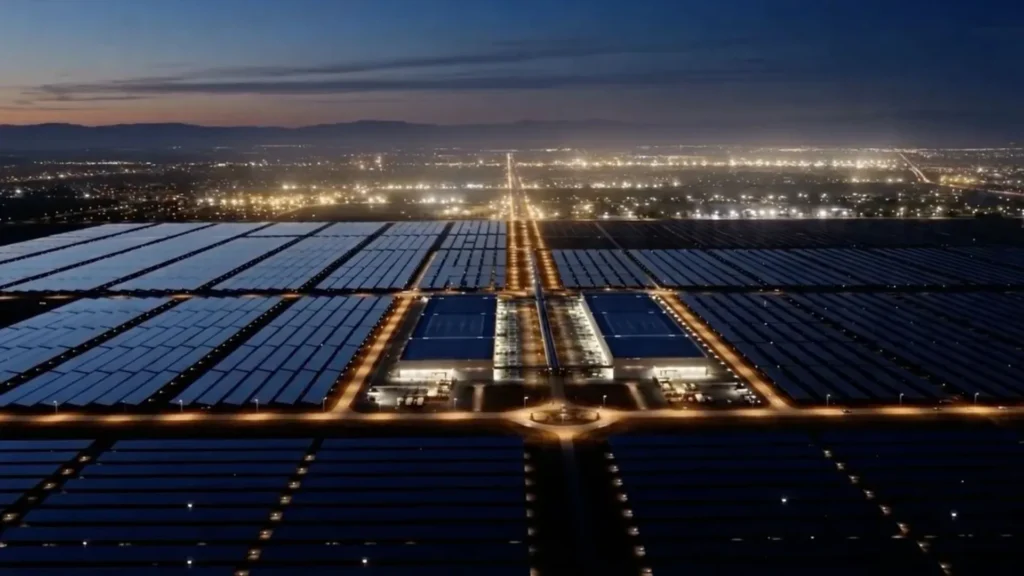
Overview Energy proposes to use satellites in geostationary orbit to collect sunlight continuously. That energy would then be sent to terrestrial receivers via low-intensity near-infrared light, directed toward existing or future solar projects.
In this way, the company seeks to extend the useful generation hours of solar farms and increase their production without requiring new land, additional fuel or lengthy interconnection processes. According to Overview’s approach, the beam would be invisible, less intense than sunlight and designed to operate under U.S. safety, grid integration and regulatory standards.
A capacity agreement of up to 1 GW
The agreement also makes Meta one of the first major companies to reserve rights to future space-based solar power. The announced capacity, of up to 1 GW, aims to cover part of the electricity demand associated with data centers and artificial intelligence and artificial intelligence loads.
The planned schedule calls for a first orbital demonstration in 2028 and the start of commercial supply in 2030. Although the technology has yet to demonstrate its viability at scale, the agreement places space solar power in a conversation closer to practical energy infrastructure and less tied to long-term experimental concepts.
Orbital energy infrastructure for the U.S.
For Overview Energy, the partnership with Meta represents an early validation of its model. The company, founded in 2022, claims that its satellites will be able to distribute power on demand and tap into terrestrial receivers without significantly modifying installed solar infrastructure.
For its part, Meta is linking this commitment to its energy and sustainability strategy to sustain the growth of its platforms, AI services and immersive technologies. The company also positions the agreement as a way to strengthen U.S. energy leadership through U.S.-made technology.
Data centers, power grid and new renewable energy sources
However, the challenge will be to convert the technical promise into a reliable commercial system. The space solar power must pass orbital testing, regulatory validation, grid integration, and public acceptance of transmission safety.
Still, the agreement marks a significant move for the energy sector. If Overview Energy meets its deadlines, data centers could receive continuous renewable energy from satellites, while terrestrial solar farms would gain more hours of generation without expanding their physical footprint.
In practice, Meta is betting on a solution that brings together orbital energy, existing solar infrastructure and AI power demand. The operation does not replace current renewable sources, but it does open a new route to supplement the grid with clean electricity available during more hours of the day.
Source and photo: Overview Energy