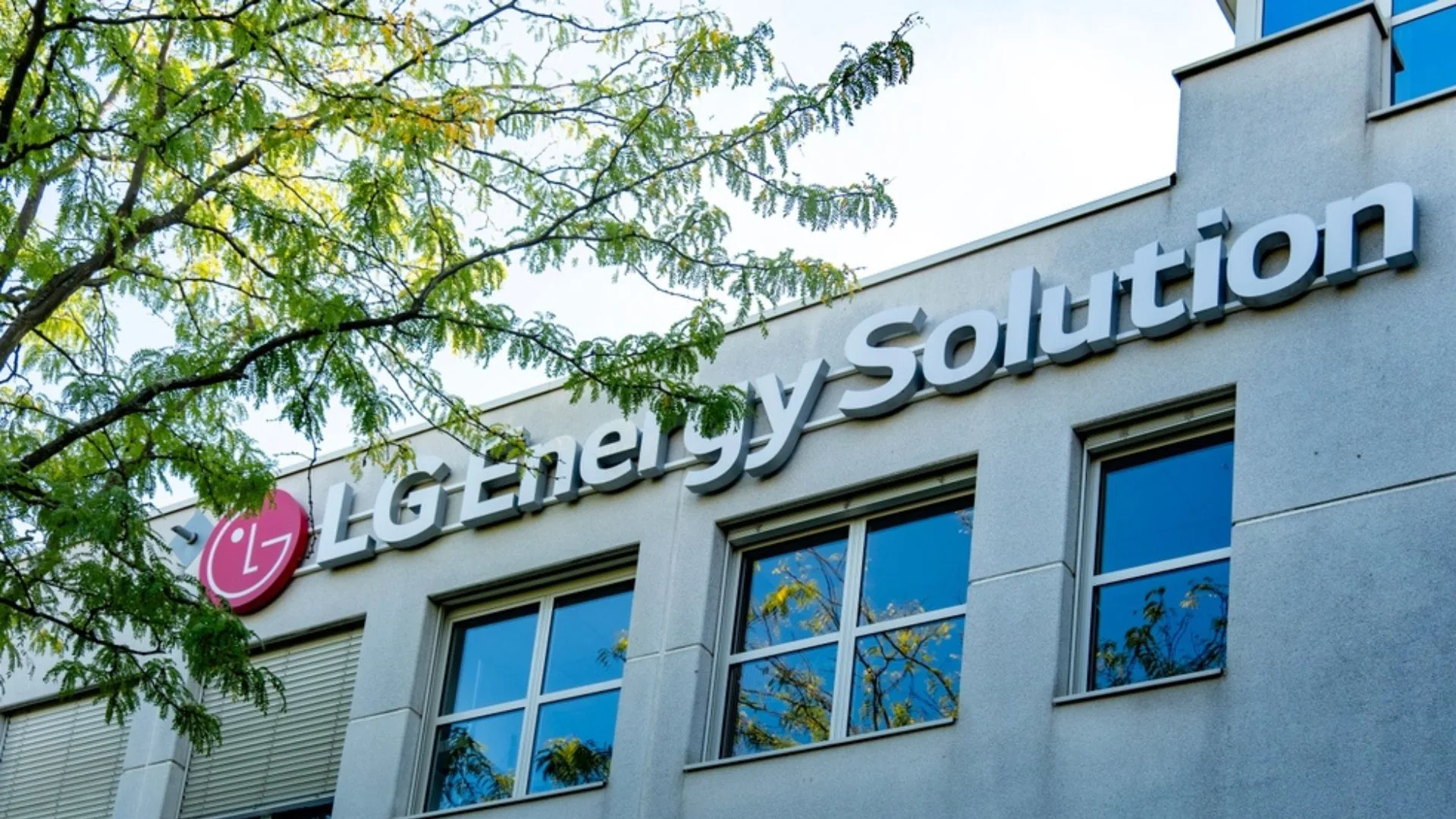
LG Energy Solution presented its financial results for the first quarter of 2026, with consolidated revenue of 6.6 trillion South Korean won and an operating loss of 207.8 billion won. The South Korean battery company explained that the quarter-on-quarter revenue increase was supported by steady demand for cylindrical batteries for electric vehicles and by growth in the energy storage systems business, known as ESS.
In addition, revenue grew 1.2% compared to the previous quarter and included 189.8 billion won associated with the North American production incentive. Even so, the initial costs of expanding ESS plants and the lower share of pouch-type batteries for electric vehicles put pressure on profitability for the Seoul-based manufacturer.
Demand for 46-series cylindrical batteries gains momentum
During the quarter, LG Energy Solution secured more than 100 GWh in new orders for 46-series cylindrical batteries for electric vehicles. As a result, its backlog exceeded 440 GWh at the end of April 2026, a clear sign that this cell format is gaining prominence within the company’s strategy.
Likewise, the company began producing 4695 cells at its Ochang plant in late 2025 and expects to manufacture several 46-series cylindrical cells, from 4680 to 46120, at its Arizona plant toward the end of this year. This move strengthens its response to electric vehicle manufacturers seeking higher-efficiency batteries, regional production, and a more stable supply capacity.
However, the growth of cylindrical batteries did not fully offset the lower volume of pouch-type batteries for electric vehicles. LG Energy Solution attributed that decline to inventory adjustments made by a major customer in North America, a factor that worsened the product mix during the quarter.
ESS already represents a significant share of the business
On the other hand, the energy storage systems business contributed close to 20% of LG Energy Solution’s total revenue. The company responded to higher demand for ESS batteries in North America by expanding capacity and launching a regional production network.
That network already includes three standalone plants in Holland, Lansing, and Windsor, as well as two joint-venture plants: Ultium Cells in Tennessee and LH Battery Company in Ohio. With this industrial base, the company aims to exceed 50 GWh of ESS battery production capacity in North America before the end of 2026.
In addition, LG Energy Solution secured an additional contract to supply ESS batteries to a large-scale project in North America. Deliveries will begin in 2028 with a next-generation product that reduces total cost by 15% compared to its current LFP-based ESS solutions.
Local production and supply chain, key to competing
Meanwhile, local battery production is becoming increasingly important in the United States and Europe. Government incentives and regional manufacturing requirements are changing purchasing decisions for industrial customers, electric vehicle manufacturers, and energy infrastructure developers.
In this context, LG Energy Solution is seeking to leverage its manufacturing presence in North America to reduce logistics risks, stabilize the supply chain, and respond more quickly to orders for batteries for electric vehicles and energy storage. The company will also strengthen raw-material monitoring and seek to secure transportation capacity in advance.
Thus, the quarter shows a clear tension: demand for EV batteries and ESS remains active, but expansion costs, inventory adjustments, and capital expenditure continue to weigh on margins. To address this environment, the company will prioritize cash flow management, asset turnover, and the allocation of resources to essential investments.
Next-generation technologies on the radar
Finally, LG Energy Solution will remain focused on improving the competitiveness of its products. Its priorities include system-integration-based software for ESS, fast charging for electric vehicles, dry electrode processing, solid-state batteries, and sodium-ion batteries.
With these initiatives, the South Korean manufacturer aims to balance two fronts: restoring profitability in the short term and sustaining its position in markets where electrification, data centers, and power-grid stability are driving higher demand for energy storage.
Source: LG Energy
Photo: Shutterstock