Table of Contents
- Hydrogen power generation leverages existing infrastructure
- The hydrogen and natural gas blend improves operational flexibility
- Power plants seek solutions to stabilize the grid
- Decarbonization drives a new generation of industrial engines
- The energy transition is betting on technologies with gradual implementation
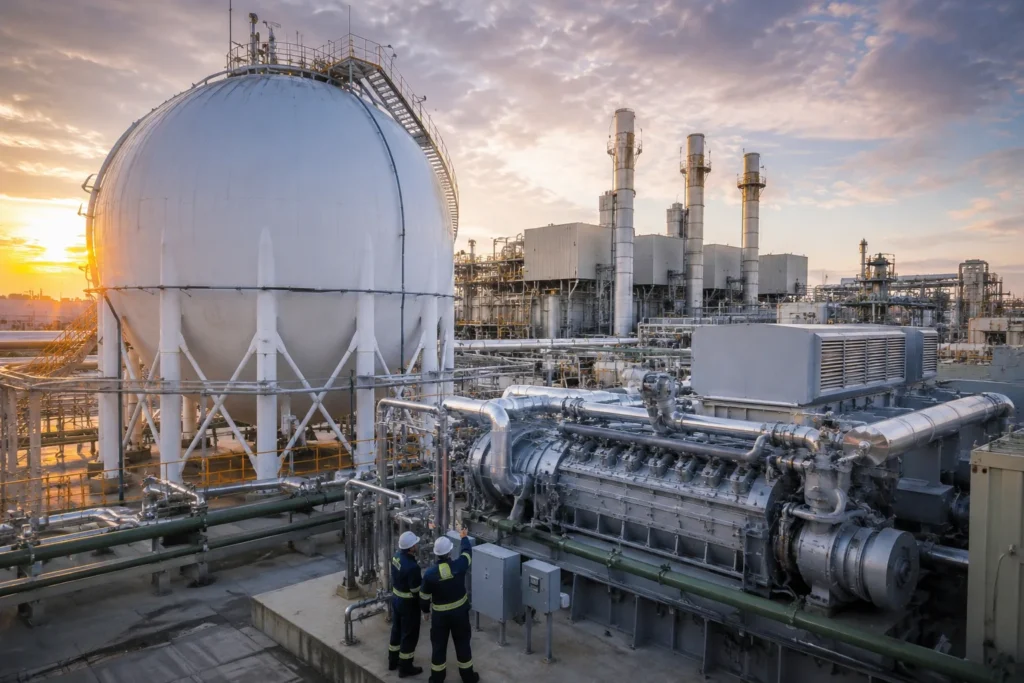
Hydrogen power generation is taking a new step toward industrial deployment with the development of technologies capable of operating using hydrogen and natural gas blends without requiring a complete replacement of existing infrastructure. The new solution presented by Kawasaki Heavy Industries shows how high-power gas engines can accelerate decarbonization in the power sector through a progressive transition, reducing emissions and optimizing investments in energy assets.
Hydrogen power generation leverages existing infrastructure
One of the main challenges of the energy transition is incorporating low-emission fuels without replacing the facilities that currently meet electricity demand. In this context, combustion engines capable of operating with blends of up to 30% hydrogen represent an alternative that makes it possible to reuse much of the installed infrastructure, including pipelines, distribution systems, and auxiliary equipment, significantly reducing implementation costs.
This approach enables a gradual transition for power operators and energy-intensive industries, which can reduce their carbon footprint without facing investments equivalent to building new power generation plants.
The hydrogen and natural gas blend improves operational flexibility
The technology developed by Kawasaki Heavy Industries is designed to operate with different proportions of hydrogen blended with natural gas, offering greater flexibility to adapt to fuel availability and the operational needs of each facility.
In addition to reducing carbon dioxide emissions compared to conventional systems fueled exclusively by natural gas, this configuration maintains high levels of reliability and stability during power generation—key factors in ensuring continuous supply in modern grids.
The ability to progressively adjust the hydrogen ratio makes these engines a transitional solution capable of supporting the future growth of the hydrogen economy.
Power plants seek solutions to stabilize the grid
The accelerated growth of renewable energy has also increased the need for technologies capable of responding quickly to variations in wind and solar generation. High-efficiency gas engines partially fueled with hydrogen can play a strategic role as flexible backup to maintain the stability of power grids.
Thanks to their fast response times and ability to operate under different load conditions, these systems help balance generation when output from intermittent renewable sources declines, strengthening the reliability of the power system.
Decarbonization drives a new generation of industrial engines
Beyond the case presented by Kawasaki, the development of hydrogen-compatible engines reflects a trend that is gaining momentum in the global energy industry. Equipment manufacturers, power operators, and engineering companies are seeking technologies capable of reducing emissions by using increasingly cleaner fuels without compromising operational efficiency.
This approach also supports modernization through retrofit projects, enabling existing equipment to be adapted to operate on hydrogen blends and extending its service life—an especially attractive strategy for generation plants looking to move toward lower-carbon-intensity models.
The energy transition is betting on technologies with gradual implementation
The evolution of hydrogen power generation shows that decarbonization does not depend solely on building new infrastructure, but also on making smart use of existing assets. The progressive incorporation of hydrogen into commercial gas engines offers a realistic pathway to reduce emissions, strengthen grid stability, and facilitate the integration of renewable energy without affecting the continuity of electricity supply.
As the availability of low-emission hydrogen increases and new production and distribution capabilities are developed, these types of solutions could play a key role in transforming the global energy system over the coming decades.
Sources: El Economista / Kawasaki