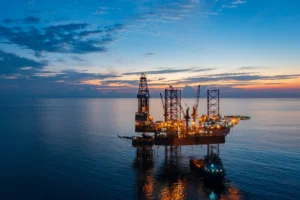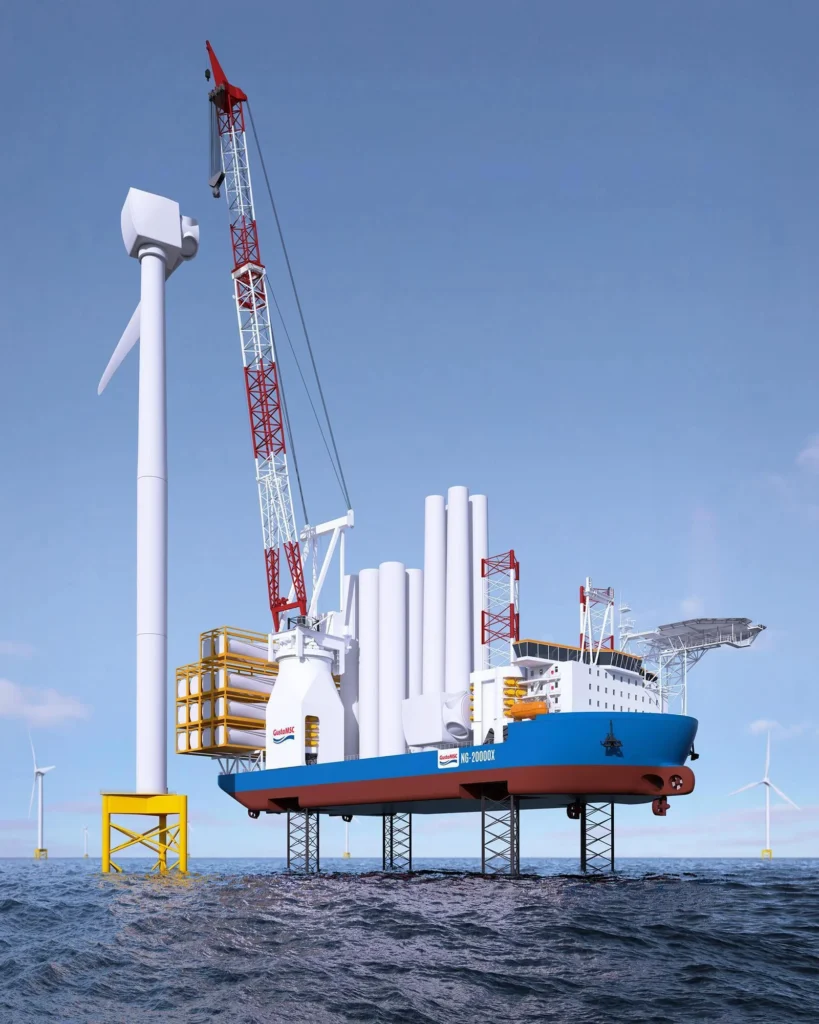
GustoMSC, NOV’s offshore design and engineering division, introduced its new asymmetric rack-and-pinion technology, called ASYM R&P, designed to improve the performance of offshore wind installation vessels without increasing system size, weight, or complexity.
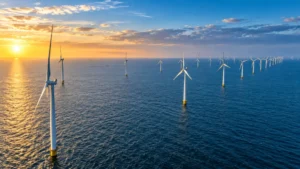
The innovation aims to meet new demands in the offshore wind sector, where growing turbine sizes and expansion into deeper waters are increasing the need for vessels with higher payload capacity, operational efficiency, and tighter delivery timelines.
Greater capacity on the same platform
ASYM R&P technology is based on GustoMSC’s experience in rack-and-pinion lifting systems for offshore units.
Its patent-pending approach improves load distribution within the system’s existing architecture, enabling better use of available structural capacity.
Instead of relying on conventional scaling methods, which often require larger components and more weight, ASYM R&P boosts performance through an asymmetric design integrated into the lifting systems already developed by GustoMSC.
According to Marc Doorduin, GustoMSC’s Commercial Director for Fixed Offshore Wind, the industry is under pressure to install larger turbines more efficiently, reduce the levelized cost of energy, and maintain project profitability.
Response to larger wind turbines
Offshore wind projects are moving into more demanding environments, with larger components and operations in deeper waters.
This scenario requires installation vessels to handle higher loads without compromising efficiency or unnecessarily increasing system complexity.
ASYM R&P was developed to enable installation vessels to meet these needs without oversized structural redesigns. The technology optimizes how loads are transferred and distributed during lifting operations, providing flexibility for shipowners and operators.
Integration with GustoMSC systems
GustoMSC already has rack-and-pinion lifting systems with variable-speed drives, used on offshore vessels for lifting and positioning operations. These systems are designed to distribute torque between motors and pinions, reducing loads, wear, and stresses during maneuvers.
The new ASYM R&P technology builds on this technical foundation, with the aim of increasing operational capacity without fully replacing the existing architecture. This makes it possible to offer a practical, field-ready solution.
NOV notes that system efficiency is key for repetitive operations in wind farms, where vessels must perform multiple lifting cycles over the project’s service life.
Vessels ready for the next offshore phase
As offshore wind scales toward heavier turbines and more complex farms, naval engineering solutions must adapt without disproportionately increasing costs, weight, or operational consumption.
With ASYM R&P, GustoMSC aims to provide a technical tool so installation vessels can remain competitive in the next stage of offshore wind development.
The technology reinforces NOV’s focus on market-ready offshore solutions aimed at improving efficiency, expanding installation capacity, and supporting operators in next-generation offshore wind projects.
Source and photo: https://www.nov.com/