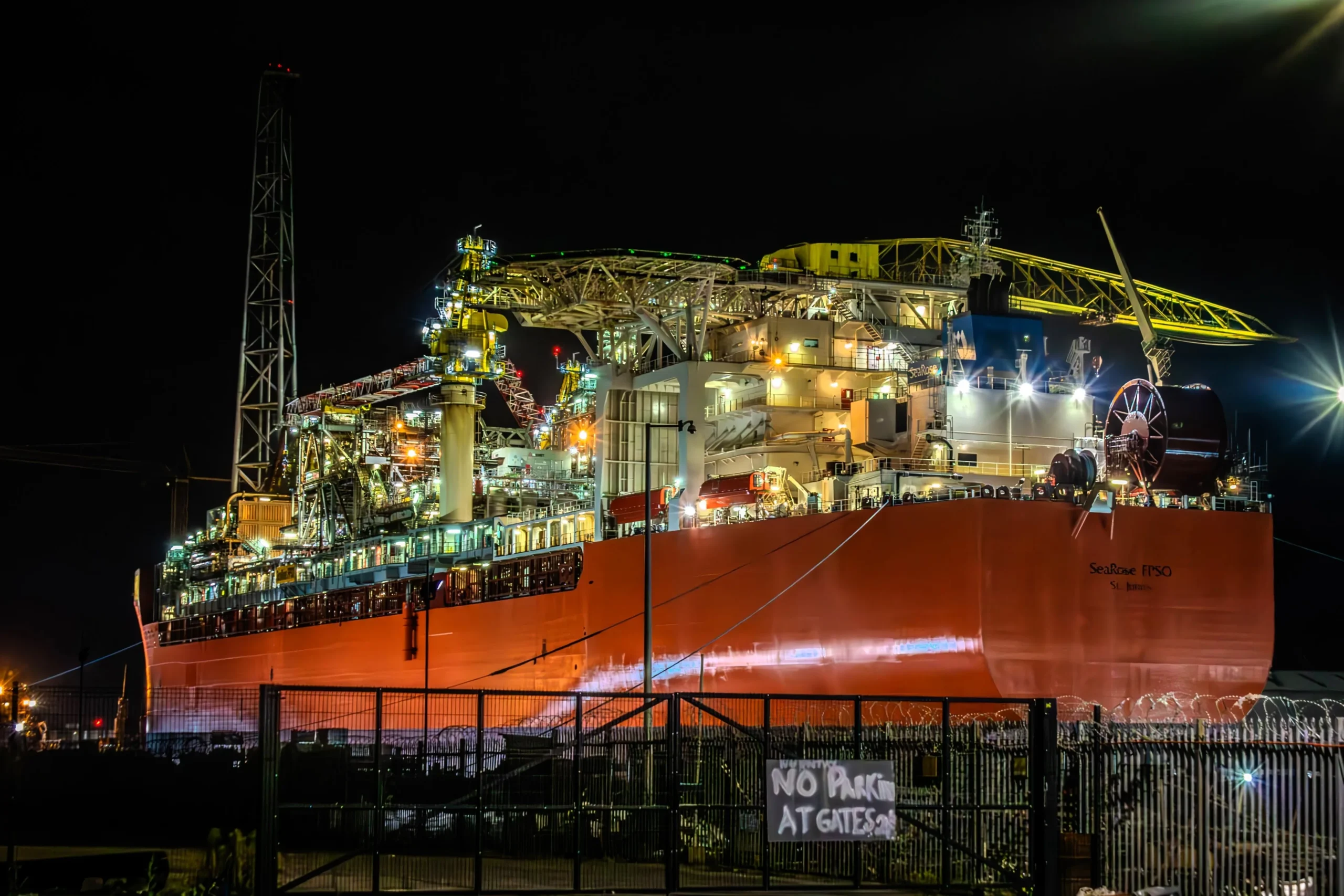
The FPSO P-80 y P-82 of Petrobras are moving towards their deployment in the Búzios field, where they will contribute a combined capacity of 450,000 barrels per day.
P-80 and P-82 will expand the capacity of the Búzios field
Seatrium is preparing the P-80 and P-82 FPSO for mobilization to Petrobras’ Búzios field, located in the pre-salt area of the Santos Basin off the coast of Brazil. The two units were named on August 27 at the Tuas Boulevard shipyard in Singapore.
After completing this stage, the platforms are scheduled to depart for Brazil within a few weeks of each other. There, they will become new components of the expansion of Búzios, one of Petrobras’s main offshore production centers.
Each FPSO is designed to produce up to 225,000 barrels of oil per day and process 12 million cubic meters of gas per day. Thus, the P-80 and P-82 will together add up to 450,000 barrels per day of installed capacity.
In addition, each unit has an approximate water injection capacity of 250,000 barrels per day and can store approximately 2.5 million barrels of oil.
The new FPSOs will boost Petrobras’ production
With the addition of P-80 and P-82, the installed production capacity of the Búzios field could grow by around 34 %. Petrobras reported that the field has already exceeded a production of 1.2 million barrels of oil per day. The new platforms are intended to further expand that scale, production of both units is scheduled to begin in 2027.
Magda Chambriard, president of Petrobras, stated that the two FPSO will allow the company to increase production at Búzios by 450,000 barrels per day. The field occupies a central position within the company’s offshore production strategy due to the size of its reserves and its high productivity.
Likewise, P-80 and P-82 will respectively become new units of the Búzios development within the field expansion program using floating production systems.
Seatrium expands its participation in the Petrobras program
P-80 and P-82 are the second and third FPSO Turnkey projects delivered by Seatrium under Petrobras’ P Series program. The first was P-78, which departed Singapore in 2025 before heading to Brazil.
The construction of the new platforms required an industrial chain distributed across several countries, Seatrium manufactured more than 110,000 metric tons of superstructure modules for both FPSOs at facilities in Singapore, China, and Brazil.
Subsequently, the company concentrated the integration and commissioning work at its Tuas Boulevard facilities in Singapore. The relationship between Seatrium and Petrobras extends for more than three decades, P-80 and P-82 represent projects 47 and 48 developed by the group for the Brazilian oil company.
P-80 and P-82 incorporate technologies to reduce emissions
In addition to their high production capacity, FPSOs integrate systems designed to reduce emissions associated with offshore operations.
These solutions include technologies of carbon capture and reinjection and energy recovery systems, these facilities aim to improve energy efficiency during hydrocarbon production and processing operations.
The capacity to process gas will also be relevant, together, the two units will be able to handle up to 24 million cubic meters per day when they reach their design capacity.
Seatrium develops six FPSOs for Petrobras
The industrial program goes beyond P-80 and P-82, Seatrium is simultaneously managing six FPSO projects destined for Petrobras.
When all these units are operational, they are expected to provide a combined capacity of approximately 1.3 million barrels of oil per day.
For now, P-80 and P-82 are moving towards the next phases of mobilization and offshore commissioning, their arrival at the Búzios field will allow the facilities to be prepared for the start of production planned for 2027 and expand one of the most important oil developments in the Brazilian pre-salt.
Source: World Oil
Photo: Shutterstock