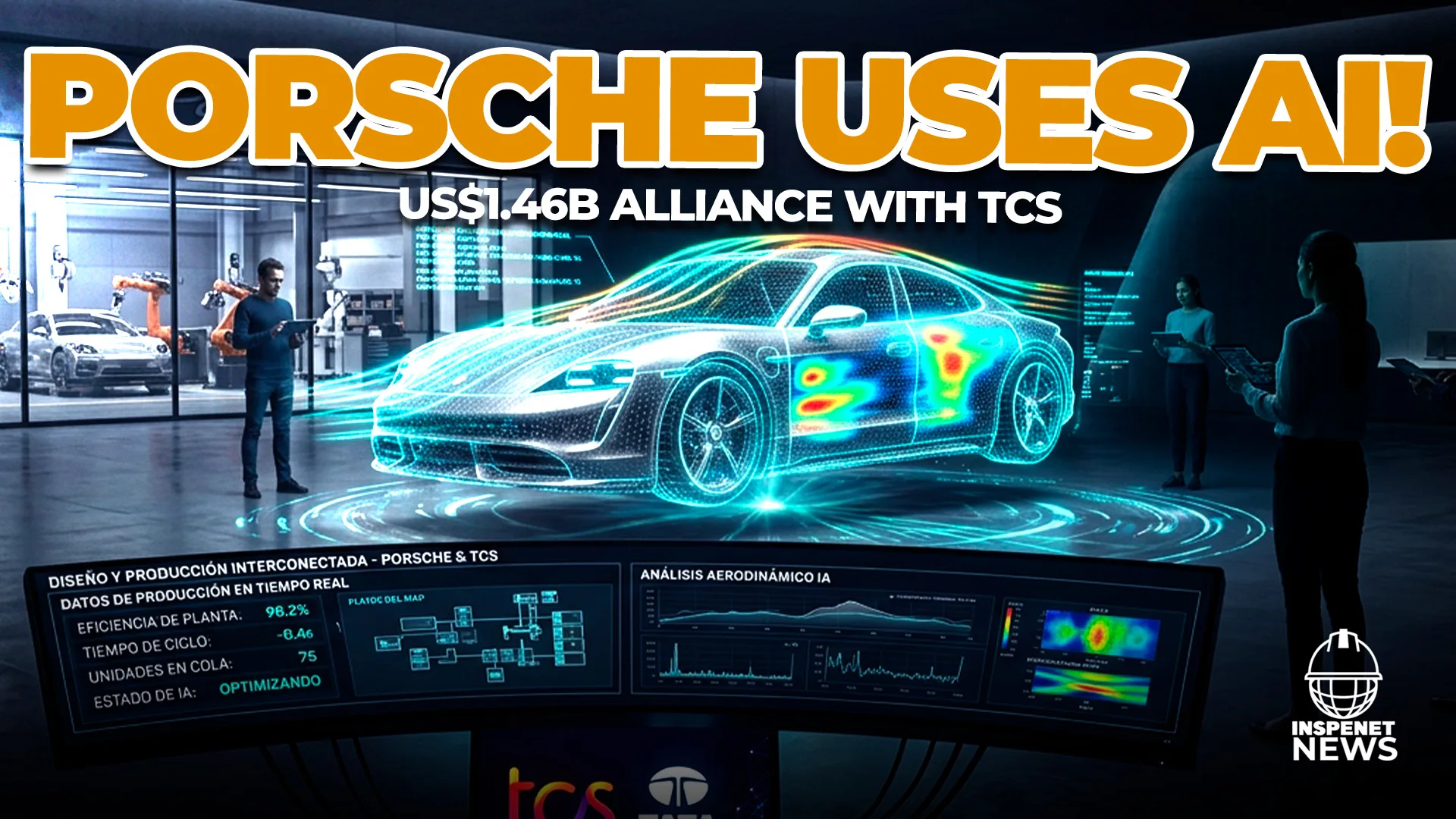
Porsche and TCS are bringing artificial intelligence to their factories and operations
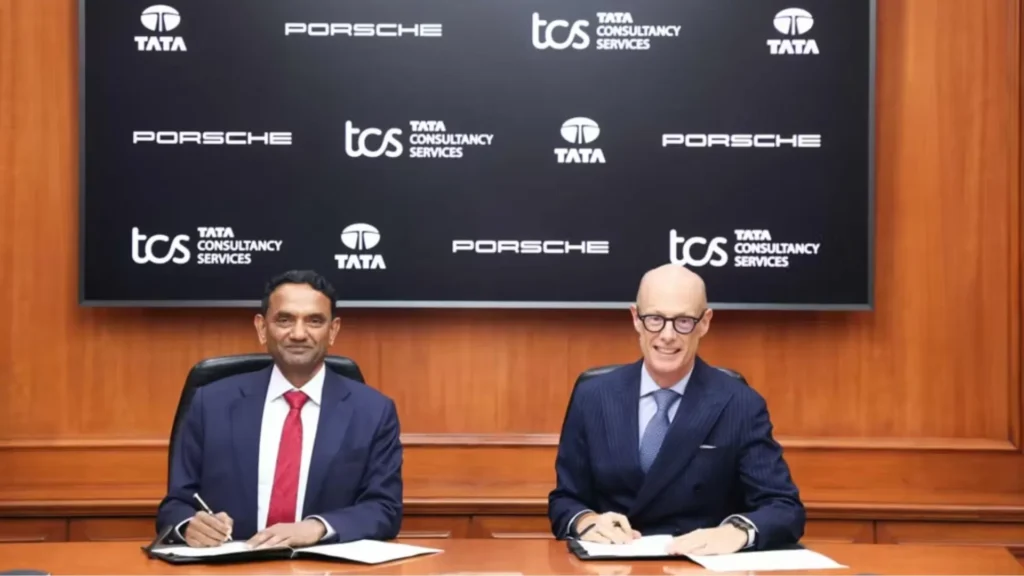
Porsche and TCS have formed an alliance that will expand the use of artificial intelligence within the German automaker. The program involves an investment of €1.25 billion over five years and will bring AI solutions to areas such as engineering, manufacturing, operations, and customer experience.
Furthermore, the agreement modifies the technological relationship between the two companies; Tata Consultancy Services (TCS) will assume a broader role in Porsche's digital transformation as it prepares to acquire MHP, the manufacturer's management and technology consultancy.
In this way, the operation sets an objective that goes beyond developing new tools. Porsche seeks to integrate AI into existing industrial processes and transform specific projects into systems capable of operating on a larger scale.
Porsche allocates 1.25 billion euros to its strategy with TCS
Specifically, the collaboration between Porsche and TCS will last five years and will involve 1.25 billion euros, equivalent to about 1.46 billion dollars.
During that period, TCS will work in different areas of the manufacturer; artificial intelligence will have applications in engineering, production, operations, and services related to customer experience.
For its part, Porsche seeks to concentrate more resources on its core business; the company believes that TCS's technological expertise can complement its knowledge of the automotive sector at a time when software is playing an increasingly important role in the development and manufacture of vehicles.
Thus, the Porsche-TCS agreement establishes a relationship that combines technology, consulting services and industrial knowledge.
Artificial intelligence will reach engineering, factories, and operations
Porsche already uses artificial intelligence in various applications; the next challenge is to ensure that these solutions no longer function as independent projects and can be used across different parts of the organization.
For example, a tool designed to assist engineers needs proper access to technical systems and product data. A solution intended for factories must also communicate with production systems and adapt to the processes used by workers.
Therefore, deploying AI in the automotive industry involves solving integration problems as well as developing models capable of performing certain tasks.
As these tools become involved in more important processes, aspects such as security, data availability, and integration with existing platforms become more relevant.
A specialized center will seek to scale up AI projects
To address this process, TCS will create an AI Center of Excellence for Mobility dedicated to Porsche.
This center's mission will be to transform specific artificial intelligence applications into secure and scalable solutions. These solutions can then be implemented in engineering, manufacturing, and operations.
This approach helps to understand one of the main implications of the agreement: Porsche is not simply looking to test new AI applications. The intention is to integrate these tools into systems used daily within the company.
Consequently, the technological work must also take into account the existing infrastructure. The models will need to interact with industrial data, engineering platforms, and production systems without disrupting essential processes.
TCS buys MHP for 320 million euros
In parallel, Tata Consultancy Services has agreed to acquire 100% of Management- und IT-Beratung GmbH (MHP), Porsche's management and IT consultancy subsidiary.
The transaction establishes an enterprise value for MHP of 320 million euros, around 373 million dollars.
However, the purchase will still need to pass the corresponding regulatory approvals; if it obtains the necessary authorizations, the closing is expected in the coming months.
The acquisition adds another dimension to the relationship between Porsche and TCS. The Indian company will gain an organization with more than 4,500 employees and over three decades of experience in management consulting and technology.
What does TCS gain from acquiring MHP?
Primarily, TCS strengthens its knowledge of the European automotive industry.
MHP develops activities related to manufacturing digitalization, artificial intelligence, supply chains, SAP, cybersecurity, and software-defined mobility. Furthermore, its history with Porsche provides it with direct experience in the technological needs of the sector.
This knowledge can be especially useful when moving AI applications from individual tests to industrial environments.
TCS, in turn, contributes capabilities related to artificial intelligence, engineering, and technology services. The combination of both teams aims to facilitate the application of these technologies to different points in the automotive value chain.
Porsche will retain MHP as a technology partner
On the other hand, the sale will not mean the end of the relationship between Porsche and MHP.
The consultancy will retain its name and operate independently within TCS. At the same time, it will continue to collaborate with Porsche on programs related to digitalization and technological transformation.
For the German manufacturer, this structure allows it to transfer ownership of its consulting firm while maintaining access to an organization that understands its processes and systems.
Furthermore, the operation fits with Porsche's intention to concentrate on its core business while increasing TCS's role as a technology partner.
The challenge of integrating AI into factories
Beyond the numbers, the Porsche-TCS agreement reflects one of the major challenges associated with industrial artificial intelligence: transferring demonstrations and pilot projects to the everyday operation of a factory.
Developing a model for a specific task represents only one part of the process; afterwards, it is necessary to connect it with business information, production systems, and tools used by engineers and operators.
It must also function stably within processes that may have consequences for production, quality, and efficiency.
For this reason, the advancement of AI in the automotive industry depends as much on the models as on their integration with each manufacturer's technological infrastructure.
The Center of Excellence planned by TCS will seek precisely to reduce that gap between use cases and their industrial application within Porsche.
Volkswagen and BMW accelerate their automotive AI strategies
Meanwhile, other major manufacturers are addressing this challenge through different strategies.
Volkswagen has collaborated with AWS on a digital production platform designed to extend AI applications and solutions across its industrial network. BMW and Hyundai have focused their efforts on robotics and physical AI.
General Motors, for its part, has combined in-house manufacturing developments with technological partnerships such as its collaboration with NVIDIA. Toyota has explored platforms designed to bring machine learning tools to its factory employees.
Mercedes-Benz has also linked the deployment of artificial intelligence to the training of its workers.
Although the models vary, these strategies respond to a common problem for the industry: getting artificial intelligence to move from specific projects to becoming part of the systems that support industrial operations.
In the case of Porsche and TCS, the solution combines technological investment, specialized knowledge, and a corporate reorganization through the acquisition of MHP. The next five years will show the extent to which this structure allows AI to be extended from specific cases to the German manufacturer's daily processes.
News of additional interest
CNOOC achieves record profit due to rising oil prices
CNOOC closed the first half of 2026 with a record net profit of 85.8 billion yuan, or about US$12.7 billion, a year-on-year increase of 23.4%. Revenue also reached a record high of 242.7 billion yuan, with oil and gas sales growing by 20%. The company produced 398.7 million barrels of oil equivalent, up 3.7% year-on-year.
The result was boosted by the sharp rise in crude oil prices amid the conflict in the Middle East and disruptions in the Strait of Hormuz. Brent crude surpassed US$100 per barrel in March and reached US$115 during the second quarter. CNOOC combined this price environment with record production both in and outside of China and announced its largest interim dividend since going public.
Shell attracts offers for chemical business in the US
Shell has attracted interest from ExxonMobil, LyondellBasell , Apollo Global Management, and Kuwait Petroleum Corporation's chemical division for its chemical assets in the United States. The potential sale could reach US$8 billion and includes facilities located in Louisiana, Texas, and Pennsylvania. These plants manufacture compounds used in products such as plastics, detergents, and pharmaceuticals.
Interested parties submitted non-binding offers ranging from the purchase of the entire business to the acquisition of individual plants. Shell is looking to divest itself of underperforming facilities, and the proposed price is reportedly below the capital invested in them. This move follows the recent sale of its European onshore renewable energy business to TotalEnergies.
South African mining companies move away from coal
South Africa's major mining companies are accelerating their investments in renewable energy to cut costs and reduce their reliance on Eskom, the state-owned power company. Anglo American and Sibanye Stillwater are among the companies seeking new energy sources in the face of problems with a national grid sustained primarily by aging coal-fired power plants.
The change will be gradual. More than 80% of the country's electricity still comes from coal, while renewables account for around 10%. Therefore, mining companies expect to maintain a portion of Eskom's stable supply for several years. At the same time, companies like Anglo American are working with private producers to develop renewable energy projects and diversify their energy supply.
Gunvor is going after more shale gas in the US.
Gunvor is in talks to acquire Silver Hill Energy Partners' natural gas assets in the Haynesville Basin, located between Texas and Louisiana. The transaction is valued at between US$1.2 billion and US$1.5 billion. The assets cover approximately 58,000 net acres and produce about 370 million cubic feet of gas equivalent per day. The discussions are in their early stages, and there is no guarantee that a deal will be reached.
The trading company has been increasing its presence in the US gas market since 2024. This year it has already backed an asset purchase in Haynesville for approximately US$300 million and expanded its LNG contracts. This interest stems from the expected growth in electricity demand from artificial intelligence data centers and the expansion of LNG export terminals on the Gulf Coast.