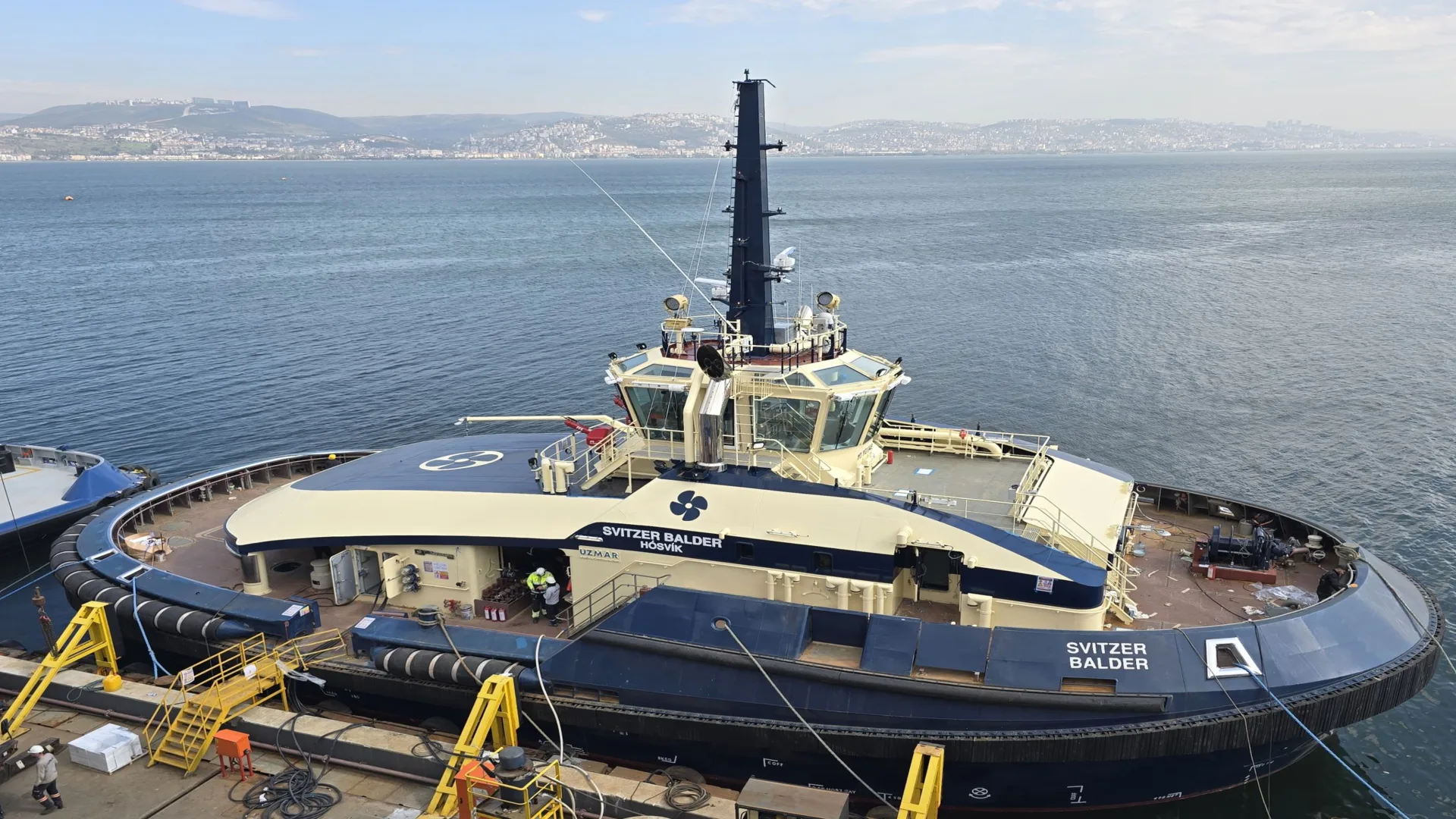
The transition to zero-emission vessels continues to gain traction in the maritime industry with the arrival of the Svitzer Balder, considered the world’s most powerful electric tugboat. This vessel, equipped with a high-capacity battery system, marks a new step in the electrification of port operations.
A hybrid design that combines batteries and methanol
In this context, the Svitzer Balder integrates a propulsion system based on 6 MWh marine batteries along with dual-fuel methanol engines. This configuration allows it to operate primarily in electric mode, while the methanol acts as a backup to extend the vessel’s range.
Furthermore, the tugboat has successfully completed its sea trials, confirming its ability to perform tasks both in port and at sea. Its deployment is planned for the port of Gothenburg, where it will conduct most of its zero-emission operations.
LFP batteries are crucial for efficiency and safety
On the other hand, the technology used in this project is based on lithium iron phosphate (LFP) batteries, an alternative that is gaining prominence over traditional chemistries such as NMC.
According to the manufacturer AYK Energy, these batteries offer significant advantages in terms of safety, cost, and durability. They also allow for achieving the energy density required for demanding applications such as port towing, while maintaining a lower risk of combustion.
The installed system has ABS certification and an estimated lifespan of a decade, reinforcing its long-term operational viability.
Reduction of emissions in port operations
In environmental terms, the predominant use of electric propulsion will allow the vessel to reduce its emissions by more than 90% during towing and docking maneuvers. This advancement responds to increasing regulatory pressure and the need to decarbonize maritime transport.
In fact, ports are adopting cleaner energy solutions to meet climate goals, which is driving demand for electrified vessels.
Growth of electric tugboats in the maritime industry
Finally, this project reflects a broader trend within the naval sector: the adoption of marine batteries is extending to ferries, cruise ships, fishing vessels, and container ships, consolidating a more flexible energy mix.
AYK Energy, the system’s manufacturer, has increased its production capacity to meet this demand, relying on automated facilities capable of scaling up the manufacturing of energy storage systems.
Consequently, the development of the Svitzer Balder represents a technical advance and also a clear sign of the direction the maritime industry is taking towards cleaner and more efficient solutions.
Source and photo: Aykenergy