BP has initiated the process to sell minority stakes in the Kaskida and Tiber projects, two of its main deepwater oil developments in the Gulf of Mexico, according to sources familiar with the operation. The move is part of the company’s strategy to optimize its asset portfolio and free up capital for future investments.
Although the company has not officially confirmed the details of the operation, various sources indicated that the process is already underway and could become one of the first significant decisions under the direction of new CEO, Meg O’Neill.
Kaskida and Tiber are essential assets for BP
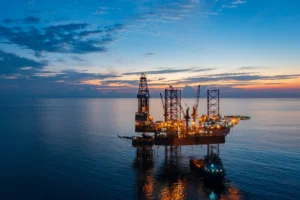
The Kaskida and Tiber projects are among BP’s most important offshore developments in the United States. Both are located in the deep waters of the Gulf of Mexico and are considered fundamental to the company’s growth strategy.
Current estimates suggest that each project could reach a production capacity of approximately 80,000 barrels of oil per day once operational.
BP anticipates Kaskida to begin production in 2029, while Tiber is expected to start operating in 2030, significantly contributing to the company’s production growth in North America.
Oil Company Reinforces Focus on Oil and Gas
The sale of minority stakes is a common practice in the energy industry to share risks, attract strategic partners, and recover part of the investments made during development stages.
Over the past year, BP has redefined its corporate priorities to strengthen its traditional oil and gas business, reducing the emphasis on some renewable energy initiatives.
The company aims to increase its production in the United States to approximately one million barrels of oil equivalent per day by 2030, which would represent about half of its global production target for that date.
United States Gains Weight in Growth Strategy
The Gulf of Mexico continues to be one of the most relevant regions for BP’s expansion due to its deepwater resources and the existence of consolidated infrastructure for offshore development.
The operation also coincides with a context of higher energy prices, driven by geopolitical uncertainty and tensions affecting international hydrocarbon markets.
Although the exact size of the stakes BP intends to sell and potential interested buyers are not yet known, the transaction could attract companies looking to increase their presence in one of the world’s most active offshore markets.
With this initiative, BP continues to adjust its portfolio while maintaining its commitment to large-scale projects aimed at sustaining its production growth over the next decade.
Source: https://www.reuters.com/
Photo: bp