Føn Energy takes over Baltic Power’s subsea O&M
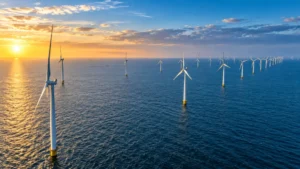
Føn Energy Services Poland signed a multi-year contract, with extension options, to deliver an integrated Balance of Plant (BoP) operations and maintenance program at Baltic Power, the 1.2 GW offshore wind farm being developed by Orlen Group and Northland Power in the Polish Baltic Sea. The scope covers all subsea assets; foundations and cables; as well as environmental monitoring of marine growth and habitats, vessel management, logistics, engineering, and procurement.
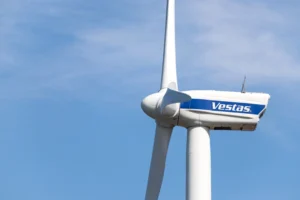
Baltic Power, Poland’s most advanced offshore wind project and the first to enter the construction phase, will install 76 Vestas V236 15 MW turbines on monopile foundations, with commissioning expected by the end of 2026. Føn, owned by the Norwegian groups IKM, DISA International, and Akastor of the Aker conglomerate, already operates in 14 offshore wind farms across the Netherlands, Scotland, Germany, and Poland.
21% local content barely meets the regulatory floor
The figure no press release highlights in its headline is that the projected local content for Baltic Power over its lifetime will barely exceed 21%, according to the company’s own figures. That number sits right at the lower end of the 20–30% range required by Poland’s Sector Deal for Phase I projects, and well below the 40–50% that the same framework envisages for Phase II projects.
In other words, Poland’s flagship offshore wind project—the one meant to prove the viability of a domestic supply chain—meets the regulatory minimum; it does not exceed it by a comfortable margin.
That local content is tangible in specific components: the topsides for the offshore substations were manufactured in shipyards in Gdansk and Gdynia, the onshore export cables come from a plant in Bydgoszcz, and part of the foundations was produced in Żary and Niemodlin.
Føn Baltic Power builds a logistics base
But for the operational phase—where Føn’s contract comes in—Føn Baltic Power is building an O&M logistics base from scratch in Łeba, something unprecedented in Poland’s energy sector, just as the country’s offshore wind O&M spend will grow at an annual rate close to 40% in the coming years.
The outcome of this first project—whether or not it manages to get closer to the 30% ceiling, and how replicable its local-supplier model proves to be—will serve as a mandatory benchmark for assessing whether the jump to the 40–50% required in Phase II is a realistic target or a regulatory aspiration disconnected from the country’s current industrial capacity.
Source and photo: https://www.linkedin.com/