Table of Contents
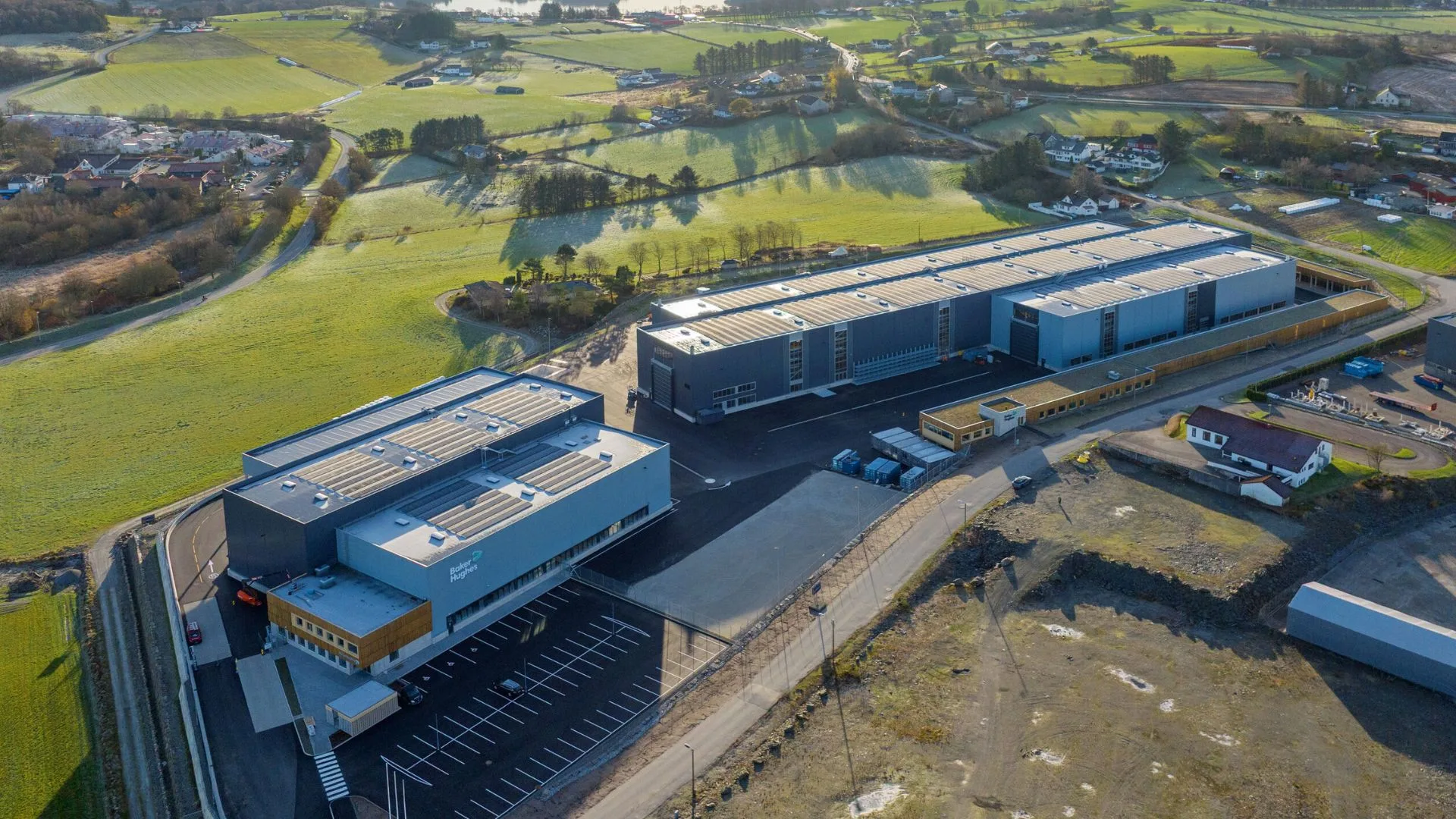
Recently, Baker Hughes announced the opening of its center of excellence in Dusavik, confirming its commitment to the stability of the North Sea. The new facility covers an area of 49,000 square meters and serves as a central hub for global offshore production.
Technical capacity of the subsea plant in Dusavik
Under the supervision of engineering experts, the complex houses a 12,000-square-meter workshop where production trees and wellheads are manufactured. The test bays allow for the simulation of extreme conditions up to 22,500 psi, ensuring equipment reliability in the most demanding depths.
Furthermore, the center is designed to offer comprehensive support ranging from initial installation to maintenance and eventual decommissioning of subsea infrastructure.
The power supply for these operations comes exclusively from renewable sources, reducing the environmental impact of industrial activity. Amerino Gatti noted that the North Sea is vital for Europe’s energy security and provides reliable hydrocarbons in a complex geopolitical context.
In Norway, it demonstrates how the use of smart policies allows for balancing the development of conventional resources with economic decarbonization goals. The technology firm’s presence in the region is consolidated with this plant, which complements its existing facilities in the United Kingdom.
The Montrose and Newcastle centers continue to supply flexible piping systems, while the new Norwegian hub takes the lead in intervention and modernization services. This strategy strengthens the responsiveness to the demands of global operators and ensures the continuity of sustainable energy supply for the future.
Source and photo: Baker Hughes