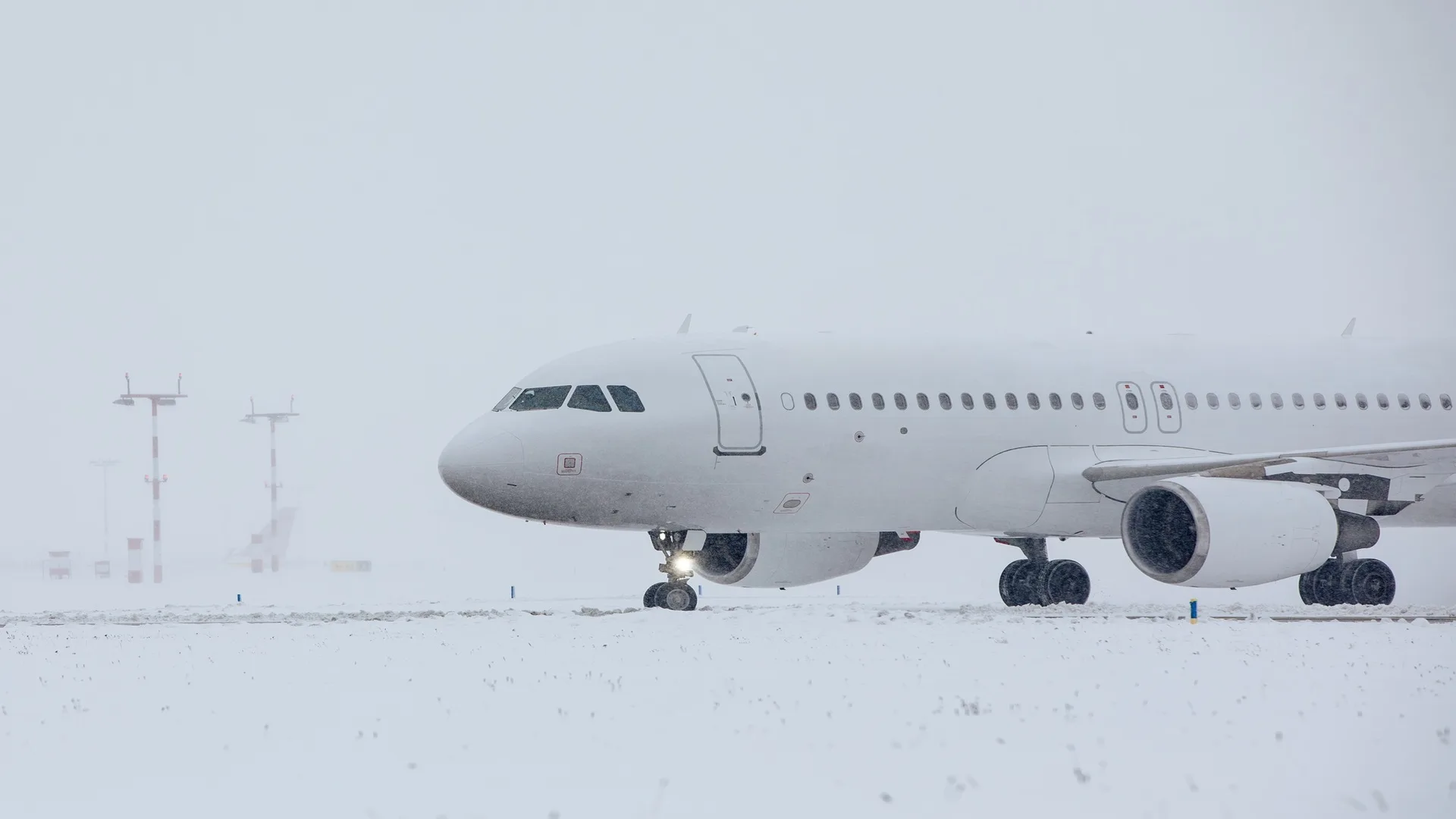
In the aeronautical sector, in-flight icing remains one of the most critical challenges to aviation safety and operational efficiency. Faced with this scenario, the COAT-IPS project is advancing in the development of a heated anti-icing coating that promises to change the current approach to aircraft protection.
The initiative, promoted by Omar Coatings together with AIMPLAS and the Instituto Nacional de Técnica Aeroespacial (INTA), is part of a public-private collaboration program that will run until 2026. The objective is clear: to transfer a technological solution from the laboratory to its real application in demanding industrial environments.
A critical problem for aviation safety
Currently, ice accumulation on aircraft has a direct impact on performance; a thin layer can reduce lift by up to 30% and increase aerodynamic drag by 40%, compromising stability and increasing fuel consumption.
In addition, icing conditions are present for approximately 15% of an aircraft’s operational life, making this phenomenon a recurring factor affecting both safety and maintenance costs.
A heatable coating based on the Joule effect
Faced with the limitations of traditional systems, the COAT-IPS project proposes a solution based on a heatable technical coating that works through the Joule effect.
This coating is an energy-efficient paint capable of operating in both anti-icing and de-icing modes. Thus, it allows preventing the formation of ice and eliminating it when it is already present, with a more efficient and controlled response.
Unlike conventional technologies such as hot air from the engine or electrothermal systems, this solution reduces energy consumption, minimizes added weight and simplifies thermal management.
Direct application and simplified maintenance
One of the most relevant aspects of the development is its capacity for direct application on the surface of the aircraft, even in complex geometries. This facilitates its integration without the need to redesign structures.
In addition, the coating allows for on-site repairs, avoiding complete system replacement and reducing maintenance times. This feature introduces a significant operational advantage over current solutions.
From research to industrial scalability
Within the consortium, AIMPLAS leads the development of the formulation, while INTA is in charge of validation under representative conditions through advanced testing.
For its part, Omar Coatings plays a vital role in industrial transfer, focusing on process optimization, scalability and adaptation to real application conditions. This step is decisive, as many creations do not make it through this phase.
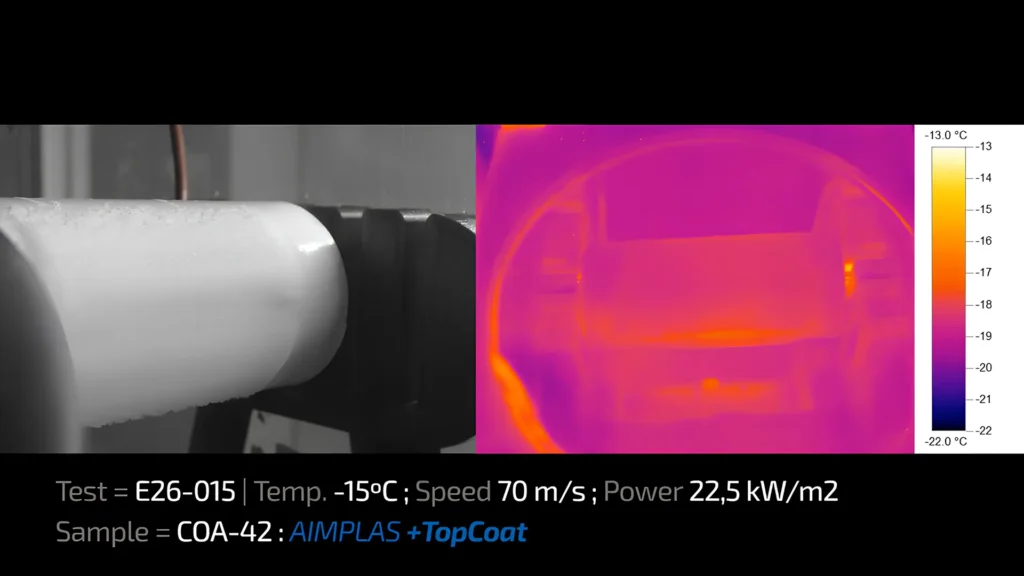
Currently, the project is in an advanced experimental stage, with validations in wind tunnels that allow evaluating the behavior of the coating in conditions close to real operation.
Applied creation with market impact
Beyond the technological development, COAT-IPS reflects a growing trend in the industry, the need for solutions that combine energy efficiencysustainability and operational safety.
In this context, collaboration between technology centers and industrial companies is reinforced as an effective mechanism to accelerate the arrival of improvements to the market.
The next step will be to ensure the industrialization of the coating and its adoption in the aeronautical sector, where its true competitive impact will be defined.
Source: Omarcoatings