ALNAFT has taken a strategic step in strengthening the energy sector by granting a prospecting authorization to bp, thus consolidating a new phase of dynamism in hydrocarbon exploration in Algeria.
This move is part of a policy aimed at increasing the competitiveness of the national mining sector, taking advantage of the country’s vast territory, which exceeds 1.7 million km². This expanse represents one of the largest geological opportunities still partially unexplored globally.
Beyond conventional exploration, the determining factor lies in the incorporation of advanced subsurface characterization technologies, which not only optimize the identification of fossil resources but also open the door to future integration with hybrid energy systems, including biogas as an energy transition vector.
Advanced technology redefines Algerian energy potential
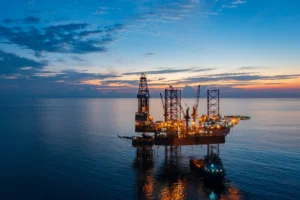
The focus of this new authorization is located in the Eastern Basin, a region with high geological potential where the implementation of state-of-the-art technologies in seismic prospecting, geological modeling, and subsurface data analysis is expected.
These tools allow for greater precision in reservoir identification, reducing exploratory risks and improving efficiency in decision-making. Subsurface digitalization thus becomes a central element of the country’s energy strategy.
In this context, experts highlight that the same technological infrastructure used for hydrocarbons can be progressively adapted to evaluate biogas production potential, especially in areas where agricultural activity or organic waste can be integrated into decentralized energy schemes.
The return of bp reinforces global investor confidence
The return of bp to the Algerian market represents a clear signal of confidence in the regulatory framework and investment conditions promoted by ALNAFT.
This decision responds not only to the geological potential but also to institutional stability and openness toward international collaboration models that facilitate technology transfer and the development of local capabilities.
From a strategic perspective, these types of alliances can also accelerate the incorporation of complementary energy solutions, such as biogas plants associated with industrial operations, which would contribute to reducing emissions and optimizing resource use in the energy cycle.
Energy strategy integrates innovation and sustainability
With this initiative, ALNAFT reaffirms its commitment to sustainable energy development based on three pillars: technological innovation, international collaboration, and operational pragmatism.
While the immediate focus remains on hydrocarbons, there is a growing trend toward energy diversification. In this sense, biogas emerges as a strategic opportunity for Algeria, especially in waste recovery and distributed energy generation.
The convergence between advanced exploration and energy transition positions Algeria as an operational architect not only in the supply of hydrocarbons but also in the evolution toward more resilient and low-carbon energy systems, aligned with global industry trends.
Source and photo: https://www.alnaft.dz/